

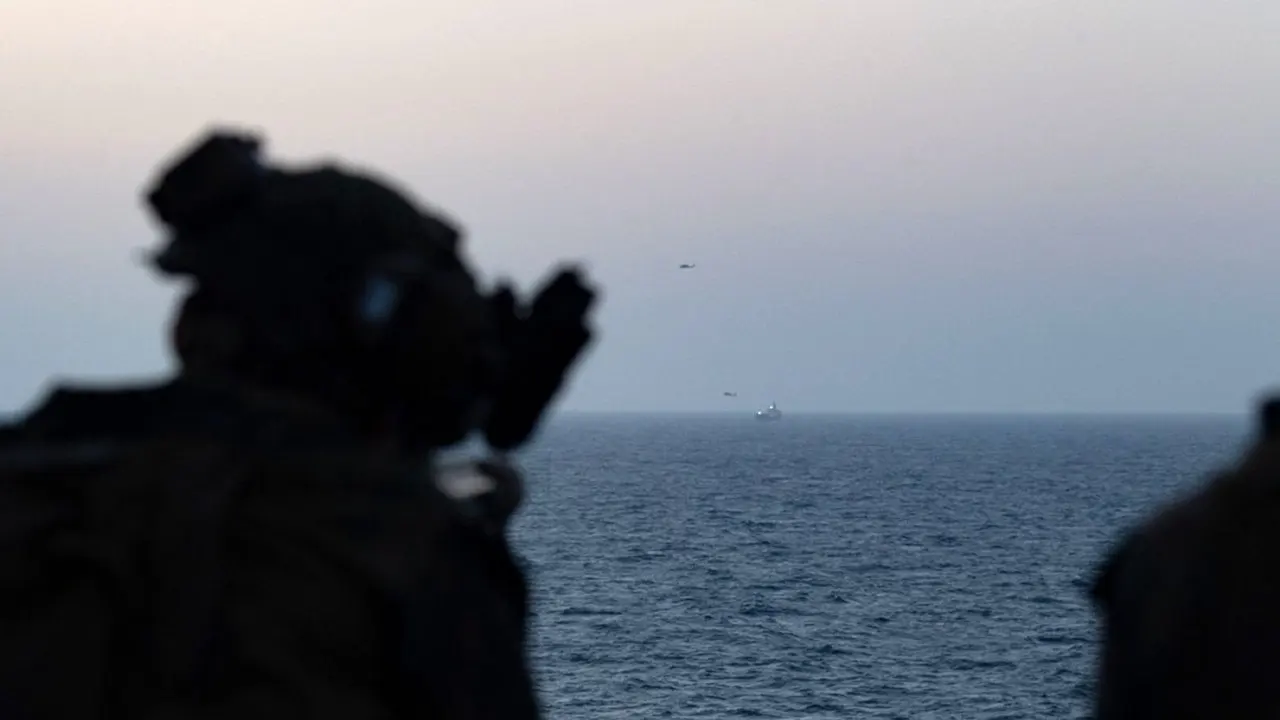
Around the waters that have long served as one of the world’s busiest and most strategically vital shipping routes, a quiet human crisis is unfolding. Thousands of sailors remain stranded near the Strait of Hormuz, caught between the escalating attacks on commercial ships and the political and military tensions that have turned their ordinary workplaces into danger zones. The United Nations’ top maritime official, Arsenio Dominguez, secretary-general of the International Maritime Organization, has warned that the situation is “severe and critical” for international shipping. He spoke of a “double blockade” and noted that too many vessels have been attacked, particularly in recent days. According to the Financial Times, roughly two dozen ships have been attacked in the waterway over about two weeks, and the numbers continue to rise. But behind those statistics are real people: seafarers who have lost their lives, and around 6,000 who have remained trapped aboard their vessels since the conflict began. Dominguez did not mince words. He said he would not advise anyone to transit the Strait of Hormuz or place seafarers at risk until there are solid guarantees of safety. This is not just a geopolitical flashpoint; it is a human catastrophe unfolding at sea, where men and women who are not soldiers, who are not political leaders, and who have no role in the conflict are paying the heaviest price. They are the ones loading cargo, steering the ships, and keeping the global supply chains moving, all while trying to survive in a region where the next message over the radio could be a threat, and the next missile could be the last thing they ever see.
The alarm over the human toll has been compounded by an increasingly strange and troubling diplomatic dispute: Iran has accused the United States military of using an international emergency radio channel to threaten civilian crews. In a letter sent to the International Maritime Organization on October 9, Iran’s ambassador, Seyed Ali Mousavi, alleged that American forces operating in the Persian Gulf had repeatedly occupied VHF Channel 16, the internationally designated maritime distress and safety frequency, for prolonged periods. The letter claimed that Iranian seafarers were addressed in Persian with threatening, abusive, and provocative language, and in some instances were urged to abandon their vessels. Iran described this as transforming a channel created for life-and-death emergencies into an instrument of military intimidation and psychological pressure against civilian crews. The complaint did not provide recordings, transcripts, or specific details of the alleged exchanges, and Fox News Digital was unable to independently verify the accusations. But the very existence of the complaint points to a deep breakdown in the norms that govern communication at sea. For sailors, VHF Channel 16 is sacred in a practical sense; it is the channel you turn to when you are sinking, when someone is overboard, when you need help. To hear it used for threats is not just distressing; it shatters the assumption that the sea, despite its dangers, has rules and protections. Imagine being thousands of miles from home, perhaps in a cramped and vulnerable vessel, and hearing your own language used to order you to leave your ship. That kind of fear does not stay on the bridge; it follows you into every dark corner of the ship, and it stays with you long after the voyage ends.
The United States, for its part, has defended its actions. U.S. Central Command responded to the accusations by saying that the naval blockade of Iranian ports has been in place for months and is professionally communicated to all international mariners. They insisted that vessels refusing to comply with blockade enforcement receive multiple warnings and ample opportunity to comply. American forces, they said, remain highly vigilant, focused, and professional while fully enforcing the naval blockade against Iran. This is a classic clash of narratives: one side sees a military necessity, enforced with discipline and warnings; the other sees an intimidation campaign that endangers innocent civilians. The truth likely lies somewhere in the murky middle, but what is certain is that the shipping industry is caught in the crossfire. The phrase “naval blockade” itself is a sobering reminder that the region is effectively closed to normal economic activity, except under the guns of those who control the water. The U.S. denies any abuse of the emergency channel, but the international community is left wondering whether the protocols designed to save lives are being stretched or broken. Dominguez, when asked about the allegations, pointed out that seafarers are not trained for combat and are not guilty of any of the conflicts happening around the world. He stressed that Channel 16 should never be used for the kind of communication that might be perceived as threatening. His comments were measured, as they must be for a UN official, but the underlying concern was unmistakable. When the emergency frequency becomes another weapon, even a verbal one, the whole system of maritime safety begins to shake.
Dominguez also emphasized that the IMO has a role to play in reviewing its own regulations and procedures, though he stopped short of announcing a formal investigation. He said that when situations like this arise, the organization will look into any technical measures or operational aspects that might need clarification within its regulatory framework. He was careful to stress that member states have equal rights to raise concerns, regardless of the conflict, and that he has a duty to circulate letters and notes from countries that believe they are being affected. “We take all that information,” he said, and meet at the level of different meetings of the organization to have discussions. If it becomes clear that rules need to be improved to avoid communications issues, or that the knowledge of how these channels should be used needs to be enhanced, that is part of the IMO’s mandate. At the same time, he revealed that diplomatic channels with Iran remain open, although he has no direct contact with the Islamic Revolutionary Guard Corps. He said he communicates with all member states, including the Islamic Republic of Iran, through diplomatic channels, and that information flows, but final decisions are difficult because of the ongoing conflict. This is the slow, frustrating work of international diplomacy in a time of war. While missiles fly and ships burn, officials in conference rooms send notes and schedule meetings, hoping that some small procedural change might prevent the next tragedy. Dominguez’s careful language reflects a man who knows that the worst thing he can do is inflame a volatile situation, but also that silence is not an option when hundreds of lives are at stake.
Beyond the immediate conflict, there is another layer of danger that Dominguez highlighted: fraudulent ship registrations and false flags. The IMO had recorded one hundred confirmed maritime incidents across the region as of October 9, with twenty-four seafarers killed since the conflict began on February 28. Dominguez warned that fraudulent registries and false flags are becoming major contributors to the danger. Some shipowners, eager to keep trading in a war zone, are taking risks by using shuttle tankers that are not properly registered or that fly flags that are not legitimate. These irresponsible shipowners, as Dominguez called them, are putting profit above the lives of their crews. They are the shadows in this story, the people who never appear in the news, who never explain their decisions, and who leave ordinary sailors to face the consequences. “That’s one of the reasons that we’re seeing an escalation,” he said. The combination of military strikes, naval blockades, and unregulated vessels creates a perfect storm of confusion and danger. Imagine being a sailor on a ship that is not officially recognized, with a flag that offers no protection, in a waterway where warships from multiple nations are patrolling. You are not just in danger from missiles; you are in danger of being attacked and having no one to call for help, because your own ship is part of the problem. Dominguez made it clear that for him, any single case is critical: any vessel attacked, any seafarer killed. Every life matters, and the numbers do not capture the human cost.
In the end, the story of the Strait of Hormuz is not just about oil, military strategy, or regional power struggles. It is about ordinary people, many of them from developing nations, who spend months away from their families to earn a living on the seas. They did not choose to be in a war zone; they chose a job that has always been dangerous, but never in this way. They cannot quit and go home when the fighting starts. They are trapped on board, often near the action, with little way to escape. The world’s attention is focused on the politicians and generals who make decisions, but the seafarers are the ones who suffer the immediate consequences. Dominguez’s warning should be a wake-up call to the international community. If we allow places like the Strait of Hormuz to become permanent danger zones, if we allow emergency channels to be used for intimidation, and if we allow fraudulent registrations to put unseaworthy ships in the path of war, we are failing the people who keep our shelves stocked, our cars fueled, and our lights on. The sea is supposed to be a place of sovereignty and law, not a lawless battlefield. The hope, fragile as it may be, lies in the fact that diplomatic channels are still open, that the IMO is still talking to all sides, and that someone in a position of authority is speaking up for the sailors. But words alone will not save them. What is needed is a collective will to de-escalate, to respect the rules of the sea, and to remember that every vessel is filled with human beings who deserve to reach home in one piece. Until that happens, the stranded sailors near the Strait of Hormuz will continue to wait, listening to the silence of a channel that was meant for help, and hoping that someday soon, they will be allowed to sail safely away.