


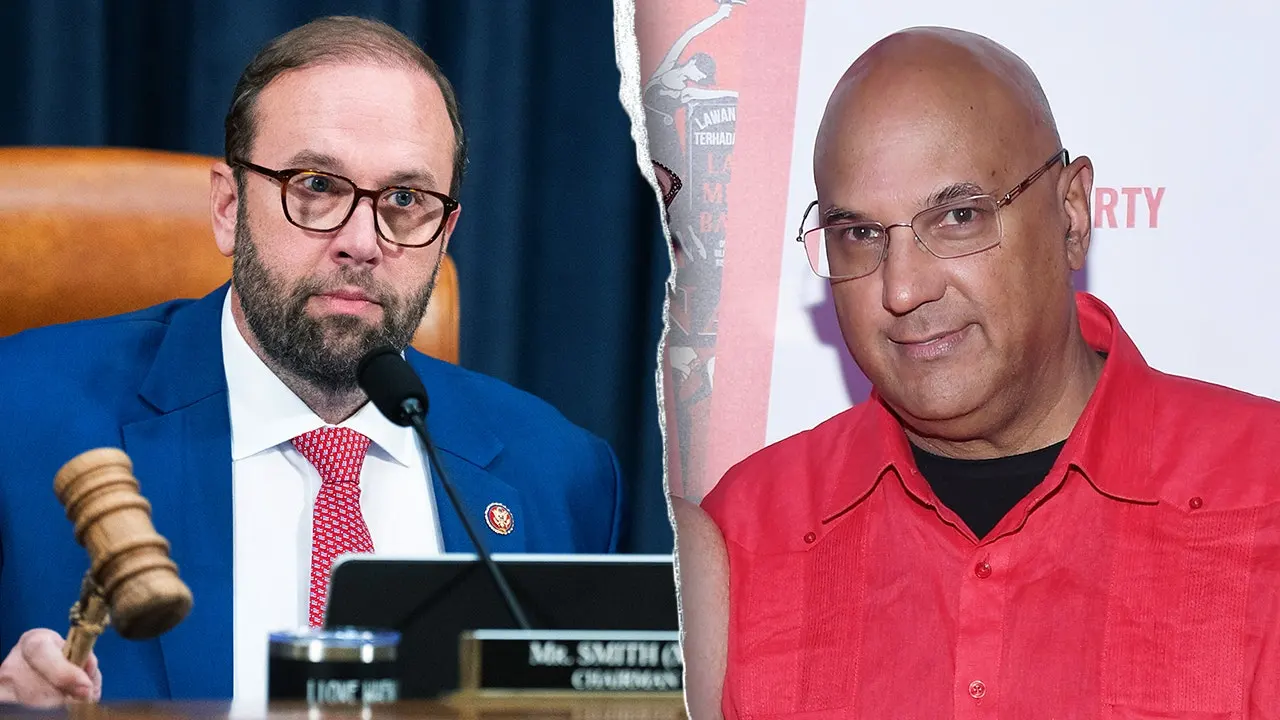
It begins to feel like a political thriller, except the subpoenas are real and the clock is ticking. The Republican-led House Ways and Means Committee has dramatically escalated its long-running investigation into three left-leaning nonprofits linked to Marxist software tycoon Neville Roy Singham, warning that if the groups don’t hand over a mountain of financial records by Tuesday, their top executives—and possibly Singham himself—could be summoned to Washington to testify under oath. In new letters announced this week, Chairman Jason Smith, R-Mo., renewed the committee’s demands with a stark choice: “Either these organizations turn over the documents, or their leaders will answer the Committee’s questions under oath.” The letters went to The People’s Forum, a New York City activist hub; BreakThrough News, a left-wing media outlet that shares a Manhattan address with the People’s Forum; and Tricontinental: Institute for Social Research, a Massachusetts-based Marxist think tank. According to Fox News Digital sources, Singham himself is among 21 individuals identified for potential questioning under oath. The list includes nonprofit executives, activists, and journalists connected to all three organizations. Smith’s statement framed the probe as a vital national security matter, saying Singham has “poured millions of dollars into these groups to take advantage of America’s nonprofit sector and promote Chinese Communist Party propaganda. That much is public. What these groups are fighting to keep hidden is even more concerning.” To the groups on the receiving end, however, the investigation itself is the problem. They argue that lawmakers are targeting their political views and punishing protected speech, a dispute that has now dragged on for more than a year and shows no signs of cooling down.
To understand why Washington is paying so much attention to a handful of small leftist organizations, you have to understand the man at the center of the storm. Singham is an American-born technology tycoon and longtime Marxist activist who sold his software company, ThoughtWorks, for an estimated $785 million in 2017 and now lives in Shanghai. The Ways and Means Committee alleges that he channeled money through a complex web of shell companies and donor-advised funds before it ever reached the three tax-exempt groups. Such arrangements, the committee says, “by design, obscure the original source of the contribution,” making it possible for foreign-linked money to sneak into U.S. political and cultural life without detection. Fox News Digital previously traced at least $278 million from Singham into six core U.S. nonprofits that served as funding hubs for a broader international network of activist organizations, media outlets, and think tanks promoting socialist, communist, and pro-China causes. Of that funding, the investigation found $22.44 million flowed to The People’s Forum, $16.76 million to Tricontinental, and $1.098 million to BreakThrough BT Media Inc., the parent organization of BreakThrough News. Together, those three received approximately $40.3 million—a figure the committee cited in its earlier correspondence. For lawmakers, that pattern raises a disturbing possibility: that a wealthy foreign-based ideologue is using tax-advantaged American nonprofits to influence public opinion in ways that benefit Beijing. The committee says it is examining whether existing tax laws adequately guard against this kind of foreign influence, and whether Congress needs to strengthen those laws. For the nonprofits, the numbers are just a sign of legitimate philanthropy from a rich American citizen, and they insist there is nothing sinister about accepting money from someone whose politics they share. But in an era of increasingly heated debates about foreign interference, the committee is not backing down easily.
The threatened depositions mark the latest escalation in a battle that began in 2025 with requests for financial records, intensified when the committee subpoenaed the three nonprofits in July, and has now moved to the personal level. The potential deposition targets include eight individuals at The People’s Forum, seven at BreakThrough News, and six at Tricontinental. Among those named are Manolo De Los Santos, executive director of The People’s Forum; education director Layan Fuleihan; organizing director David Chung; BreakThrough News editor-in-chief Ben Becker; news director Zoe Alexandra; chief correspondent Rania Khalek; and Tricontinental executive director Vijay Prashad. Singham is listed as chairman of Tricontinental’s international advisory board. The committee has not publicly announced that any deposition subpoenas have been issued to these individuals yet—but the threat is unmistakable. A deposition under oath before a congressional committee is not a casual chat. It is a formal legal proceeding in which lawmakers can ask probing questions, and witnesses must answer truthfully or risk criminal penalties. For journalists and activists who have built their careers on challenging American power, the prospect of being dragged before a hostile panel is deeply unsettling. It also raises serious legal and constitutional questions. The nonprofits’ attorneys have spent months arguing that the investigation is an unconstitutional fishing expedition designed to punish political speech. The committee, for its part, insists that the focus is not on what these people say or write, but on where their money comes from and how it is spent. In a political climate where every committee investigation invites accusations of tyranny from one side and cover-ups from the other, the fight over these three groups has become a proxy war for a much larger debate about the limits of congressional power.
BreakThrough News, in particular, is pushing back loudly. On Oct. 9, the outlet condemned the latest demands in a statement on its website, accusing the committee of targeting its journalists because of their political views. The outlet insisted that it receives no outside editorial direction and that its major donations come from U.S. organizations. During an episode of its BT Live program, hosts Zoe Alexandra and Rania Khalek—both on the list of potential deposition targets—denounced the committee’s demands in furious terms. “Unless BT gives up its legal rights, including our First Amendment protections, he’ll subpoena each of us individually and drag us to Washington for depositions,” Alexandra said. Khalek warned that lawmakers will “come after us individually if we don’t comply with their unconstitutional demands.” The outlet is not just complaining in public; it is organizing. BreakThrough News has urged supporters to sign a petition opposing the investigation and to donate money to help cover its legal expenses. The rhetoric on the left has been even hotter outside the organization. Prominent Twitch streamer Hasan Piker called the July subpoenas “the McCarthy trials” and warned, “They will come for you.” Medea Benjamin, co-founder of CodePink, described them as a “terrible attack on independent journalism.” The comparison to McCarthyism is deliberately provocative, invoking the memory of the House Un-American Activities Committee, which blacklisted artists and activists during the Red Scare. But to the lawmakers on the Ways and Means Committee, such comparisons are exactly the kind of overheated demagoguery that obscures the real issue: whether a foreign-based multimillionaire is exploiting loopholes in American tax law to push a foreign power’s agenda. The fight over language is, in many ways, a fight over the very narrative of the investigation.
The procedural history of the probe reveals how much friction has built up between the committee and the nonprofits. The committee first sought records from The People’s Forum in September 2025, then expanded the investigation to BreakThrough News and Tricontinental in February 2026. After the organizations challenged the initial requests, lawmakers narrowed their demands in May, and when that still didn’t produce cooperation, they issued formal subpoenas in July. The subpoenas sought records involving foreign-linked funding, financial arrangements, communications with Singham and other foreign interests, and detailed information about donors and overseas grants. Attorneys for BreakThrough News and The People’s Forum formally objected in August, arguing that the subpoenas violated First Amendment protections and demanded far more information than the committee’s legislative authority allowed. Their response was blunt, comparing the investigation to the House Un-American Activities Committee’s infamous investigations of suspected communist influence during the 1940s and 1950s. “A witch-hunt is not a valid legislative purpose,” the attorneys wrote in their Aug. 7 responses. They also accused lawmakers of repeatedly shifting the stated purpose of the investigation as their legal objections mounted. Yet despite all their protestations, both organizations left the door open for a negotiated resolution if the committee were willing to narrow its demands. The committee has so far rejected those arguments, maintaining that its investigation concerns the organizations’ finances and structure, not their politics or journalism. The conflict is now at a critical juncture. If the organizations do not comply by Tuesday, the committee could vote to hold them in contempt of Congress, triggering a long legal battle. Or it could issue individual deposition subpoenas and begin hauling journalists and activists before the panel one by one, turning the entire affair into a televised spectacle.
Meanwhile, the legal clouds surrounding Singham have grown darker. Fox News Digital previously reported that Singham is under federal grand jury investigation in the Southern District of New York for alleged financial crimes involving his nonprofit funding network. That investigation is examining possible wire fraud, bank fraud, money laundering, and other financial offenses. No criminal charges have been announced, but the existence of a grand jury probe adds a layer of serious legal jeopardy that goes far beyond congressional hearings. It suggests that federal prosecutors believe there may be a crime to find in the tangled web of shell companies and donor-advised funds that Singham allegedly used to move millions into left-wing causes. If the criminal investigation and the congressional investigation are reading from the same playbook, then Singham is facing pressure on two fronts simultaneously: public hearings in Congress and possible indictment in federal court. For the nonprofits, the moment is deeply consequential. If they continue to resist, they risk being branded as obstructionist and potentially facing contempt citations. If they comply, they risk exposing internal communications and donor lists that could deter future contributions and damage their reputations. The clock is ticking toward Tuesday, and the leaders of these groups—including Singham himself—are staring down the barrel of an oath before Congress. In a democracy, congressional oversight is a powerful tool; but when it is wielded against journalists and activists, it can feel like a weapon. The question now is whether the three organizations will hand over their books, face the light of public scrutiny, and answer questions under oath—or whether they will keep fighting, turning this obscure tax dispute into a landmark legal battle over the First Amendment, foreign money, and the limits of American political power.