


Paragraph 1
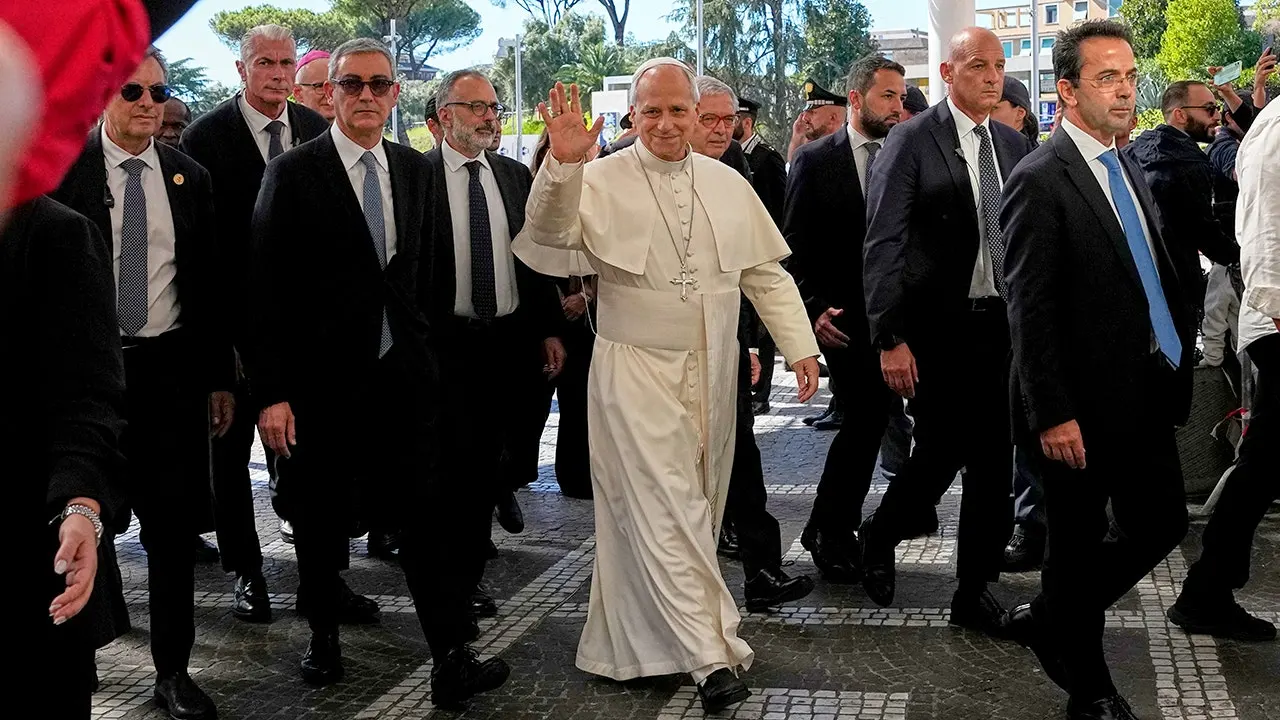
Rome’s Gemelli Hospital has long been a place where the weight of history meets the vulnerability of the human body. It is a building that has witnessed papal triumphs and papal fears, where white-robed figures have come as pilgrims not to a shrine, but to an operating table. On Wednesday morning, the world woke to a simple but deeply reassuring message from the Vatican: the night had passed calmly for Pope Leo XIV. After days of anxiety, after the shock of a cancer diagnosis, after the precise and delicate surgery that removed a portion of his right lung, the 71-year-old pontiff was resting, breathing, and beginning the slow, patient work of healing. The Holy See Press Office offered a measured update, noting that the pope had undergone scheduled blood tests and a chest X-ray. The results, doctors said, confirmed that his postoperative recovery was progressing normally, with all values falling within the expected range for the type of operation performed. For the faithful who had gathered in St. Peter’s Square, for the cardinals who had watched the news with grim faces, for the nurses and orderlies who had seen so many patients pass through these corridors, those words were a small, quiet miracle. The pope was not merely surviving; he was recovering. He had begun respiratory physiotherapy, those slow, careful exercises that teach the lungs to remember how to work after being opened and repaired. He was walking around his room, not yet striding through the Apostolic Palace, but taking the first tentative steps that would lead him back to the altar. And he was eating again, a simple breakfast and lunch that carried the profound significance of ordinary life returning. In a world where papal statements are often measured in doctrinal precision, this was something more intimate: a bulletin about a man’s body, his breath, his appetite, his fragile hold on health. It was, in every sense, a human update.
Paragraph 2
The road to this hospital room had been swift and startling. Only a few weeks earlier, Pope Leo had stood in St. Peter’s Square, his voice strong, his presence commanding, delivering an Angelus address that touched on the spiritual needs of the Church. But beneath that voice, somewhere in the depths of his right lung, a small nodule had been growing—a tiny intruder that had not yet announced itself with cough or pain. It was discovered, doctors said, at a very early stage and in a well-situated location, the kind of finding that can make all the difference between a routine procedure and a desperate fight. On Tuesday, the pope entered the operating theater at Gemelli Hospital for a procedure that would remove the lower lobe of his right lung. The surgery itself lasted about ninety minutes, though the pope spent roughly three hours in the operating room when anesthesia, preparation, and careful monitoring were taken into account. The surgeons, led by a team that included Dr. Luigi Carbone and Professor Stefano Margaritora, encountered no complications. The procedure was declared successful. But the deeper truth emerged when the tissue was examined under a microscope: the nodule was malignant. Pope Leo XIV had lung adenocarcinoma, a form of lung cancer. The diagnosis, the Vatican later explained, was confirmed through a tissue examination conducted during the operation, and it was consistent with what preoperative tests had suggested. There was no hedging, no euphemism. The word “cancer” hung in the air, stark and undeniable. Yet the statement that followed was also remarkably composed, almost clinical in its calm. The doctors spoke of expected ranges and normal recovery, of respiratory physiotherapy and the return of appetite. They did not speak of miracle, but perhaps they did not need to. The miracle, if there was one, lay in the timing—the nodule found early, the surgery scheduled quickly, the body responding well. In the long history of the papacy, such transparency about a pope’s health is rare. In the even longer history of human illness, the combination of skill, luck, and timely action is something to be cherished.
Paragraph 3
For all the medical terminology, the most moving words of the past days came from the pope himself. On Monday, before his surgery, Pope Leo had stood at the window of the Apostolic Palace and spoken directly to the crowds below. There was no grand theological reflection, no stern teaching, no sweeping vision for the Church. Instead, there was a confession of frailty, delivered with the same gentle directness that had come to define his papacy. “Doctors found a small lump in the lung,” he said. “It was identified at a very early stage and well situated.” He paused, as if weighing the words. “The doctors consider it appropriate to intervene and so, following their advice, I decided to have surgery to remove it.” There was something almost disarmingly simple about that sentence. The pope of Rome, the successor of Peter, the spiritual father of more than a billion souls, did not pretend to be beyond the reach of ordinary human fear. He did not claim that prayer alone would suffice, nor did he dismiss the skill of surgeons as irrelevant. He listened, he deliberated, and he chose life. He chose the knife, the anesthesia, the long and uncertain recovery, because that was what prudence and love demanded. “The surgery is already scheduled for the next few days,” he continued. “I thank you for your spiritual closeness and I rely on your prayer.” In those words, the distance between the pope and the people seemed to collapse. He was no longer an infallible teacher or a distant monarch. He was a man about to undergo a serious operation, asking for the same thing any of us might ask in that moment: companionship, prayer, the knowledge that we are not alone. The crowds in St. Peter’s Square responded with applause and tears. Across the world, churches opened their doors for rosaries and vigils. The pope’s humility had become a kind of sermon in itself—a reminder that even the highest office in Christendom cannot shield a body from the ordinary fragility of human existence.
Paragraph 4
The setting of this recovery has its own profound symbolism. The Gemelli Hospital is not just any medical center; it is the place where modern medicine meets the ancient institution of the papacy. Popes have come here before, for surgeries and treatments, for check-ups and emergencies. The hospital’s tenth floor contains a small papal apartment, designed to accommodate a pontiff who needs medical care while still allowing him to receive visitors, pray, and work when strength permits. It is a strange and humbling sight: the throne of Peter reduced to a hospital bed, the white zucchetto replaced by a surgical cap, the papal vestments swapped for a hospital gown. And yet, in that very strangeness, there is something deeply human and deeply Christian. The pope, after all, teaches that the Church is a hospital for sinners, a place of healing and mercy. Now he himself is the patient, receiving the care that the Church has always encouraged its members to provide for the sick. His doctors are not priests, but they perform a ministry of their own. The nurses who check his vitals and adjust his pillows are, in their own way, tending to the Body of Christ. The pope’s illness has also become a moment of transparency for the Vatican, which has historically been guarded, even secretive, about the health of popes. This time, the Holy See Press Office has issued regular bulletins, naming doctors, explaining procedures, and offering details that would have been unthinkable in earlier eras. This is not merely a PR strategy; it is a recognition that the faithful, who love their pope, deserve to know the truth. It is also a reflection of Pope Leo’s own character—a man who has always preferred honesty to mystique, simplicity to pomp. He has asked for prayers, and millions have responded. He has placed himself in the hands of surgeons, and they have responded with skill. The rest is now in the hands of God, a phrase that hangs in the air of every hospital room, whether the patient wears a crown or a cheap cotton gown.
Paragraph 5
In the days ahead, the pope’s recovery will be measured in small, unglamorous milestones. The blood tests and chest X-ray on Wednesday were only the beginning. He will need to breathe deeply, to clear his lungs, to resist the temptation to lie still when movement is what his body truly needs. The respiratory physiotherapy he has begun is not glamorous; it is a series of exercises designed to prevent pneumonia, to strengthen the remaining tissue, to coax the lungs back to full capacity. Walking around his room may seem trivial to a man who has traversed the globe, who has stood before enormous crowds and greeted presidents and kings. But after thoracic surgery, every step is a victory. Every breakfast and lunch eaten without difficulty is a sign that the body is cooperating, that the digestive system has not been rattled by anesthesia, that the long process of rebuilding is underway. The doctors have been careful to emphasize that everything is proceeding “as expected.” Those words are a physician’s way of saying that there is no cause for alarm, but also no cause for premature celebration. Recovery from lung surgery is a marathon, not a sprint. The pope will need weeks, perhaps months, to regain his full strength. He may tire easily. He may need to delegate more responsibilities. His schedule, once filled with audiences, ceremonies, and international travel, will likely be scaled back. But the Vatican has made it clear that the pope’s ministry will continue, even from his hospital room. He has already received spiritual communion, and he has reportedly been kept informed of the prayers and messages pouring in from around the world. The Church, after all, does not stop because its leader is sick. But it does pause, in a sense, to remember that its leader is human. The solemn ceremonies and grand liturgies can wait. The most important work right now is happening quietly, in the lungs of a 71-year-old man who is fighting to recover, one breath at a time.
Paragraph 6
There is, in this story, a lesson that transcends politics and religion. It is about the universality of human vulnerability. Pope Leo XIV, whatever one thinks of the papacy, has shown the world a face of courage that is not triumphant but tender. He did not hide his diagnosis. He did not pretend that everything was fine. He stood before the world and said, in effect, “I am sick, I am scared, and I need your prayers.” That kind of honesty is rare in public life, where leaders often cloak themselves in invincibility. It is even rarer in the Vatican, where the pope has often been viewed as something more than a man. But Pope Leo has always insisted on his humanity, and now he is living it in the most public and vulnerable way imaginable. The faithful who have prayed for him are not praying for a distant figure; they are praying for a fellow traveler, a brother who knows what it means to feel pain, to face uncertainty, to hope against hope. The doctors’ latest statement, with its calm language and measured optimism, is a gift to those who love him. But the deeper gift is the image of the pope himself—a man in a hospital bed, breathing slowly, walking carefully, eating his breakfast, trusting in the skill of his caregivers and the mercy of God. It is an image that will stay with those who have seen it, because it reminds us that holiness does not mean being untouched by suffering. It means being transformed by it. The road ahead will not be easy. There will be good days and bad days, moments of progress and moments of setback. But if the first chapter of this story is any guide, Pope Leo XIV will face it with the same grace, humility, and quiet determination that he has shown from the moment he first stepped onto the balcony of St. Peter’s Basilica. For now, the world can only do what he asked: pray, wait, and trust. And in that waiting, there is a strange and beautiful peace.