


Paragraph 1
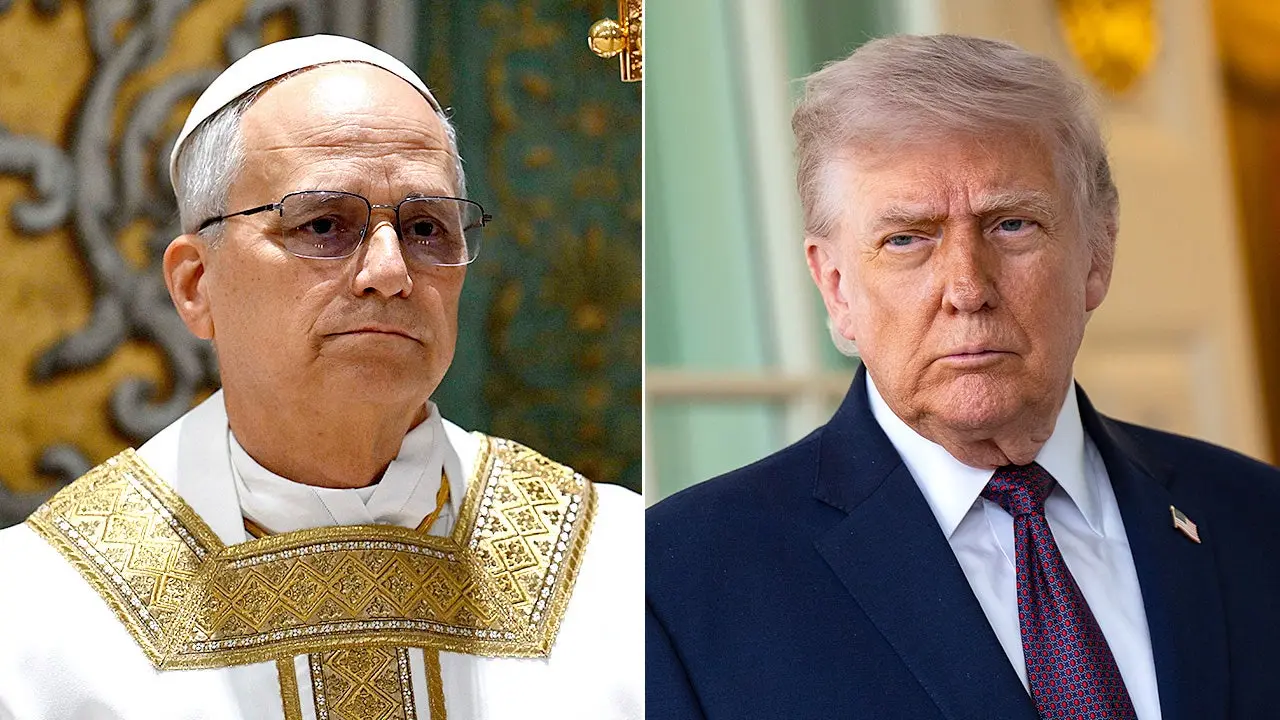
There are moments when the heavy machinery of politics suddenly stops, and something far more human breaks through. That was exactly what happened on Wednesday, as President Donald Trump sat aboard Air Force One traveling from Arizona to Montana. He wasn’t talking about tariffs, border security, or election strategy. Instead, he was speaking from a place of genuine concern about a man he has come to know in a deeply personal way: Pope Leo XIV. The 71-year-old pontiff had just been diagnosed with lung cancer, and the news had reverberated around the world. Trump’s voice carried a warmth that doesn’t always show in official statements or press briefings. He didn’t stand behind a podium; he simply talked to reporters, sharing his fears, his hopes, and his prayers. “I want to see Pope Leo get well,” he said. “I hear the prognosis for that type of a problem. It’s a cancer. It’s big stuff. Anytime you have cancer.” There was no spin, no political framing. Just a man acknowledging how frightening cancer is, especially for someone who has spent years serving others. Trump went on to say that the prognosis seemed good, and he had been watching the news closely. “We just want to wish him our love and our best wishes,” he added. It was a quiet, sincere moment that reminded us that even in the middle of high-stakes diplomacy and partisan division, a human heart still beats behind every headline. For a pope who had barely settled into his new role, this health crisis suddenly made him seem more relatable, more fragile, and more deserving of collective kindness.
Paragraph 2
The medical news itself was serious, and it hit the Catholic world with a jolt. The Vatican announced that Pope Leo XIV had been diagnosed with lung adenocarcinoma, a common but serious form of lung cancer. The discovery came after he underwent surgery at the Agostino Gemelli University Hospital in Rome, one of the most renowned medical centers in Italy. Doctors removed the lower lobe of the pontiff’s right lung during a procedure that lasted about ninety minutes. They reported no complications, which was the first small mercy in an otherwise frightening ordeal. The Holy See Press Office clarified that the cancer diagnosis was confirmed through an examination of tissue collected during the surgery, and that it matched what doctors had found in earlier tests. This was not a surprise discovery made on the operating table; Pope Leo himself had already told the world that doctors had found a small lump in his lung at an early stage and had strongly recommended surgery. He had gone into the procedure with the same calm that has come to define his early papacy, trusting in the medical team and in something larger than himself. After waking up normally from the anesthesia, he was moved back to his hospital room after a brief period of observation. The sense of relief was cautious but real. For a leader who has already captured the hearts of millions with his humility, his willingness to be transparent about his condition only deepened the public’s affection. There was no secrecy, no hidden agenda, just a straightforward acknowledgment of human vulnerability. That honesty, combined with the skill of the surgeons and the prayers of the faithful, created a fragile but genuine hope that this would be a chapter of recovery rather than tragedy.
Paragraph 3
What made the president’s remarks even more unexpected was the personal connection he revealed. Trump told reporters that he is friends with the pope’s brother, and he couldn’t help but smile when describing him. “His brother is a friend of mine, who’s a great — he’s a fantastic guy — and his wife. You know, they’re big Trump supporters. They have MAGA all over their house,” the president said. The image was striking: a family seemingly split between the highest office of the Catholic Church and the most colorful American political movement of our era. Yet Trump relayed the details with affection, not irony. He spoke of the brother’s deep love for Pope Leo, saying, “I can say that his brother loves him a lot. Loves the pope a lot.” In that simple sentence, the story transcended politics. Here was a pope, chosen by the cardinals, leading a global faith, still very much the beloved sibling of an ordinary family. And here was a president, often known for his combative style, softening when he spoke about his friends and their worries. The connection also underscored something essential: people are never just their titles. The pope’s brother may have MAGA flags around his house, but his first priority was clearly his brother’s well-being. The president’s words suggested that their friendship goes beyond policy or ideology. It has become a relationship rooted in mutual respect and personal care. In an age when every conversation seems polarized, this unlikely bond between a Trump-supporting family and a pope who leads millions of Catholics offered a gentle reminder that love can cross even the strangest divides. The brother may cheer for Trump, and the pope may lead a faith tradition with complex social teachings, but both of them apparently know what it means to stand by a family member in difficult times.
Paragraph 4
The broader significance of Pope Leo’s illness cannot be overstated, and not just because he is a spiritual leader to more than a billion people. He was elected relatively recently, and the early months of his papacy have been marked by dedication, energy, and an eagerness to engage with the modern world. He had just begun a historic four-day visit to France, meeting with leaders and addressing crowds with his characteristic blend of wisdom and warmth. The news of his lung cancer diagnosis interrupted that momentum, forcing a sudden reassessment of what lies ahead. For Catholics, the pope is not simply a politician or a celebrity; he is a living symbol of continuity, faith, and moral guidance. To hear that he is sick is to feel a collective ache, a reminder that even the vicar of Christ on earth remains mortal. But the reaction around the world has also been one of astonishing tenderness. Leaders from every continent have sent messages of support. Ordinary people have gathered in churches to light candles and say prayers. In Rome, the hospital has become a site of vigil, with faithful pilgrims standing outside, clutching rosaries and holding up handwritten signs with simple messages: “Get well soon, Holy Father.” This outpouring of love is a testament to the kind of pope Leo XIV has already become. He has been known to visit the poor, to speak plainly about the challenges of faith, and to carry himself with a humility that seems rare among those who hold great power. His illness, while tragic, has given the world an opportunity to show him the same compassion he has so often shown others. It has also reminded us that no matter how high someone rises, they still need care, comfort, and the prayers of those who believe in them.
Paragraph 5
For President Trump, the news of Pope Leo’s cancer landed at an interesting moment in their complicated relationship. Trump has never been a conventional Catholic ally, and his administration has seen its share of conflict with church leaders over issues ranging from immigration to social justice. At the same time, Trump has always spoken warmly about the pope as a person, and he has repeatedly expressed admiration for the reverence and devotion of the Catholic faithful. Earlier, he had even taken aim at Pope Leo’s meeting with Chicago’s mayor, referring to the official as “useless” in his typical blunt style. But that political sparring seemed irrelevant on this day. When the president stood beside a window aboard Air Force One and talked about his friend’s brother, he was not engaged in diplomacy or negotiation. He was simply being human. He acknowledged the gravity of the situation, refusing to sugarcoat what a cancer diagnosis means. “It’s big stuff,” he said, and those three words carried enormous weight. They were the words of someone who has known people who have faced cancer, and perhaps mourned those who did not survive. Yet he also chose hope, pointing out that the prognosis appeared favorable and that the pope was in good hands. He ended with a simple plea: “Get better fast.” There was no political posturing, no need to score points, no attempt to claim credit. It was just a prayer from one leader to another, a reminder that at the end of the day, we all share the same fragile existence. If nothing else, that moment revealed a side of the presidency that is often hidden behind the noise and the headlines: the quiet, unguarded empathy that comes when someone you know is hurting.
Paragraph 6
As the world waits for more news from Rome, there is a palpable sense of hope mixed with anxiety. The surgery was successful in the sense that no complications were reported, but recovery from lung cancer is rarely a straight line. There will be scans, follow-ups, and long periods of waiting. The pope will need rest, and he will need to allow himself to be cared for, which is often harder than any procedure. For the Catholic Church, this is also a test of institutional resilience. The faithful will look to their leaders to keep things moving while the Holy Father heals, and they will pray for a strength that is both physical and spiritual. But perhaps the most powerful takeaway from this news cycle is how quickly everyone, regardless of their beliefs or politics, seemed to come together. President Trump’s heartfelt message, the Vatican’s transparent updates, the concerned faces of strangers in St. Peter’s Square, all of it pointed to a simple truth: we are all connected. Pope Leo XIV may be a towering figure in the eyes of the world, but he is also just a brother, a friend, and a man in a hospital bed. The love his brother shows him, and the love that people of every faith have shown him, is the best medicine that any of us can offer. So we send our own good wishes, our own quiet prayers if we are inclined, and our own hopes that this story will have a soft, bright ending. In the meantime, the memory of Donald Trump’s voice, softened by affection and concern, stands as a small but meaningful reminder that some things matter more than politics. We wish Pope Leo courage, comfort, and a swift recovery. And we hope that in a few weeks, we will see him smiling again, fully healed, ready to continue his journey of service.