


Trump, Musk, and South Africa’s Affirmative Action Fight: Inside the Clash Over B-BBEE
A White House Campaign With a Familiar Target
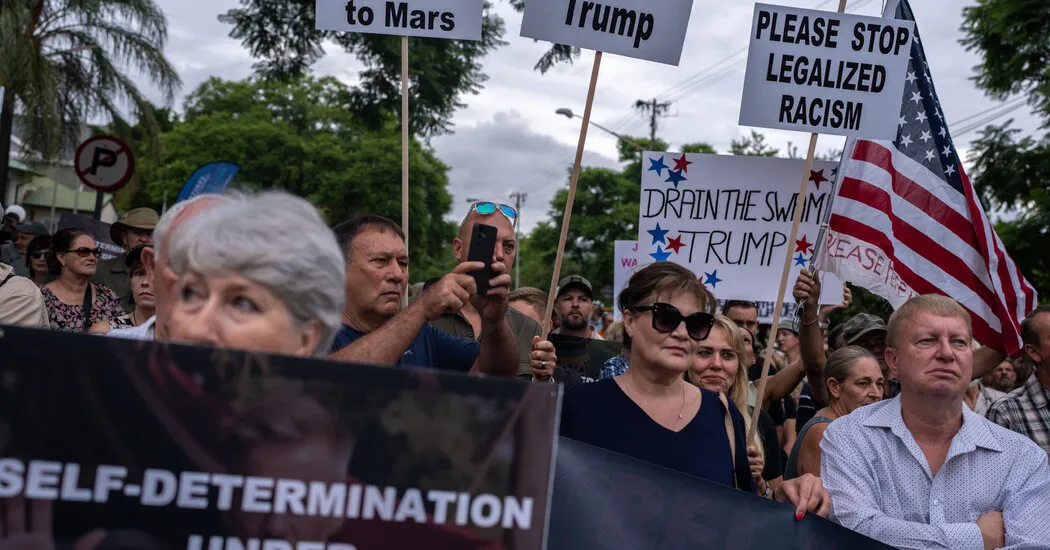
At the heart of the widening rift between Washington and Pretoria lies a policy that most Americans have never heard of, but that President Trump and his allies have turned into a symbol of racial discrimination. Broad-Based Black Economic Empowerment, better known as B-BBEE, was designed by South Africa’s democratic government to dismantle the economic architecture of apartheid. More than two decades later, it has become one of the most fiercely debated pieces of legislation in the country. The Trump administration has repeatedly attacked the policy, arguing that it discriminates against white business owners and discourages American investment. Administration officials have framed B-BBEE as a trade barrier and a moral wrong, insisting that U.S. companies should not be forced to comply with ownership quotas based on race. Trump’s own opposition to affirmative action is well documented; he has spent years railing against similar measures in the United States. Now, his administration is using the full weight of American diplomatic and economic power to pressure South Africa to overhaul or abandon its version of the idea. In early 2025, Trump issued an executive order suspending foreign assistance to South Africa and directing federal agencies to prioritize relief for what the administration called victims of “unjust racial discrimination.” The order did not single out B-BBEE by name, but the White House has made clear that the empowerment framework is a central target. For South Africans who lived through apartheid, the American criticism is deeply unsettling. They see the policy not as a form of reverse racism but as a necessary corrective to centuries of forced exclusion. The dispute is no longer a quiet diplomatic disagreement. It has become a public, escalating confrontation, fueled by presidential politics, billionaire influence, and a growing global debate over how countries should confront historical injustice. And at the center of it all is a simple but profound question: what does fairness actually look like in a country where the economy was built on racial exclusion?
The Apartheid Legacy That Shaped B-BBEE
To understand why the policy exists, one has to go back to apartheid. For nearly half a century, South Africa’s white minority controlled the levers of political and economic power. Black South Africans were denied property rights in most of the country, barred from skilled professions, forced into underfunded schools, and confined to townships and rural reserves that offered little chance of advancement. When apartheid collapsed in the early 1990s, the racial wealth gap was staggering. White South Africans, a small fraction of the population, owned the overwhelming majority of land and business assets. Black South Africans, who made up the vast majority of the country, held a tiny share of its wealth. The first democratic government introduced Black Economic Empowerment in the 1990s, but the program was criticized for enriching a small, politically connected elite. In response, Parliament passed the Broad-Based Black Economic Empowerment Act in 2003. The law was designed to spread opportunity more widely, not just through employment but through ownership, management, skills development, and supplier contracts. B-BBEE works through a scorecard system. Companies are evaluated on several pillars, including Black ownership, management control, skills development, enterprise and supplier development, and socio-economic development. A company’s score determines its “contributor level,” which can affect its ability to win government tenders, obtain licenses, and do business with larger firms. The ownership requirement is by far the most contentious piece. For certain licenses and contracts, companies must have a meaningful degree of Black ownership. Critics say this amounts to racial quotas and unfairly penalizes white business owners. Supporters argue that ownership is the only way to break the concentration of wealth that apartheid created. Over the years, the rules have become extraordinarily complex, with different codes for different sectors and a tangled web of exemptions, verification agencies, and compliance consultants. That complexity has made the policy easy to attack and difficult to defend — and it has turned B-BBEE into one of the most polarizing issues in South African public life.
Elon Musk, Starlink, and the Ownership Rule That Started a Firestorm
No one has done more to bring the B-BBEE fight to the White House than Elon Musk. The South Africa-born billionaire, who grew up in Pretoria during the final years of apartheid, has become one of the most powerful figures in American politics. As a major Republican donor and a close advisor to President Trump, Musk has a direct line to the Oval Office. He has used that influence to amplify a very personal grievance: his satellite internet company, Starlink, has been unable to operate in South Africa because of the country’s affirmative action rules. Under South African law, companies that want to obtain a telecommunications license must meet certain B-BBEE requirements, including a significant level of Black ownership. Starlink, a division of SpaceX, has resisted that condition. Musk has described the rules as racist, arguing that they punish foreign companies and block much-needed investment in South Africa. He has said that his global businesses already create jobs and opportunities in ways that should satisfy the spirit of transformation, even if they do not meet the letter of the ownership requirement. South African regulators, however, have held firm, insisting that the law applies to every company that wants to operate in the country. The Starlink dispute has turned a technical regulatory matter into a geopolitical flashpoint. Musk’s personal stake in the issue has given the Trump administration a powerful narrative: that South Africa’s empowerment policies are not just outdated but hostile to innovation, enterprise, and American interests. His advocacy has helped move the debate from the margins of diplomatic relations to the center of U.S. policy. Whatever one thinks of the B-BBEE rules, there is no doubt that Musk has reshaped how Washington sees them.
Washington’s Ultimatum: Change the Law or Face Consequences
The American threat is not abstract. U.S. officials have said repeatedly that they will continue to punish South Africa unless the affirmative action laws are changed. The administration has suspended foreign assistance, criticized South Africa in international forums, and issued executive orders that treat the country’s racial policies as a human rights concern. The White House has also signaled that American companies could face pressure to avoid investing in South Africa if the B-BBEE framework remains in place. For South Africa, the stakes are enormous. The United States is one of its largest trading partners, and American firms employ tens of thousands of South Africans across technology, finance, manufacturing, and retail. A prolonged confrontation could scare off investors, raise the cost of doing business, and further weaken an economy that is already struggling with high unemployment and slow growth. The South African government has pushed back, insisting that it has the right to design policies that address its own history and that foreign pressure will not dictate domestic law. President Cyril Ramaphosa has defended the broad goals of B-BBEE while acknowledging that the policy needs reform. But Washington’s position remains uncompromising. From the administration’s perspective, the policy is a form of race-based discrimination that cannot be justified, no matter how much history lies behind it. That stance has resonated with some American conservatives, who see B-BBEE as an extreme example of the affirmative action policies they have long opposed at home. The result is a diplomatic standoff with no easy exit. South Africa does not want to be seen as yielding to coercion, and the United States does not want to appear to back down. In the meantime, the economic consequences are beginning to ripple through boardrooms on both sides of the Atlantic.
A Nation Reckons With Its Own Empowerment Policy
The outside pressure has forced South Africans to confront uncomfortable questions about B-BBEE’s record. Even many supporters of the policy admit that it has not delivered what it promised. Economic inequality remains deeply racial, but the benefits of empowerment have often flowed to a small, politically connected elite rather than to the poor. The phenomenon known as “fronting” — where white-owned companies install Black figureheads to satisfy ownership requirements — has undermined the credibility of the entire system. Meanwhile, unemployment remains above 30 percent, and young Black South Africans continue to face enormous barriers to economic opportunity. Ramaphosa has said that the empowerment framework needs to be revised, and he is not alone. Across South Africa’s political spectrum, there is broad agreement that the policy must change. But there is little consensus on how. Some reformers want to simplify the rules and shift the focus from ownership quotas to job creation, skills training, and support for small businesses. Others want to go further, arguing that race-based criteria should be replaced by poverty-based criteria that target all disadvantaged South Africans, regardless of race. Still others insist that B-BBEE has not gone far enough and that the state should take more aggressive steps to redistribute wealth and ownership. The American ultimatum has made the debate more urgent, but it has also made compromise harder. No South African leader wants to be seen as rewriting the country’s laws at the insistence of Washington, especially when the policy is rooted in a history that many Americans do not fully understand. Yet refusing to engage with the criticism could carry a heavy price. The conversation about B-BBEE is no longer just a domestic matter. It has become a test of South Africa’s sovereignty, its economic pragmatism, and its ability to navigate a shifting global order.
A Complex Code, a Global Crossroads
For anyone trying to make sense of the conflict, the most frustrating part is the sheer complexity of the policy itself. B-BBEE is not a simple quota system. It is a sprawling framework of codes, charters, scorecards, and verification procedures that can be almost impossible to navigate without expert help. There are different rules for large companies, small companies, and multinationals. There are specialized charters for the financial sector, the agricultural sector, the tourism industry, and many others. A company’s compliance level can affect its access to government contracts, its ability to secure licenses, and its standing in the private sector. For international investors, the costs of compliance can be substantial, and the uncertainty can be even more daunting. Yet for all its complexity, the underlying goal is straightforward: to make sure that the people who were locked out of the economy under apartheid are no longer locked out forever. That is why the American demand to dismantle or gut the policy touches such a raw nerve. When U.S. officials describe B-BBEE as racist, many South Africans hear a rejection of their history and their struggle. When critics of the policy hear South African leaders defend it, they hear a refusal to acknowledge its failures. The truth lies somewhere in between, and finding it requires more than a headline. It requires a deeper understanding of what the policy was created to do, what it has actually achieved, and how it might be reformed without losing sight of its purpose. As the confrontation between Washington and Pretoria intensifies, those questions are no longer academic. They are shaping the future of South Africa’s economy, the fate of its relationship with the United States, and the broader global debate over race, reparations, and economic justice. How much do you really know about affirmative action in South Africa? The quiz below is a good place to start.