


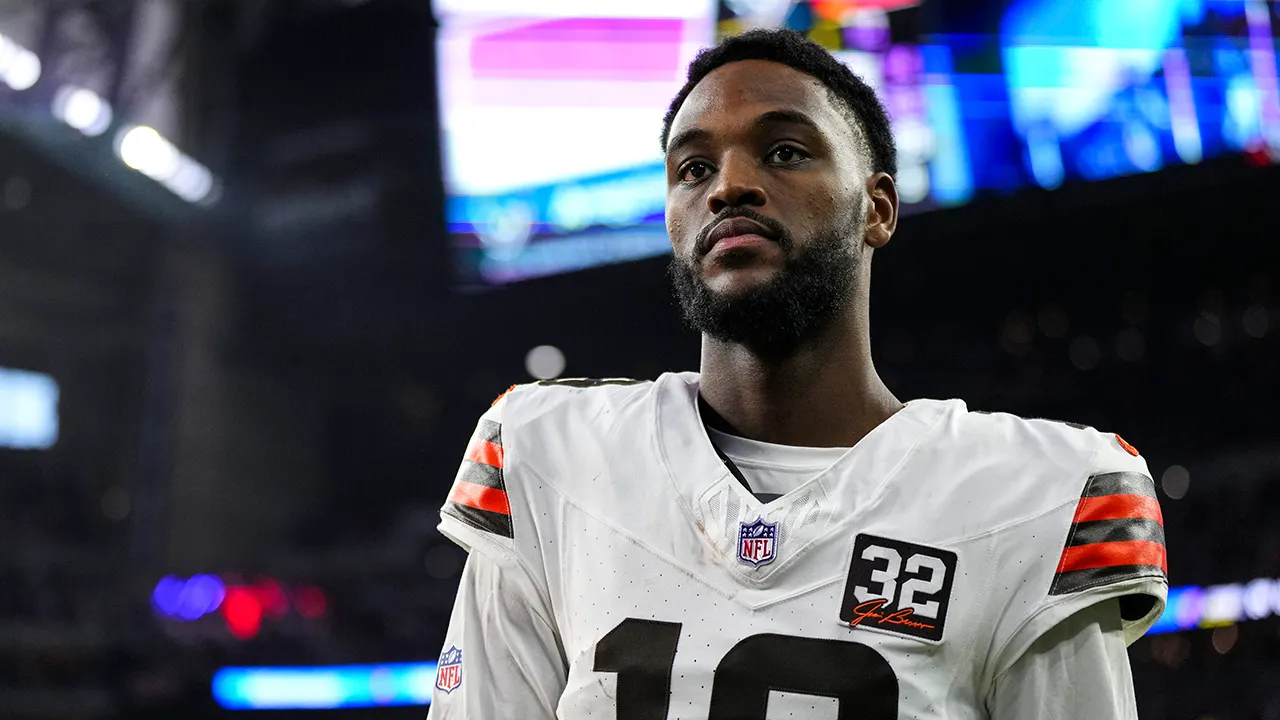
David Bell was the kind of athlete who never made excuses. He was not the most famous player on the Cleveland Browns, and he was never going to be the loudest voice in the locker room, but he had earned his place through years of quiet, relentless work. At Purdue, Bell turned himself into one of the most productive wide receivers in college football. He was honored as the Big Ten Receiver of the Year, and he left the program as a proven playmaker with the kind of reliability that coaches value. When the Browns selected him in the third round of the 2022 NFL Draft, it felt like the beginning of a long and bright story. Bell spent the next three seasons developing his craft. He played in 32 games and accumulated 41 catches for 408 yards and three touchdowns, including a 214-yard rookie season that offered a glimpse of his potential. He was not yet a household name, but he was on the path. He was trusted. He was learning. He was only 23 years old when the 2024 season began, with the bulk of his career still in front of him. Then, in Week 2 of that season, Bell felt a pain in his hip during a game. He assumed it was one of those injuries that every NFL player fights through at some point. He never imagined that this single moment would lead to a medical disaster, a multimillion-dollar lawsuit, and a forced retirement at the age of 24. All he wanted was to heal, get back on the field, and continue the journey he had worked his whole life to complete. Instead, he found himself in an operating room, under the knife of a surgeon he did not know, undergoing a procedure that should never have been recommended in the first place.
The exact details of what happened after Bell’s hip injury are laid out in the lawsuit he filed in Philadelphia. According to the complaint, Bell met with a team of medical professionals, including Dr. William Meyers, a surgeon with a national reputation for treating core injuries in elite athletes. The lawsuit alleges that Meyers and the other doctors showed Bell scans that they insisted proved he needed surgery. The proposed operation was described as a core muscle repair, a procedure most fans know as sports hernia surgery. That surgery is real, and it has helped countless players return from debilitating groin and abdominal pain. But Bell says he was not one of the people who needed it. The scan images, he claims, were misleading. They were presented in a way that made a minor issue seem far more serious, or perhaps even misread entirely, in order to justify a procedure that Bell never required. The lawsuit states that this was not an isolated mistake but rather a profit-driven pattern. Bell was a professional athlete with a bright future, and to the doctors he appeared less like a patient and more like an opportunity. A successful surgery in such a high-profile case can bring referrals, publicity, and revenue. That kind of incentive can cloud medical judgment. Bell did not know any of this at the time. He was a young player doing what all young players are taught to do: trusting the institution, following the advice of the experts, and avoiding any decision that might be viewed as questioning the medical staff. When a doctor with a major reputation says “you need surgery,” a 23-year-old athlete does not say “are you sure?” He says “when can I get it done?” And so he scheduled the operation, believing it would fix his hip and send him back to the field. Instead, it sent him to the emergency room.
The nightmare began during the surgery itself. The lawsuit alleges that Dr. Meyers cut Bell’s femoral artery, the major blood vessel that carries oxygen-rich blood from the heart to the lower half of the body. A puncture or tear in the femoral artery is a life-threatening emergency. Blood can pour into surrounding tissue at an alarming rate, and if the bleeding is not controlled quickly, the patient can go into shock, suffer permanent damage, or die. Bell, according to the complaint, was not immediately treated for this complication. The clinic where his surgery was being performed was not prepared to deal with a vascular catastrophe of that magnitude. It did not have the necessary equipment on hand, and the personnel were not capable of stabilizing him. So Bell had to be loaded into an ambulance and rushed to Thomas Jefferson Hospital, a much larger facility. By the time he arrived, he had lost a massive amount of blood and was in a life-threatening condition. The doctors at Jefferson worked frantically to repair the damaged artery, stop the internal bleeding, and save his leg. They succeeded in the sense that Bell survived. His leg was not lost, and his heart continued beating. But the phrase “saved his life” is not an exaggeration. Had the ambulance been slower, had the bleeding been heavier, had the surgeons at Jefferson not been able to repair the artery in time, Bell could have died on the table or been forced to live with a lifelong disability. Instead, he walked away from the hospital with a permanently damaged body and a future erased. For a man whose entire life had been built around athletic movement, the damage was not just physical; it was existential. He could no longer trust his body, and he could no longer trust the medical system that was supposed to protect him.
The weeks and months that followed the surgery were a blur of pain, recovery, and unanswered questions. Bell wanted to believe that he could return to the field, that the damage done by the unnecessary operation and the emergency procedure could be healed with enough time and effort. But as he tried to rehab, it became clear that the setback was too severe. He could not run with the same explosiveness. He could not plant and cut without agony. The kind of sudden movements that define a wide receiver’s job were no longer possible. Bell could not play the game he loved at the level required by the NFL, and so the Cleveland Browns placed him on the reserve/retired list in 2025. At 24 years old, Bell was forced to admit that his playing career was finished. The statistics from his three professional seasons are not the stuff of legend: 41 catches, 408 receiving yards, three touchdown receptions, and 214 receiving yards as a rookie. But they represented something far greater to Bell than numbers on a page. They represented every practice, every film session, every sacrifice he had made to become an NFL player. They represented the potential for more—more contracts, more touchdowns, more moments in the spotlight. And because of what happened in that surgical suite, he will never get to chase those moments. There is a devastating emotional component to losing an NFL career in this way. Athletes spend their entire lives being told that their worth is measured by what they can do on a field. When that ability is taken away by someone else’s negligence, the psychological wound can be as painful as any physical scar. Bell was not given the chance to leave the game with dignity, on his own terms. He was taken from it, and now he is left to rebuild a life that was shattered by a decision he never should have had to make.
The lawsuit Bell has filed is his attempt to make the people responsible for his suffering answer for what they did. It names Dr. William Meyers, Jefferson Health, and 14 other defendants, all of whom Bell says played a role in the deception, the unnecessary surgery, or the aftermath. The complaint asks for more than $300 million in damages. That number is not the product of greed. It is the result of a careful calculation of everything Bell lost. First, there are the future NFL contracts he will never sign. A player who enters the league in his early twenties and performs well can expect to earn tens of millions of dollars over the course of a career, and Bell was on the path to a bigger deal. Second, there are the endorsement opportunities that come with NFL success. Third, there is the pain and suffering Bell endured during the surgery and the emergency that followed, and the permanent physical damage that will affect him for the rest of his life. Fourth, there is the loss of a career he loved, a loss that cannot be measured in dollars alone. The lawsuit also alleges that the scan results were deliberately misleading and that the doctors were operating out of financial self-interest rather than medical necessity. That is a serious accusation that strikes at the heart of the doctor-patient relationship. The Browns are not named in the suit, nor are they accused of wrongdoing. The doctors and healthcare organizations have not yet formally responded in court, so there are still two sides to this story. But regardless of how the litigation resolves, Bell’s life is permanently changed. He will never get back the years he lost, and the legal system’s only real power is to provide a measure of compensation and accountability.
Bell’s story deserves to be seen not just as an NFL headline but as a human tragedy with uncomfortable lessons for everyone. Professional athletes are expected to be invincible. They play through broken fingers, torn muscles, and concussions. They are celebrated for their toughness, but that very toughness can make them vulnerable to exploitation. They are taught to trust the people in charge, and that trust can be weaponized. The lawsuit Bell filed paints a picture of a healthcare environment where profits were put ahead of patients, and where the pressure to operate was stronger than the commitment to simply care. It is a problem that exists far beyond football. Unnecessary procedures are a known issue in American medicine, where doctors can be compensated for doing more, not less. The Department of Justice’s recent charges against 19 defendants in an alleged $4 million Medicare and Medicaid fraud scheme in Philadelphia is just one example of how vulnerable the system is to bad actors. While Bell’s case is separate, it fits within a larger pattern of medical misconduct that affects people from all walks of life. Bell’s decision to speak out and sue is a form of advocacy. He is standing up not only for himself but for every athlete who has ever been told “you need surgery” without being given the full story. His case may encourage others to ask for second opinions, to demand access to their medical records, and to be skeptical of advice that seems too aggressive. It may prompt hospitals and surgical clinics to review their emergency protocols and ensure that they are equipped to handle complications. And it may inspire a broader conversation about how the sports medicine industry treats the players whose bodies are its currency. No amount of money can give David Bell back his health. No verdict can make him a football player again. But his fight can mean that another young man or woman will not have to suffer the same fate. In the end, that is the only justice that can truly honor what he lost.