

Paragraph 1: The Gift and the Moment
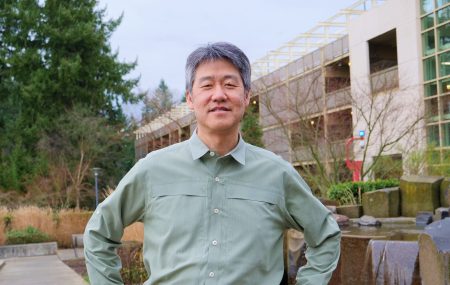
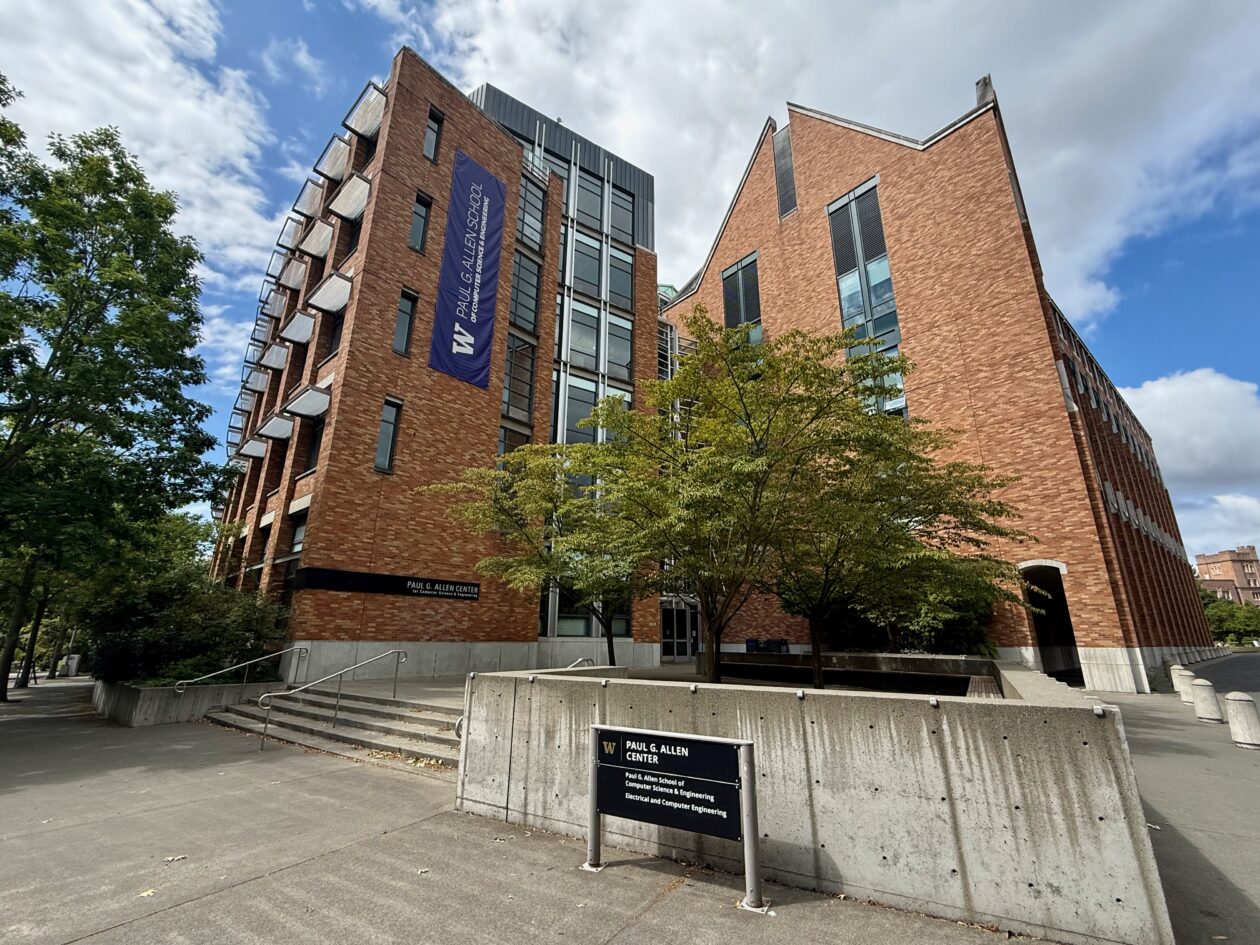
On an autumn morning in Seattle, the kind that arrives with a crispness in the air and a slight mist rolling off the Puget Sound, the University of Washington quietly became the recipient of something far more powerful than a check—it received a vote of confidence from across the Pacific. The Paul G. Allen School of Computer Science & Engineering, housed within the College of Engineering, is no stranger to acclaim; it has long been a beacon of innovation, drawing brilliant minds from around the world. But when a semiconductor giant with deep roots in Taiwan decided to make a statement, it did so in the language that universities understand best: a $12 million gift. The donation, formally announced with the kind of measured optimism that accompanies such milestones, comes from Winbond Electronics Corporation America, the U.S. arm of the Taiwan-based powerhouse Winbond Electronics Corp. At the center of this story is Arthur Y.C. Chiao, a man whose name might not ring familiar to the broader public but whose professional life has been inextricably woven into the fabric of global technology for nearly four decades. Chiao, who now serves as Winbond’s chairman and CEO, is not a distant philanthropist writing checks from a corporate skyscraper in Taipei. He is, in a very real sense, a product of the University of Washington—a graduate whose master’s degree in electrical engineering was earned more than forty-five years ago, during a time when the personal computer was still an exotic curiosity and the integrated circuits that would later power everything from smartphones to self-driving cars were just beginning their march toward ubiquity. That this particular graduate chose to give back in such a significant way, and that his company has thrown its weight behind a homegrown institution, says more than any press release could ever convey. It speaks to a conviction that education is the bedrock upon which entire industries are built, and that bridges between nations are best constructed with knowledge, research, and a genuine sense of gratitude.
Paragraph 2: The Man Behind the Million
To understand the true weight of this gift, it helps to step into the shoes of Arthur Y.C. Chiao at a moment when the world was very different. In 1980, freshly arrived from Taiwan or perhaps already familiar with American academic life, Chiao found himself in the lecture halls and laboratories of the University of Washington, a campus perched between the blue of Lake Washington and the vast green of the Pacific Northwest. He was a young man studying electrical engineering, absorbing equations, probing the behavior of semiconductors, and laying the groundwork for a future he couldn’t have fully imagined. Back then, the terms “artificial intelligence” and “quantum computing” were the stuff of science fiction, not strategic roadmaps. After completing his master’s degree, Chiao went on to join Winbond in 1987, climbing through the ranks with a combination of technical acumen and long-term vision that would eventually place him in the chairman’s seat. His journey mirrors that of many immigrant students who come to America, find mentorship and opportunity in academic institutions, and then leave to build careers that echo far beyond any single classroom. Yet, it is rare for that journey to loop back so generously. When Chiao speaks about the University of Washington, he does so with a reverence that suggests those formative years in Seattle left an enduring imprint on his soul. “Seattle is a gateway to the Pacific Northwest of North America,” he said, “and the University of Washington will play an important role in connecting future technology innovation between North America and East Asia.” These words, measured and deliberate, reveal a man who sees the big picture—who understands that technology thrives not in isolation but at the intersections of cultures, disciplines, and even continents. His personal history made the gift more than a corporate transaction; it made it a homecoming of sorts, a reunion with a place that shaped his mind and, by extension, his life.
Paragraph 3: The Fund and Its Purpose
The heart of this transformative donation is the establishment of the Winbond Endowed Fund for Excellence in the College of Engineering. On its surface, the fund reads like a laundry list of academic priorities: student scholarships, faculty recruitment and retention, research initiatives, and interdisciplinary collaboration. But beneath these bureaucratic categories lies a profound intention—a belief that universities require sustained, flexible resources to pursue the kind of bold, messy, and occasionally serendipitous work that drives genuine discovery. Scholarships, in particular, carry a deeply human dimension. They open doors for students who might otherwise never step foot on a campus like the UW, young people whose brilliance is matched only by their financial need. Faculty recruitment and retention is another quiet engine of excellence; great professors are the beating heart of any institution, and retaining them requires more than competitive salaries—it requires an ecosystem that celebrates risk-taking and intellectual curiosity. Nancy Albritton, the dean of the College of Engineering, captured the essence of the gift when she noted that “Arthur Chiao’s vision, leadership and lifelong commitment to the University of Washington make this gift especially meaningful.” She could have easily added that the timing, too, is significant. Chiao himself envisions the fund as “a catalyst for breakthrough discoveries,” a tool that will allow the college to “pursue bold initiatives and respond to evolving opportunities in engineering, technology and fields of future strategic importance.” He listed semiconductors, artificial intelligence, quantum technologies, and advanced manufacturing among these opportunities—fields that are not only academically exciting but have become matters of geopolitical heft. The fund, then, is not merely a monetary endowment; it is a stake in the future, a wager that the most important technological answers will emerge from animated, well-supported academic communities.
Paragraph 4: The Institution and Its Reach
To appreciate why this gift matters, one must also understand the scale of the institution that will receive it. The College of Engineering at the University of Washington is not a small, niche department waiting to be put on the map; it is one of the university’s largest and most consequential colleges. Last fall, it enrolled 10,136 students—a staggering number that speaks to the demand for engineering education in the Pacific Northwest and beyond. The faculty, numbering approximately 350, are not just teachers but researchers, inventors, and mentors who push the boundaries of what is possible. The college proudly notes that it is the fifth-largest producer of electrical and computer engineering graduates in the United States, a statistic that carries real weight in a world hungry for technical talent. Every year, these graduates fan out across the technology sector, working for companies in Seattle’s booming tech corridor, in Silicon Valley, and increasingly, in global markets that span the Pacific Rim. The university’s location is itself an asset. Seattle is a city defined by its geography—nestled between mountains and water, a natural gateway to Asia and a crossroads of commerce. The presence of Boeing, Microsoft, Amazon, and a dense ecosystem of startups and research labs has transformed the region into a kind of living laboratory. The College of Engineering sits at the center of this dynamism, its faculty collaborating with industry, its students flowing into internships and employment, its research projects addressing everything from energy infrastructure to biomedical devices. The Winbond gift thus does not land in a vacuum; it lands in an environment already buzzing with possibility, where the right infusion of resources can amplify existing strengths and catalyze new ones. It reinforces the college’s role not just as a regional asset but as an international player, a place where East meets West and where future technology innovation is being forged in real time.
Paragraph 5: The Geopolitical Chips on the Table
No discussion of a semiconductor company’s gift can ignore the geopolitical backdrop against which it takes place. The chip industry has rarely been more visible in global politics than it is today, and the reason is simple: semiconductors are the nervous system of the modern world. They are inside our phones, our cars, our medical devices, our weapons systems, and our data centers. Whoever controls their production holds enormous sway over economic and national security. Taiwan, for its part, has become the epicenter of advanced chip manufacturing, a concentration that many in the West view with a mixture of admiration and anxiety. The United States, waking up to the risks of such dependence, passed the CHIPS and Science Act in 2022, a landmark piece of legislation designed to incentivize domestic fabrication, research and development, and workforce training. The act represented a recognition that the days of offshoring critical technologies were over, that resilience required bringing production home. Against this backdrop, Winbond’s decision to invest in the University of Washington carries symbolic and substantive weight. It is, in a way, a bridge-building gesture—an acknowledgment that while Taiwan may lead in manufacturing today, the future will belong to those who collaborate across borders, sharing knowledge and nurturing talent. Chiao’s stated belief that Seattle and the UW will “connect future technology innovation between North America and East Asia” is not mere diplomatic boilerplate; it is a strategic vision. By supporting the College of Engineering, Winbond gains access to a pipeline of bright minds, a community of researchers, and a reputation as a company that invests in the long-term health of the semiconductor ecosystem. At the same time, the gift demonstrates that the flow of knowledge is not one-way. As U.S. policymakers push for domestic chip production, they must also confront the reality that talent is global, that breakthroughs often emerge at the intersection of cultures, and that universities are the indispensable gateways to that shared future.
Paragraph 6: Looking Ahead with Warmth and Purpose
When the ceremony in Seattle concluded—when the photographs were taken, the handshakes exchanged, and the press releases distributed—what remained was a quieter, more enduring story about generosity, memory, and hope. For Arthur Y.C. Chiao, the gift to the University of Washington is a way of closing a circle that began decades earlier, when he was a graduate student wrestling with the mysteries of electrical engineering. It is also a way of opening a new chapter, one in which the next generation of engineers—students from Seattle, from Taiwan, from everywhere in between—will have the resources to dream a little bigger, sketch a little further, and build the technologies that none of us can yet imagine. The Winbond Endowed Fund for Excellence will not conjure a single breakthrough overnight, and it will not immediately solve the staffing shortages or retention challenges that confront so many engineering programs. But endowments are patient. They grow, they compound, they provide a stable foundation upon which temporary funding cycles cannot intrude. They say, in effect, that this institution matters, that these students matter, and that the pursuit of knowledge is worth betting on. As Seattle’s rain falls and the sun occasionally breaks through, the University of Washington will continue its quiet work of transforming curious minds into creators, and the ripple of a $12 million gift will spread outward, touching scholarships, laboratories, and collaborations for generations. At its core, this is a story about paying it forward—about a man who once sat in the seats that today’s students now occupy, and who decided that the best way to honor his own journey was to light the way for others. That is the true measure of philanthropy: not the number on the check, but the faith in human potential that the check represents. And on this October morning, that faith feels especially luminous.