


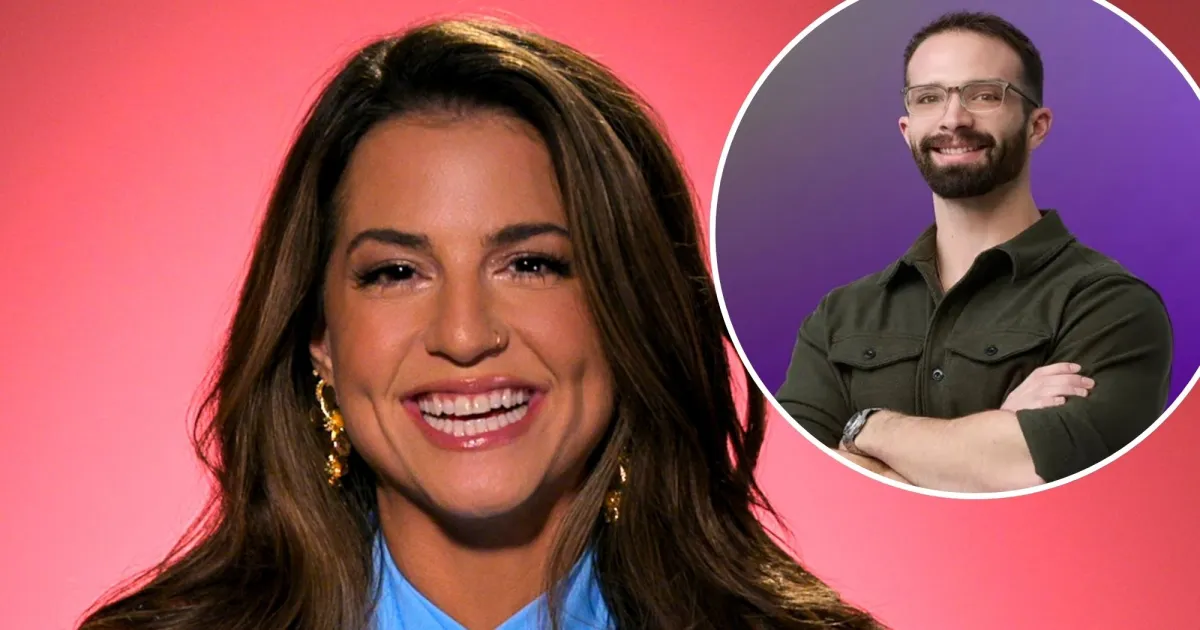
It was supposed to be one of those rare, quiet moments in the Love Is Blind pods where two strangers actually seem to find each other. Sarah, a 34-year-old health care manager, and John, a 33-year-old account executive, were in the middle of a conversation that felt lighter and warmer than most pod dates. They had bonded over music, specifically The Fray, and John was glowing as he recalled seeing the band live and how one of their songs had topped his Spotify Wrapped playlist. He told Sarah that he wanted someone to go to concerts with, someone to share experiences with, and he mentioned that he had gone to see The Fray with a lesbian couple, which made him sound open, thoughtful, and perhaps a little lonely. Sarah laughed, and John seemed genuinely delighted. He ended the date with a sincere promise: “Really excited to talk to you tomorrow, Sarah. Have a good night.” She thanked him, returned the warm wishes, and wrote notes in her notebook. It felt like the beginning of something real, something worth exploring in this strange social experiment where love is supposed to be blind and the outer world is supposed to disappear. Then, in a matter of seconds, the spell was broken. John left his pod, forgot to close the door behind him, and started talking to another man in the hallway. The words that followed were not meant for Sarah’s ears, but because the door was open, she heard every single one. “Not the people I expected, dude. My bottom people I talked to,” he said. When his friend asked how his date had gone, John replied, “Great.” But the damage was already done. Sarah had understood that she was not the person he was hoping for. She was just one of the people he had tried, and she had been ranked somewhere near the bottom.
The moment is a perfect, painful reminder of how vulnerable the Love Is Blind experience really is. In the pods, participants can hear everything, but they cannot see anything. They are supposed to be shielded from the physical world, but glass walls and half-open doors create a strange kind of transparency that can be just as revealing as a face. Sarah had every reason to believe that her conversation with John had gone well. They had laughed together, shared a common interest, and he had asked to talk to her again the next day. There was no signal, at least from her side of the glass, that he was underwhelmed. But when John stepped out into the hallway, he let his guard down, perhaps thinking he was among friends, and spoke the kind of blunt, casual shorthand that people use when they are processing a lot of new information. “My bottom people” is a crass way to describe the women he had been talking to, and it suggests that he was keeping a mental ranking of his matches. Sarah, in his mind, was not at the top. She was somewhere low enough to mention without concern, low enough to be dismissed. And the worst part is that John did not know she could hear him. The reminder from another voice—“Need to close the door”—came too late. By the time the portal finally shut, Sarah had already been handed a devastating piece of information that John never intended to share. The irony is almost too much to bear: they had just been talking about wanting someone to do things with, someone to share experiences with, and John’s careless words had inadvertently given Sarah an experience she would never forget, just not the kind she had hoped for.
Sarah’s reaction is immediate and raw. She leaves the pod and tells another woman exactly what she heard, and it is impossible not to feel her frustration and humiliation. “They’re so stupid, they keep the door open,” she says. “I overheard him saying I was one of his bottom two.” Her use of “stupid” is aimed at the men and the door, but there is a tremor underneath it, a sense of betrayal. In her confessional, she repeats the story for the cameras, confirming that she listened to every awkward second. She explains that she overheard John saying he had spoken to someone he was not that interested in. Then someone asked him how it went, and he said, “Good.” And it was her. That small word—“Good”—is almost more painful than “bottom people.” It is so lukewarm, so dismissive, so far from the excitement he had seemed to feel during their date. Sarah had allowed herself to be charmed, to believe that this was a person who wanted to do things with her, go to concerts, share experiences, maybe find love. Instead, she discovered that she was merely a placeholder, a name on a list, someone to talk to while waiting for a better option. The confession is not just about being rated; it is about being deceived. John’s bright smile and eager good-night were not lies exactly, but they were not the whole truth either. Sarah was left with the awful realization that the man she was beginning to like did not like her back anywhere near as much. She is left to wonder if she misread the whole conversation, if her laugh was too eager, if her love of The Fray was not enough, or if John was simply playing a game and being charming to every woman he met. That kind of self-doubt is the cruelest consequence of what she overheard, because it makes her question not only John but also her own judgment.
What makes this moment so human is that it is not entirely John’s fault, and it is not entirely Sarah’s fault either. John was in a strange environment under enormous pressure. He was meeting multiple women in short, intense conversations, and it is natural to compare people, to rank them, to try to make sense of a chaotic process. His “bottom people” comment was probably not meant as a cruel assessment of Sarah’s worth as a human being. It was just the lazy, unguarded language of someone trying to debrief with a friend. But that is exactly why it hurts so much. The things people say when they think no one is listening are often the most honest things they say. Sarah did not have the benefit of seeing John’s face, his body language, or the context of his conversation. All she had were his words, and his words were devastating. The show is built on communication, but communication is fragile. A laugh can be real one moment and meaningless the next. A glance can be misinterpreted. A door left open can change everything. Sarah’s trust in John was not based on evidence; it was based on emotion, and emotions can be shattered by a single careless sentence. She is not just angry about being ranked. She is angry because she was beginning to believe in a possibility, and that possibility was abruptly taken away. It is also worth noting that John may genuinely have had a good time with Sarah, even if she was not his top match. People are complicated. He might have walked out of the pod thinking that she was someone he could grow to love, while still acknowledging that he was more excited about another woman. But Sarah did not get to hear the nuance. She only heard the part where she was not enough, and that is a hard thing to recover from, especially in an environment where every conversation is supposed to be meaningful and every connection is supposed to be real.
This moment also fits into the larger story of Love Is Blind season 11, which follows a new group of singles in Boston as they attempt to find love without ever seeing each other. The show has always been a social experiment about whether emotional connection can override physical attraction, but it is also, at its core, a reality television drama built on conflict and heightened stakes. Sarah’s overheard conversation is exactly the kind of twist that makes the show irresistible. It is uncomfortable, it is awkward, and it makes the audience feel an immediate connection to Sarah, who has been blindsided by someone she barely knows. It also raises a question that will haunt her throughout the rest of her journey: Can she ever trust John again? Even if he apologizes, even if he explains that he was nervous and misspoke, she will always remember the sound of his voice in that hallway. She will always know that, at least for a moment, she was his bottom. That kind of knowledge does not disappear easily. It lingers in the back of a relationship, quietly resurfacing at moments of doubt. John may have thought he was just making small talk, but he gave Sarah a reason to doubt every future word he says. The show’s title promises love that is blind, but it cannot promise love that is deaf. Sarah heard too much, and now she has to decide whether to act on what she heard or try to forget it. The premiere of the Boston-based season, which lands on Netflix Wednesday, October 14, is clearly setting up a storyline that will have viewers cringing and cheering in equal measure. It is the kind of moment that makes Love Is Blind so addictive: the collision between a manufactured romantic fantasy and the messy, awkward, often hurtful reality of human behavior.
In the end, the premiere of Love Is Blind season 11 is set to begin with a bittersweet bang. Sarah’s story is not just a juicy reality TV moment; it is also a painfully relatable human experience. Almost everyone has been in a situation where they discovered, by accident, that someone they cared about did not feel the same way. It might have been a text message left on a screen, a conversation overheard in a hallway, or a casual comment made by a friend. Those moments are humiliating and disorienting because they force us to confront the gap between what people show us and what they actually think. Sarah was lucky enough, or unlucky enough, to get a glimpse of John’s private thoughts, and now she must decide what to do with them. She could confront him, demand an explanation, and perhaps give him a chance to prove that his words did not reflect his true feelings. Or she could move on, trusting her instincts and refusing to accept a place near the bottom of anyone’s list. Love Is Blind is, at its heart, a show about choices, and Sarah’s choice has just become much more complicated. As the season unfolds, viewers will be watching to see whether she can recover from this early betrayal, whether John can ever make it right, and whether love can truly be blind enough to ignore the words that should never have been spoken. For now, one thing is certain: the door has closed, but the echo of John’s words will not be easy for Sarah to forget. She will carry that moment with her every time she sits in the pod, every time John speaks, and every time she wonders if she is being chosen or merely tolerated. It is a heartbreaking way to begin a journey that is supposed to be about love, but it is also a deeply human one, because no matter how perfect a connection seems, there is always the possibility that someone is listening just outside the door.