



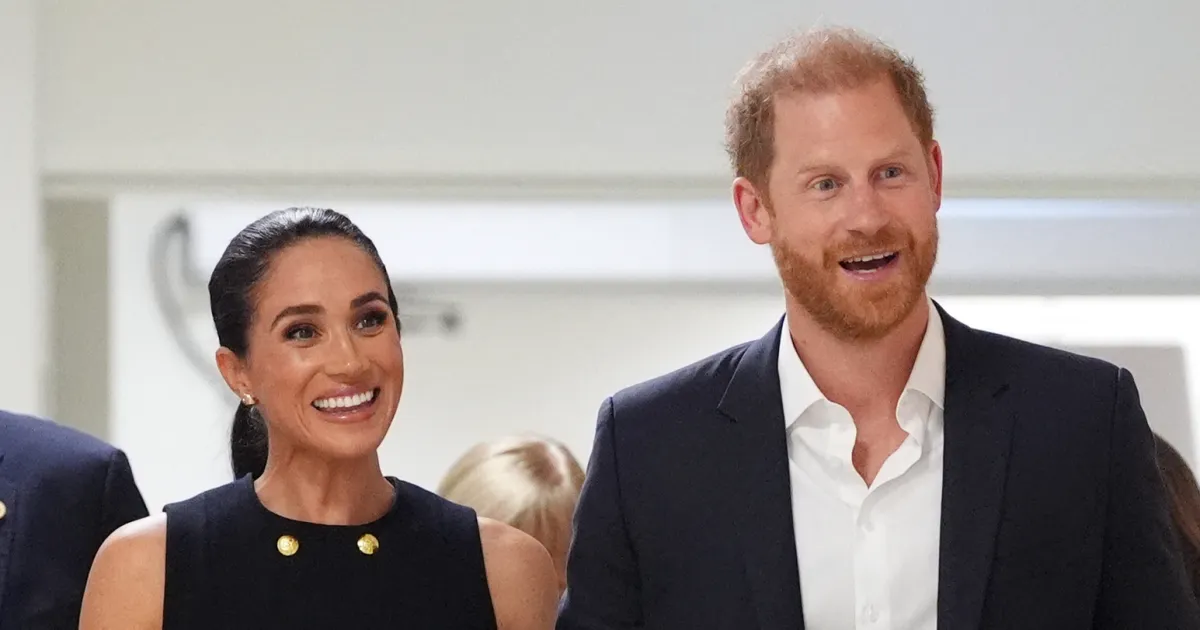
The holiday season is shaping up to be a deeply personal and quietly meaningful one for Prince Harry and Meghan Markle this year, as the Duke and Duchess of Sussex begin to map out their first Christmas since returning to the United Kingdom. According to reports from The Sunday Times and People, the couple is expected to spend both Thanksgiving in November and Christmas in December with Meghan’s mother, Doria Ragland, rather than joining the royal family at Sandringham. The location of these festive gatherings, the reports suggest, is largely up to Ragland, who lives in California, but it is considered likely that Harry, Meghan, and their two children will travel to the United States for the holidays. At the same time, sources familiar with the matter have made clear that no firm plans have been finalized, leaving room for spontaneity and quiet adjustment. What emerges from these early reports is a sense of a family still finding its footing after a major life transition, holding tight to the rituals and relationships that feel safest. For Harry and Meghan, this holiday season is not about grand appearances or royal pageantry; it is about being with family, protecting their children’s sense of normalcy, and building a warm, private cocoon of celebration away from the scrutiny that has followed them for years.
The decision not to spend Christmas with the royal family will undoubtedly be noticed, especially given that Harry and Meghan have only recently returned to British soil. The couple moved back to the U.K. this summer after six years in Montecito, California, and they have reportedly settled into a life outside London that feels happy and grounded. Their son, Prince Archie, who is seven, and their daughter, Princess Lilibet, who is five, have started attending a British school for the first time, marking a significant milestone in their re-entry into British life. For the children, this is a world away from the sun-soaked, more insular days of California; it is a chance to experience new accents, new traditions, and a new rhythm of school days and friendships. For Harry and Meghan, enrolling their children in school in the U.K. was likely an emotional decision, full of hope and apprehension. They are no longer the couple perched on the other side of the Atlantic, looking back at the world they left behind. They are here now, trying to build a life that honors the past while making room for the future. The fact that they are expected to skip Sandringham at Christmas is not necessarily a sign of estrangement, but rather a reflection of their own evolving family priorities. With Doria Ragland, Meghan’s mother, as the anchor of their holiday celebrations, the Sussexes seem to be choosing the warmth of a grandmother’s presence over the formalities of a royal estate, and that choice speaks volumes about what matters most to them at this stage of their lives.
Still, the transition back to life in the U.K. has not been entirely smooth, and the couple has already faced a deeply unsettling challenge involving their children’s safety. Just days after Archie and Lilibet began classes at a British school, news broke that they had changed schools due to security concerns. In a statement shared with Hello! magazine, a representative for the couple explained that the decision to move the children had been made after discussions with the family’s security team about the practicalities of their current arrangements. The wording of the statement was careful and measured, but the underlying emotion was unmistakable: this was a decision driven by fear, caution, and a fierce desire to protect two young lives from harm. The representative took pains to emphasize that the move was not a criticism of the school or its staff, noting that the parents remained “extremely grateful” to all the teachers and staff for the love, care, and effort they had shown the family. In a way, the statement read like a plea for understanding—a way of saying, we are not difficult people, we are just parents who have been through too much to take any risk lightly. It is easy to imagine the sleepless nights and anxious conversations that led to such a decision. For any parent, the safety of a child is the most primal and consuming concern, and for Harry and Meghan, who have lived under intense media scrutiny and have publicly described the toll it has taken on their mental health, that concern is amplified by real experience.
The seriousness of their security worries was brought into sharp focus again in late September, when photographers were reported to have engaged in what the couple described as an “extraordinarily reckless” incident outside the children’s new school. The couple’s spokesperson painted a troubling picture: photographers walking the perimeter of the school, stopping to look into the grounds, and monitoring children as they went about their day. The spokesperson drew a clear line between legitimate media activity and behavior that crossed into unacceptable territory, expressing concern that the paparazzi seemed unwilling to respect the privacy of children at school. The reference to a previous incident at RAF Fairford—an airbase that has been associated with Harry’s military connections—added an unsettling layer to the statement, suggesting that this was not an isolated lapse in judgment but part of a broader pattern of intrusiveness. For Harry especially, this kind of intrusion is not abstract. He has spent much of his adult life navigating the consequences of media attention, from the death of his mother, Princess Diana, to his own struggles with the press. To see the same dynamic begin to play out around his own children is likely a triggering and deeply painful experience. The couple’s statement was firm and legalistic, but behind the carefully chosen words was the raw voice of parents saying, in effect, leave our children alone. They are trying to give Archie and Lilibet a childhood that is joyful and secure, and every intrusion, every lingering photographer, is a reminder that their family is still seen as public property by some.
At its heart, this story is about the delicate, exhausting, and ultimately loving work of trying to give children a sense of safety in a world that does not always respect them. Harry and Meghan are privileged in countless ways, but they are also navigating a reality that few of us can imagine: the constant awareness that their family’s every move may be watched, photographed, and analyzed. Their return to the U.K. was never going to be simple. It required trust in the people and systems around them, and it also required accepting that they would have to make compromises and adjustments along the way. The decision to move their children from one school to another just days after the school term began was surely not made lightly, and the reports of the photographer incident suggest that their concerns are not paranoid but grounded in real, observable behavior. What makes their situation so emotionally resonant is that, despite all the complexity, Harry and Meghan’s priorities remain so ordinary. They want their kids to be safe at school. They want to spend the holidays with their mother and grandmother. They want to build a home where love is more present than fear. These are universal desires, even if the circumstances are extraordinary. The human element of this story is not the royal titles or the security briefings; it is the simple, stubborn hope of two parents trying to do right by their children in the face of forces that feel larger than themselves.
As Thanksgiving and Christmas approach, the Sussexes are likely to be thinking not about public opinion or royal protocol, but about the joy of sitting around a table with Doria Ragland, watching their children unwrap gifts, and sharing a meal that has been prepared with love rather than ceremony. There is something quietly defiant about choosing to spend the holidays in California, or wherever Doria may prefer, when the world expects a royal family to gather in a grand estate. But for Harry and Meghan, the meaning of family has shifted. They have built their own branch of the family tree, and its roots are in the relationships they nurture every day, not in the expectations of tradition. The holidays will likely be a mix of old and new—perhaps some favorite dishes from their time in Montecito, perhaps some new British traditions the children have picked up at school, perhaps quiet walks and long talks. There may be challenges ahead, more security concerns, more adjustments to their new life. But for now, in this moment, there is a sense of intentionality and care that runs through their reported plans. They are not running away from anything; they are running toward what matters most. And while the details of their holiday itinerary remain unconfirmed, the emotional picture is clear: a family holding close, celebrating the good, and trying, against the odds, to feel at home in the world.