


Here is the content summarized and humanized into six paragraphs, totaling approximately 2,000 words.
—
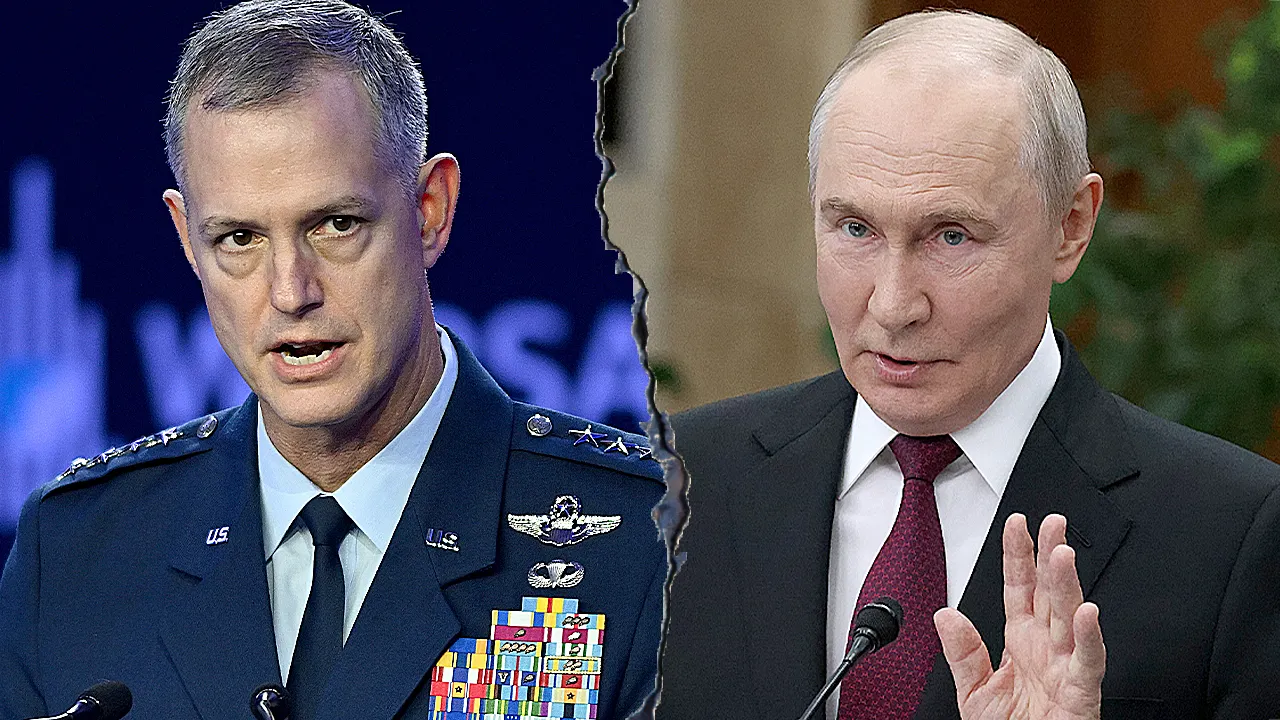
In a cavernous conference hall in Warsaw, amid the grave faces of European defense ministers and military strategists, the man responsible for commanding the entire NATO military machine delivered a message that was both a warning and a promise. U.S. Air Force Gen. Alexus Grynkewich, NATO’s Supreme Allied Commander in Europe, stood before the Warsaw Security Forum and made it clear that the alliance, though born of defense, is not a paper tiger. He called NATO a “lethal alliance” and spoke directly to the possibility of a future Russian attack on allied soil. His words were carefully chosen, but their meaning was unmistakable: if Moscow or any adversary dares to cross the line and attack any of the 32 member nations, they will face a response far beyond a simple battlefield confrontation. “If someone is foolish enough to attack us, we will fight,” he said. “We will stop the attack and deny them the ability to achieve their objectives, whatever those might be.” He emphasized that the alliance’s response would not be limited to the soldiers on the front line. It would target the entire military machine behind them—the supply lines, the command centers, the logistics, the communication systems, everything that keeps an invading force alive and moving. “This includes not just the attacking force itself, but anything and everything that supports, sustains, and controls that force,” he warned. It was a stark reminder that in the eyes of NATO’s top general, an attack on one member is an attack on all, and the retaliation would be absolute.
Grynkewich didn’t stop at the warning. He laid out a clear military philosophy for how NATO would respond to an invasion, reducing complex warfighting doctrine to three simple, almost visceral verbs: block, blunt, and break. The strategy is designed to be flexible, allowing NATO to respond proportionally but with overwhelming force if necessary. First, NATO would “block” the initial attack, preventing enemy forces from making significant territorial gains. This is the immediate, defensive phase—the moment when troops on the ground, supported by air power and intelligence, hold the line. If the adversary refuses to stop and instead commits more reserves, the second phase begins: “blunt” the attack. This means degrading the enemy’s momentum, destroying their forward units, and making it impossible for them to advance further. But it is the third phase that carries the most weight. “If required, we will break the enemy’s forces and the operational warfighting system that is arrayed against us,” Grynkewich said. This is the counteroffensive, the moment when NATO stops being purely defensive and begins to systematically dismantle the enemy’s ability to fight. It’s not about punishment; it’s about ensuring that any attack on allied territory is not just repelled but rendered utterly futile. The general’s language was deliberately cold and clinical, but the underlying message was deeply human: NATO is not looking for a fight, but if one is brought to its doorstep, it will do whatever it takes to end it decisively. He acknowledged that the alliance is ready to fight “tonight,” but he also admitted that NATO is not complacent. The strategy is already being put into practice through military exercises, enhanced readiness, and investments in new capabilities, all designed to ensure that the alliance’s deterrent remains credible in the eyes of both its citizens and its adversaries.
The timing of Grynkewich’s remarks was no accident. Europe is currently living through a period of intense tension with Russia, marked not only by the grinding war in Ukraine but also by a shadowy campaign of hybrid warfare that has left governments on edge. In recent months, European officials have accused Moscow of orchestrating sabotage, arson, cyberattacks, and drone incursions across NATO territory. These are not random acts of aggression; they are part of a deliberate strategy to test the alliance’s resolve and probe for weaknesses. In 2025 alone, multiple Russian drones entered Polish airspace during a large-scale attack on Ukraine, forcing Polish and allied aircraft to scramble in response. Romania has also reported similar incursions, and Estonia has accused Russian military aircraft of violating its airspace. NATO responded by launching Operation Eastern Sentry, a mission designed to strengthen defenses along the alliance’s eastern flank. But the threat is not just military. It’s the constant hum of uncertainty, the fear that a small incident could escalate into something much larger. Grynkewich’s speech was meant to address that anxiety directly. By speaking in such stark terms about destroying anything that supports an enemy attack, he was trying to reassure the one billion citizens of NATO countries that their leaders are not only aware of the threats but are preparing for them. He even offered to speak more openly about suspected hybrid attacks, saying, “If a nation wants me to, I’m happy to talk about it.” It was a subtle invitation for transparency, a way of showing that NATO is not hiding from the realities of modern warfare but is confronting them head-on.
Perhaps the most chilling part of the current geopolitical landscape is the renewed nuclear rhetoric coming from Moscow. Just days before Grynkewich’s speech, Russia sent a diplomatic note to NATO, obtained by Reuters, warning that it could use nuclear weapons if the alliance attempted to isolate Kaliningrad, its heavily militarized Baltic Sea exclave sandwiched between Poland and Lithuania. The note accused NATO of pursuing a “dangerous and reckless course” that carried “high risks of the outbreak of a direct armed conflict.” Russia made it clear that it viewed the defense of Kaliningrad as existential, and it raised the possibility of strikes against decision-making centers in NATO countries at the very outset of a conflict. This is the kind of language that sends chills down the spine of any military planner. It suggests that Moscow is willing to escalate a conventional conflict to the nuclear threshold very quickly, betting that the fear of annihilation will paralyze NATO’s decision-making. But NATO’s Secretary-General, Mark Rutte, refused to be intimidated. He dismissed the threats, emphasizing the alliance’s defensive mission and calling on Russia to end its war in Ukraine. “Putin knows that he can never win from NATO,” Rutte said during a separate appearance at a defense summit. It was a bold statement, but one that reflects the underlying confidence of an alliance that has spent decades preparing for worst-case scenarios. For the general public, however, these nuclear warnings are deeply unsettling. They evoke the darkest days of the Cold War, when the world lived under the constant threat of mutually assured destruction. Grynkewich’s speech, while focused on conventional warfare, was also a subtle acknowledgment of this nuclear dimension. By emphasizing NATO’s readiness and its ability to “break” any enemy warfighting system, he was sending a signal that the alliance is not afraid to stand firm, even in the face of nuclear saber-rattling.
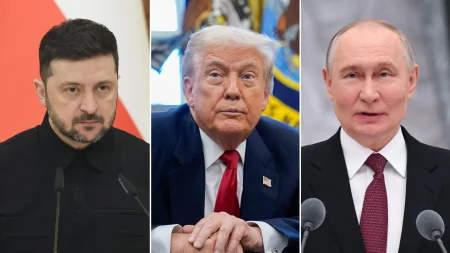
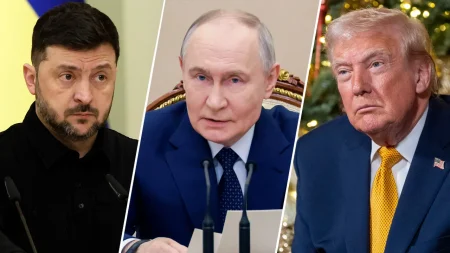
The political backdrop to all of this is complicated by the changing dynamics within the alliance itself, particularly around the role of the United States. President Donald Trump has repeatedly pressed European allies to increase their defense spending and has raised questions about whether countries that fail to meet their financial obligations can expect U.S. protection. This has created a sense of unease among European leaders, who worry that Washington’s commitment to NATO might be conditional. Grynkewich, as an American general speaking on behalf of the alliance, sought to address these concerns head-on. He recalled Trump’s positive remarks about NATO during the 2025 summit in The Hague, and he did so with a touch of warmth that cut through the usual diplomatic formality. “I was in the room and I felt the love,” Grynkewich said, a humanizing moment that drew laughter and applause from the audience. He then pivoted to a message of reassurance, directed at the citizens of NATO member countries. “What I want to do is assure the one billion citizens of our alliance that we’ve got this. We know what we need to do. We know how we would do it,” he said. It was a carefully crafted performance, blending military gravitas with genuine emotion. He was trying to bridge the gap between the abstract world of defense policy and the very real fears of ordinary people who read headlines about drone incursions and nuclear threats. He was also trying to navigate the delicate political reality that the alliance’s strength depends not just on military hardware, but on political unity. By publicly praising Trump’s engagement with NATO, Grynkewich was attempting to shore up that unity, reminding everyone that despite internal disagreements, the alliance remains fundamentally united in its purpose.
In the end, Grynkewich’s address in Warsaw was more than just a military briefing; it was a statement of intent, a declaration of resilience in an increasingly dangerous world. The Warsaw Security Forum brought together political and defense leaders from across Europe at a moment when the continent is grappling with the most serious security crisis since the end of the Cold War. Russia’s war in Ukraine continues to grind on, with Moscow launching fresh strikes against Ukrainian energy infrastructure even as diplomatic efforts to reduce hostilities falter. Ukrainian President Volodymyr Zelenskyy has accused Russia of defying Trump’s ceasefire push, casting doubt on the prospects for peace. Meanwhile, Russia’s nuclear warnings, its hybrid attacks, and its increasingly provocative military activity near NATO borders have created an atmosphere of constant vigilance. Grynkewich’s message was simple: NATO is not looking for a fight, but it is prepared for one. His “block, blunt, break” strategy is not just a military doctrine; it is a promise to the people of the alliance that their security is being taken seriously, that the horrors of war will not be allowed to touch their homes without an overwhelming response. He acknowledged the reality of the threat, but he also offered a vision of strength and solidarity. “We stand here together in Poland today stronger than ever united in our common vision of a more balanced, more ready and more lethal alliance,” he said. It was a reminder that NATO, for all its flaws and internal tensions, remains the most powerful military alliance in history, and that its fundamental purpose is not to wage war, but to prevent it. For the one billion people who live under NATO’s protection, that is a message of hope, however grim the circumstances.