


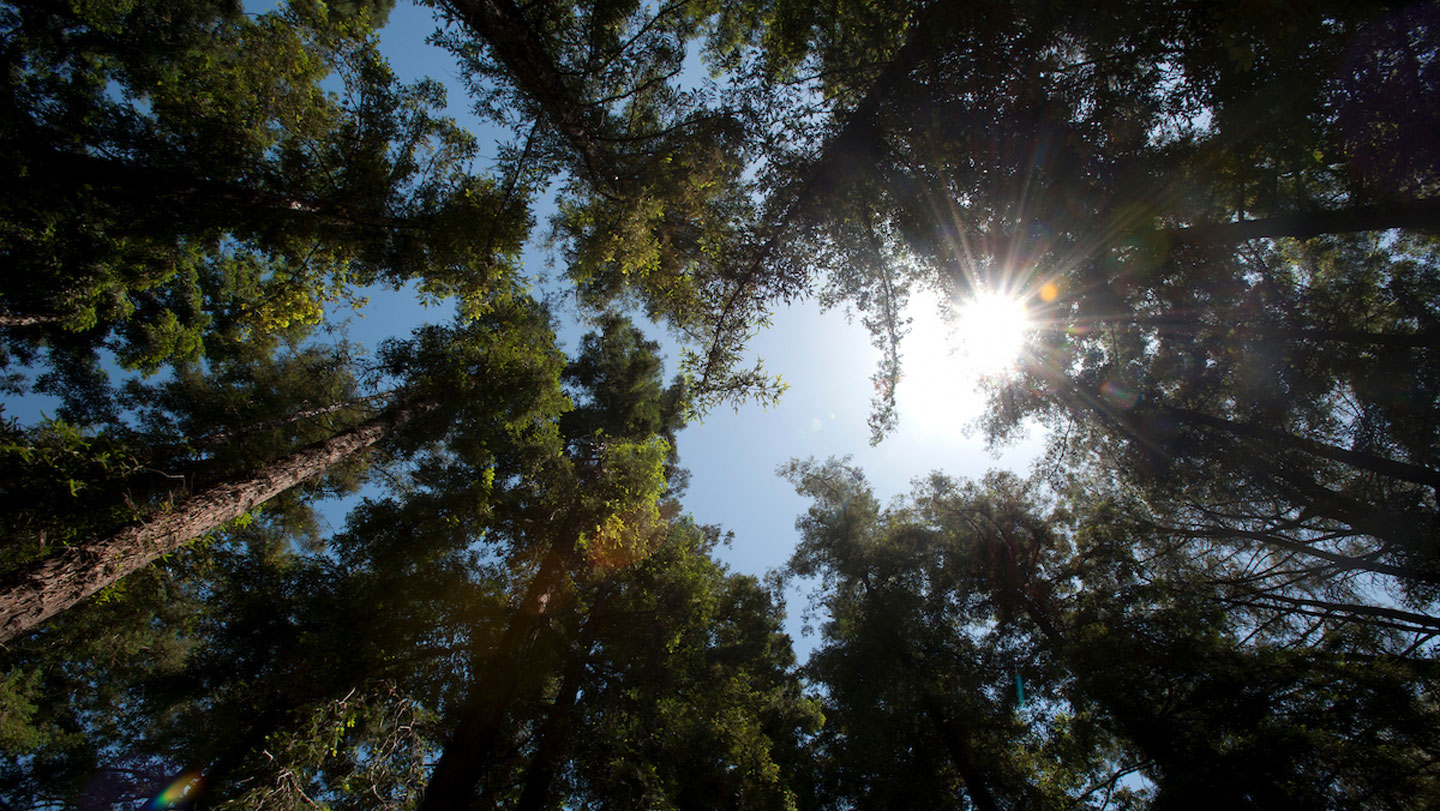
There is something almost mythical about the coast redwoods that tower along the Pacific coast. These are trees that have watched centuries pass, surviving fires, fungal infections, rot, and storms that would topple lesser giants. For thousands of years, they have stood as symbols of endurance, their thick, fire-resistant bark and rot-resistant wood allowing them to live for more than two thousand years. But even the mightiest trees have their limits, and researchers are now warning that a relatively new threat is testing those limits in ways ancient redwoods have never experienced before: extreme heat. In a study published September 22 in the Journal of Geophysical Research: Biogeosciences, scientists report that when temperatures climb from a comfortable 30° Celsius to a sweltering 40° Celsius, the rate of photosynthesis in coast redwood needles drops by roughly half. That dramatic slowdown is what ecophysiologist Lily Klinek of the University of California, Davis describes as a sign of “severe levels of stress.” For a species that has endured so much, this vulnerability is a quiet but urgent alarm. If coast redwoods cannot cope with hotter summers, their decline could ripple far beyond the groves themselves, because these trees hold one of California’s most important stores of carbon—a natural shield against the very climate change now threatening them.
To understand why heat is so dangerous for coast redwoods, it helps to know how ordinary their everyday world is. Coast redwoods, scientifically known as Sequoia sempervirens, are not wanderers. They live only in a narrow strip of coastal habitat stretching from central California to southern Oregon, where the ocean keeps temperatures mild and blankets the forest in thick, life-giving fog. This fog is not simply atmospheric decoration; it provides moisture during the dry summer months and keeps the trees from overheating. In this sheltered world, redwoods evolved to be remarkably sensitive to their environment. But climate change is rewriting the rules of that environment. In recent years, heat waves have driven temperatures in parts of their range above 40° Celsius—temperatures that, for a tree adapted to a cool, foggy climate, are dangerously extreme. Trees usually have a built-in cooling system, much like sweating in humans. Tiny porelike openings on their needles called stomata open and allow water to evaporate, carrying heat away with it. This process keeps the tree comfortable and also allows carbon dioxide to enter, which is essential for photosynthesis. But during a heat wave, especially one combined with drought, the stomata close to conserve precious water. The tree’s natural cooling system shuts down, and the dark redwood needles, which absorb sunlight efficiently, can end up becoming ten degrees Celsius hotter than the surrounding air. This means that even when the air outside is punishingly hot, the tree itself may be suffering even more.
The new study is the first to look specifically at how coast redwoods respond to heat stress, and it was no small feat to pull together. From July 2022 to October 2024, Klinek, along with Troy Magney, an ecophysiologist at the University of Montana in Missoula, and their colleagues repeatedly measured the performance of redwood needles in California’s Mendocino County. That period included two real heat waves, giving the researchers a natural window into how the trees behaved under extreme conditions. But capturing photosynthesis in the field is not easy. You cannot simply wrap a giant tree in plastic and control the temperature around a hundred-meter canopy. As Klinek explained, studying heat effects in the wild would require building a heat chamber around a real branch, or waiting for a heat event to strike and hoping you are in the right place at the right time. So the researchers took a more practical approach. Klinek climbed onto the roof of her car with a pole pruner and collected branches from about five meters up, in the lower canopy. Back in the lab, she and her colleagues exposed the needles to increasing temperatures that mimicked the heat waves of recent summers and carefully measured how photosynthesis responded. The result was striking: even when the samples were submerged in water, meaning their stomata were open and they had plenty of water to work with, photosynthesis still plummeted as temperatures rose. This was not a case of the trees being unable to get enough carbon dioxide because their pores were shut; the heat itself was disabling the photosynthetic machinery.
That distinction matters because of what it means for a redwood’s survival. Photosynthesis is how trees make their food. They take in carbon dioxide through those same stomata, use sunlight to turn it into sugars, and release oxygen as a byproduct. When stomata close to protect against water loss, the tree also blocks its own supply of carbon dioxide. “They could essentially starve if they don’t have access to enough carbon,” Klinek said. But the lab experiments revealed something more alarming: even when carbon dioxide was abundant and water was plentiful, the heat alone was enough to slow photosynthesis dramatically. In other words, heat stress does not just prevent redwoods from eating; it damages their ability to process food at the most fundamental level. For a species that has survived by being slow, patient, and efficient, this kind of disruption is deeply concerning. Coast redwoods are some of the most carbon-dense forests in the world. They lock away enormous amounts of carbon in their massive trunks, roots, and surrounding soil, acting as a vast natural reservoir that buffers the effects of greenhouse gas emissions. If these trees die in large numbers, that stored carbon could be released back into the atmosphere, and the forest would no longer be able to absorb new carbon from the air. Protecting redwoods, then, is not just about preserving beautiful landscapes; it is about protecting a crucial ally in the fight against climate change.
There are, however, important limits to what this study can tell us, and the researchers are careful not to overstate their findings. For practical reasons, the study focused on younger coast redwoods rather than the ancient giants that can exceed one hundred meters in height. It is almost impossible to reach the lower branches of those truly colossal trees, let alone study their needles under controlled conditions. As Christopher Still, an ecophysiologist at Oregon State University in Corvallis, who was not involved in the study, put it: “There are just fundamental limitations on what you can sample if you don’t have a jetpack.” Still, the fact that younger, healthy trees showed such strong sensitivity to temperature is telling. In his view, coast redwoods appear to be especially sensitive to heat compared to other tree species. “You don’t see this as much with other species necessarily,” he said. This raises the possibility that even the hardiest old-growth redwoods, growing in the same foggy, mild habitat, could be vulnerable if heat waves continue to intensify. The study cannot answer every question, but it opens a crucial door by showing that heat alone—independent of drought and carbon limitation—can send a redwood’s metabolism into a state of stress that is difficult to reverse.
Looking ahead, scientists still have much to learn about how much heat a redwood can tolerate before the damage becomes permanent. In the field, Klinek observed trees closing their stomata to hold onto water during stressful conditions. In real life, heat waves do not arrive alone; they often come hand in hand with drought, when the soil is dry and the air is parched. That combination could make the slowdown in photosynthesis even more intense, because the tree is deprived of both water and the ability to cool itself. But the exact threshold for irreversible damage remains unknown. As Klinek noted, “We still don’t know what the threshold is for irreversible damage.” That unanswered question is one of the most important in redwood conservation today. These are trees that have endured fire, fungus, and rot; they have survived volcanic eruptions, ice ages, and human development; they have stood for centuries on the same fog-shrouded hillsides. But the climate that shaped them is changing faster than they have ever experienced. The more we understand about how they respond to heat, the better we can protect them—and the more clearly we can see what is at stake. The coast redwoods are not just ancient relics; they are living, breathing giants whose fate is now tied to the choices we make. And if we want them to stand for another thousand years, we need to take seriously the quiet signal, hidden in their needles, that the heat is becoming too much.