


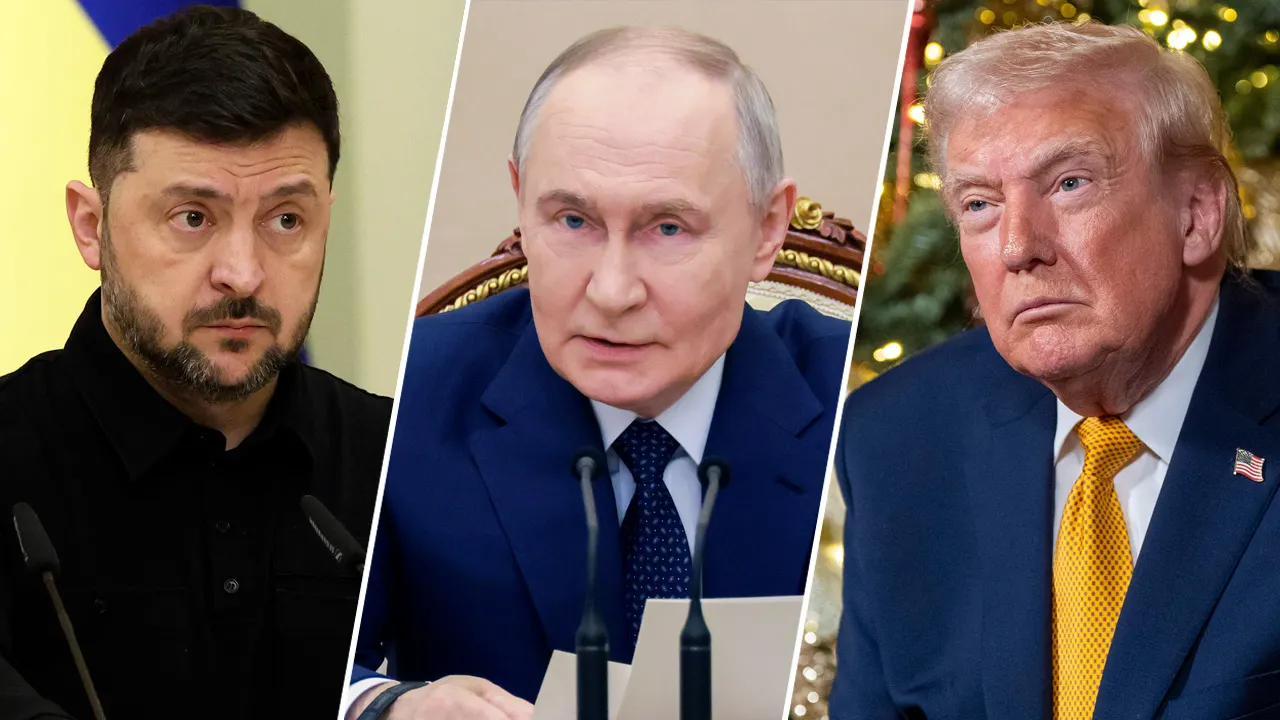
Every time an American farmer fills a tractor or a trucker tops off a diesel tank, the price at the pump is more than just an economic inconvenience—it is a political battlefield. President Donald Trump has moved forward with a plan to bring Russian diesel to American and global markets, hoping to lower fuel costs for working families and rural communities. But retired Gen. Philip Breedlove, the former NATO supreme allied commander in Europe and head of U.S. European Command, sees something far more dangerous in that transaction. He warns that the deal would hand Russian President Vladimir Putin fresh billions to keep his war machine grinding through Ukraine, all while giving Moscow a diplomatic excuse to stall. “And so we are cutting a deal with the enemy,” Breedlove told Fox News Digital, adding that “all of this money will go into fueling Mr. Putin’s continued attacks in Ukraine.” The warning cuts to the heart of a painful dilemma: how do you ease the burden on American families without inadvertently fueling the very violence that is destabilizing Europe and driving up global energy prices in the first place? For Breedlove, the answer is clear—this deal risks undermining Ukraine’s ability to defend itself, and it rewards a leader who has shown little interest in genuine peace. The price of cheaper diesel may be measured not only in dollars, but in the lives of civilians caught in a brutal war that Putin shows no sign of ending.
The mechanics of the deal are simple on paper, but deeply complicated in practice. Over the weekend, the Russian government announced it had partially lifted its ban on diesel exports, following what Reuters reported was a new understanding between Trump and Putin for Russia to supply the American and global markets. According to earlier reporting by Fox News Digital, Trump’s package calls for the immediate release of 300,000 tonnes of diesel to the United States and the wider marketplace, followed by 500,000 tonnes in November and another 1 million tonnes after that. Supporters of the arrangement, including Katie Zacharia, who has promised that the deal will deliver cheaper gas for Americans, see it as a practical solution to one of the most stubborn inflationary pressures facing the country. Treasury Secretary Scott Bessent defended the administration’s approach on Fox News, saying, “We’re going to do it with all the legal authorities we have. This is good for the American people, bringing these diesel prices down.” For anyone who has winced at the cost of filling up a truck or heating a home, that promise is understandably appealing. But the deeper question remains: at what moral and strategic cost? The diesel deal is not happening in a vacuum. It is happening while Russian missiles and drones are pounding Ukrainian cities, energy infrastructure, and civilian neighborhoods. Every barrel of Russian diesel sold into the global market is another stream of revenue that can be converted into weapons. Critics like Breedlove argue that the short-term relief at the pump is being purchased with long-term instability, and that Putin is simply using the negotiation process to buy time, restock his arsenal, and continue his assault on a sovereign nation. The administration’s defenders counter that engaging with Russia on energy does not mean endorsing Putin, and that lower prices help ordinary Americans weather a difficult economic moment. But the moral math is uncomfortable, and Breedlove is not alone in wondering whether Washington is being played.
Then came Trump’s announcement on Sunday of what he called an “energy ceasefire” between Russia and Ukraine. In a Truth Social post, the president wrote, “Effective immediately, there is an ENERGY CEASEFIRE in the War between Russia and Ukraine. Both parties have agreed. Do not break it!” It was a dramatic statement, full of hope and finality, but the reality on the ground was far more complicated. Ukrainian President Volodymyr Zelenskyy indicated that Ukraine had not actually been informed of a finalized ceasefire agreement. He expressed a conditional willingness to halt attacks on Russian energy facilities if Moscow reciprocated, but he also accused Putin of repeatedly rejecting peace proposals and continuing relentless strikes on Ukraine’s energy grid. “Ukraine has proposed many de-escalatory steps. Putin had one answer to all of them – ‘nyet,’” Zelenskyy wrote on X. “We do hope that he will finally say something to America, Ukraine, and the entire world that will lead to a real and dignified peace.” The Ukrainian leader’s words were measured, but the numbers behind them were staggering. Over the past week, Russian forces had launched more than 200 strikes on Ukraine’s electricity generation and transmission facilities, plus 17 strikes targeting gas and oil infrastructure. Those attacks killed more than 150 people and wounded more than 700. The human toll is not an abstraction or a talking point—it is the sound of air raid sirens in the middle of the night, of families huddling in subway stations, of entire cities plunged into darkness and cold. An energy ceasefire sounds wonderful on paper, but if one side keeps bombing while the other holds its fire, it becomes just another trap. Zelenskyy’s skepticism reflects the bitter experience of a country that has watched Putin break promises again and again.
Breedlove, who spent a career studying the tactics and psychology of adversaries, argues that Russia and Ukraine are not even fighting the same kind of war. Russia, he says, is waging a campaign of what military strategists call “countervalue” targeting—that is, deliberately attacking civilian populations and critical infrastructure to break the will of the Ukrainian people and separate them from their leadership. “Russia is carrying on a campaign of what we call counter value. In other words, Russia is attacking the Ukrainian people and trying to force their society to separate themselves from their president, President Zelenskyy,” Breedlove explained. Ukraine’s attacks on Russian oil refineries, by contrast, are not aimed at civilians. They are designed to disrupt the revenue streams that finance Putin’s invasion, to hit the economic engine of the war. That distinction matters. Yet the Trump administration has publicly criticized Ukrainian drone strikes on Russian refineries, arguing that they disrupt global diesel supplies and drive up costs for American farmers and ranchers. Breedlove predicts that Washington will now push Kyiv to stop those strikes, even though they are strategically vital to Ukraine’s ability to survive. “What I expect will happen is the United States will force or try to force Zelenskyy to stop bombing the petrochemical business in Russia,” he said. This is the cruel irony of the situation: a policy designed to lower fuel prices in America could end up protecting the very infrastructure that keeps Putin’s war funded. The diesel deal and the energy ceasefire are thus not separate stories—they are two sides of the same coin. In exchange for a temporary dip in prices at American gas stations, Ukraine may be asked to give up one of its most effective levers against Russian aggression. And in exchange for a piece of paper declaring an energy ceasefire, Putin may gain the time and breathing room he needs to regroup and strike again.
Breedlove’s skepticism about Putin is not just ideological; it is rooted in a documented pattern of behavior. “Russia has never kept a promise to this president in this war,” he said. “He’s never changed his expectations, and he’s never delivered on his promises. Three out of four of the big cases, the very next day or that same night after the president and Mr. Putin talked, Mr. Putin launched huge attacks in Ukraine.” Those are damning words from a man who has negotiated with and studied Russian leaders for decades. If true, then every phone call, every deal, every ceasefire announcement is not a step toward peace but a stage in Putin’s tactical playbook. The Russian president has no incentive to end a war that keeps him in power, expands his influence, and allows him to pose as a defender of Russian greatness. Breedlove called for a fundamentally different approach from Washington. “We now need an administration that leads from power. We say all the time, ‘strength through power,’ but when it comes to Russia, our demonstrated position is continued conflict through weakness,” he warned. The phrase is striking: “continued conflict through weakness.” It suggests that by trying to buy short-term stability through deals with an adversary, the United States is actually prolonging the conflict and inviting further aggression. Breedlove’s prescription is simple, if difficult: tell Putin to stop, and mean it. Back diplomacy with real leverage, real consequences, and a willingness to support allies rather than bargain with their enemies. The alternative, he implies, is a world where the aggressor is rewarded, where promises are made to be broken, and where the United States sacrifices its credibility and its allies at the altar of cheaper diesel.
Amid all this diplomatic maneuvering, Zelenskyy has made a dramatic offer: he said he would organize Ukrainian elections if Putin agreed to a reciprocal 60-day ceasefire, even though holding a vote under martial law would face enormous legal and logistical obstacles. It is a high-risk gambit, one that signals Ukraine’s willingness to compromise in the name of peace. But it also raises the question of what Putin is willing to offer in return. So far, the answer has been more missiles, more drones, more suffering. The diesel deal and the energy ceasefire may be presented as pragmatic steps toward lowering prices and stopping attacks, but they carry enormous consequences that cannot be ignored. Every dollar that flows to Moscow through Russian energy exports is a dollar that can buy ammunition, fuel, and mercenaries. Every day of negotiation without real enforcement is another day for Putin to entrench his forces and wait for the West to grow tired. The human story behind all of this is not about barrels of diesel or diplomatic communiqués—it is about grandparents in Kharkiv holding candles in basements, children learning to distinguish the sound of incoming drones, and soldiers on both sides wondering if their leaders will ever choose peace over pride. The administration may believe it is doing what is best for American consumers, and that is a legitimate concern. But as Breedlove reminds us, cutting a deal with an enemy who has broken every promise is not strength—it is wishful thinking. The challenge for Washington is to find a way to lower prices without funding tyranny, to seek peace without rewarding aggression, and to support Ukraine without losing sight of American interests. Those goals are not impossible to reconcile, but they require a strategy built on principle, not just convenience. In the end, the true test of any policy is not whether it looks good in a press release, but whether it makes the world safer. Right now, that test is far from being passed.