


A Life Silenced, A World Watching: The Fate of Darya Shipilova
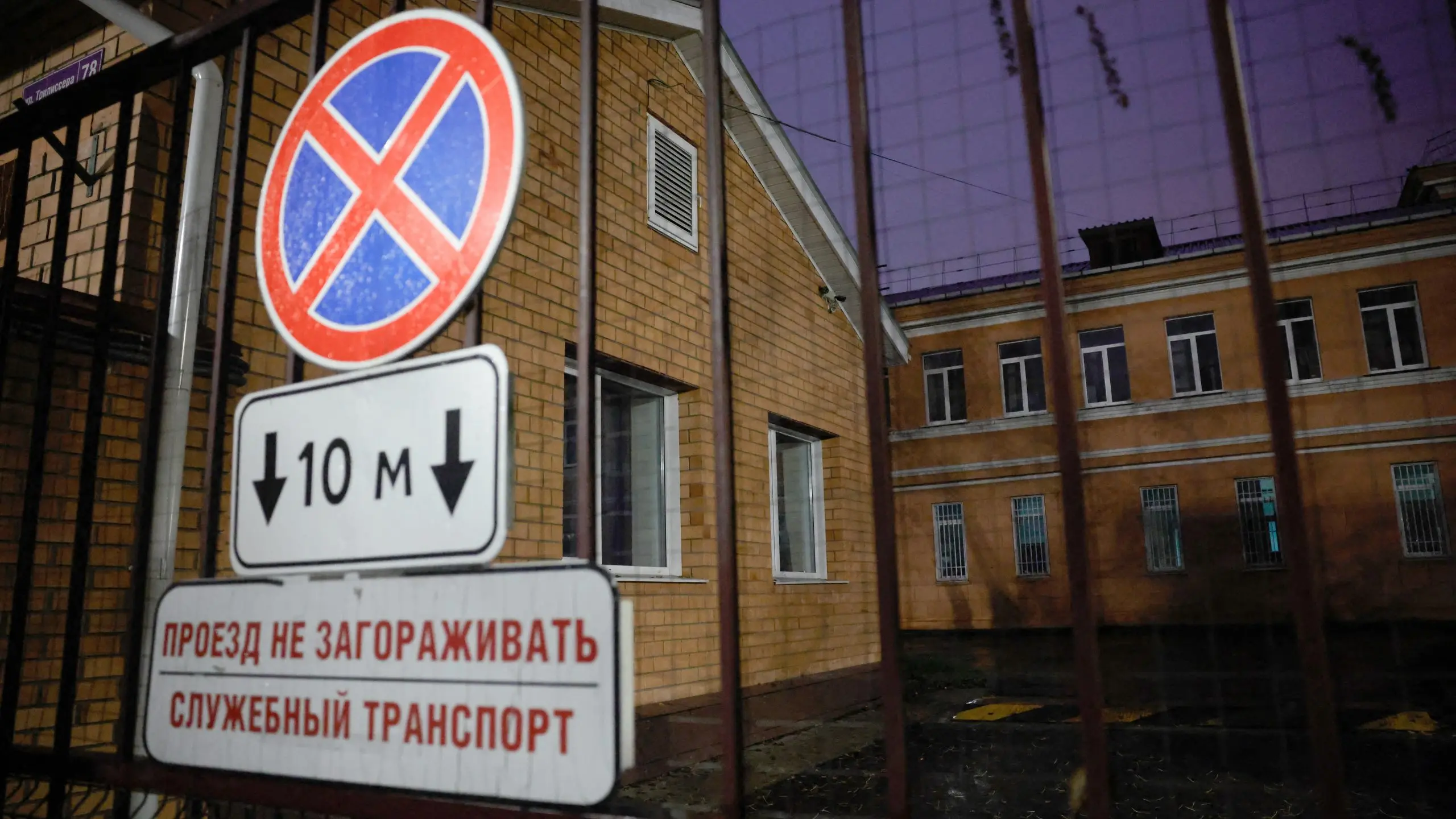
In the frozen heart of Siberia, where the Angara River carves its way through the vast, unforgiving landscape of eastern Russia, a quiet tragedy unfolded that has sent ripples of fear across the globe. Darya Shipilova was just twenty-eight years old, a bright and dedicated researcher at the Irkutsk Anti-Plague Research Institute of Siberia and Far East, a facility so secretive and specialized that its very existence speaks to the persistent, lurking threat of biological catastrophe. In this isolated region known as the gateway to the East, she devoted her short career to studying the most dangerous pathogens known to humankind—microscopic killers so potent they have the power to reshape history itself. Her untimely death, initially linked to a suspected case of pneumonic plague, has ignited a firestorm of international concern, conspiracy theories, and profound alarm among public health officials. The stark reality that a young scientist with advanced training in handling deadly biological agents could perish so suddenly, in such mysterious circumstances, has awakened deep-seated anxieties about laboratory safety, government transparency, and the very real possibility that something far more sinister may be hidden beneath the surface of official statements. As nations grapple with the specter of a new biological threat emerging from a region historically scarred by outbreaks, the world watches with bated breath, demanding answers that seem to slip further away with each passing day. Her mother, a woman of science herself, now finds herself thrust into an agonizing battle against a bureaucratic wall of silence, fighting not only for the truth behind her daughter’s final moments but also for the very legacy of a life cut tragically short.
In the midst of this swirling global controversy, the most poignant and powerful voice has emerged from the one person who knew Darya best: her mother, Svetlana Shipilova, who is herself a medical professional. Confronted with the official narrative that her daughter contracted a fatal infection after breaking a test tube in the laboratory, she has responded with a resounding and emphatic rejection. In an interview with the Russian outlet Glubina, as reported by The Telegraph, Svetlana expressed both her heartbreak and her fury at the accounts being circulated by what she dismisses as ignorant commentators and convenient cover-ups. “I know the truth,” she declared, her words carrying the weight of a mother’s certainty and a scientist’s understanding. “I’m having to fend off stupid acquaintances who believed all this. The clever ones didn’t believe it, of course.” There is a profound agony in her words, a sense of isolation not only in her grief but in her desperate attempt to be heard above the noise of speculation. The absurdity of the official explanation galls her precisely because of her deep technical knowledge, leaving her to navigate a nightmare where even her peers in medicine fail to grasp the basic physics and engineering that would make such an accident nearly impossible. In her eyes, the story of the broken test tube is not just a technical impossibility but an insult to her daughter’s memory, a flimsy excuse constructed to deflect responsibility and obscure a more uncomfortable reality that someone, somewhere, does not want the world to see.
The technical impossibility of the official explanation is precisely where Svetlana Shipilova draws the line, grounding her heartbreak in the uncompromising reality of scientific fact. “Not even all medical professionals understand it’s impossible to break a test tube like that,” she told reporters, her frustration palpable. “Even if you fling it at the wall. Only an amateur could say something like that.” This is not a mother’s naive denial of a painful truth; it is the professional judgment of a woman who knows exactly how biological containment vessels work. These tubes and vials used in maximum-containment facilities are engineered to withstand extraordinary physical force. They are typically manufactured from thick, shatter-resistant borosilicate glass or materials even more durable, designed to protect researchers from the lethal contents they handle on a daily basis. Transport flasks are frequently double-walled, often encased in heavy plastic or metal barriers, and insulated in ways that make breaking them through sheer negligence not just unlikely, but almost categorically impossible without deliberate, extreme, and sustained effort. “Even hypothetically, you simply can’t spill what’s inside or break the tube,” she insisted. “They’re that well protected.” Her words cut to the core of a terrifying implication: if the mechanism of exposure described by authorities is implausible, then the true sequence of events remains unknown, and with it, the true nature of the pathogen that killed her daughter. More devastating still is her declaration that “They simply let my daughter die.” This haunting accusation transforms the narrative from one of a tragic accident into one of potential gross negligence, obstruction, or worse, painting a picture of a young woman abandoned by the very institution entrusted with her safety.
The response from Russian authorities has only compounded the layers of suspicion, resembling what former CIA officer has grimly characterized as a “Chernobyl playbook,” a strategy of information control defined by opacity, delay, and self-protective denial. Official communiqués have been maddeningly sparse, revealing only that Darya contracted pneumonia of “unknown” origin and that tests for the specific pathogens she worked with were negative. These terse statements, devoid of detail regarding how she was exposed, why her presentation was so atypical, or what additional testing might reveal, have done nothing to quell the growing unease. Instead, they have opened a vacuum into which all manner of theories have rushed, from the resurgence of plague to the accidental release of engineered pathogens, to the possibility of a targeted assassination veiled as a laboratory mishap. The historical irony is brutal: this particular research institute exists precisely to combat plagues and hemorrhagic fevers, serving as a bulwark against biological threats that have plagued the Russian heartland for centuries. For a young researcher to die from a mysterious pneumonia within such a fortress of medical defense suggests either a catastrophic failure of biosafety protocols or the presence of a threat so novel, so obscure, that current diagnostic methods fail to identify it. As veterans of national security circles warn that this could be “far worse” than the plague, the insistence on a simple, contained narrative feels less like reassuring transparency and more like an act of deliberate concealment, raising the terrifying possibility that the world has been told only the smallest fraction of a far more disturbing story.
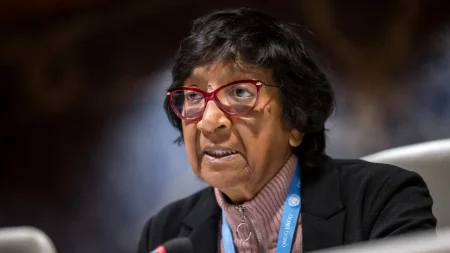
Across the Atlantic, the international community has mobilized with a gravity that underscores the stakes involved. World Health Organization Director-General Tedros Adhanom Ghebreyesus addressed the matter during public remarks, striking a cautious but notably concerned tone. “We don’t yet have the full picture of this event, and we are not able to conduct a full risk assessment,” he admitted, a statement that, while diplomatic, fundamentally acknowledges the profound limitations of global surveillance when a sovereign nation closes its doors. On the American front, the Centers for Disease Control and Prevention issued a statement confirming that it is “aware of and closely monitoring reports of a suspected case of pneumonic plague in the Irkutsk region of Russia that resulted in a death,” adding that the agency is “working across the U.S. government to assess developments as additional information becomes available.” The measured cadence of these institutional pronouncements cannot fully disguise the underlying anxiety. Meanwhile, the political sphere has erupted as well, with former President Donald Trump publicly responding to concerns over the suspected plague case, offering that the United States is “willing to help.” This offer of assistance carries a weight of its own, a tacit acknowledgment that the tools needed to combat a truly dangerous biological event require international coordination and unfettered access to data that Russia has thus far shown no inclination to provide. The specter of a global pandemic, memories of which remain painfully raw, makes every withheld detail a potential threat to millions, transforming a single woman’s tragedy into a matter of existential public health urgency.
Ultimately, at the center of this geopolitical storm and bureaucratic obtuseness lies the human story that must not be forgotten: a family shattered, a promising life unrealized, and a mother left to battle both her grief and an unyielding wall of silence. Svetlana Shipilova’s struggle is not merely about assigning blame or dismantling official narratives; it is a desperate search for meaning in the face of inconceivable loss, a primal need to know exactly what happened to her child so that her death may not have been entirely in vain. As the world speculates about pathogens and politics, about cover-ups and contagion, Darya Shipilova remains a daughter, a colleague, and a brilliant young mind whose future was stolen under circumstances that demand scrutiny. The eyes of the international community remain fixed on Irkutsk, but each unanswered question is a wound reopened for her mother, each conspiracy theory a further distortion of her reality. In this haunting limbo of secrets, the most profound truth remains locked behind laboratory doors and government mandates. The world may never receive a satisfactory explanation, but the responsibility to keep asking, to keep demanding transparency, and to keep honoring Darya’s memory through relentless pursuit of the truth, remains. Her mother’s plea, wrapped in the rawest form of human sorrow, serves as a powerful testament that behind every headline, every geopolitical calculation, every epidemiological statistic, there is a heart that will never fully heal until the questions are answered.