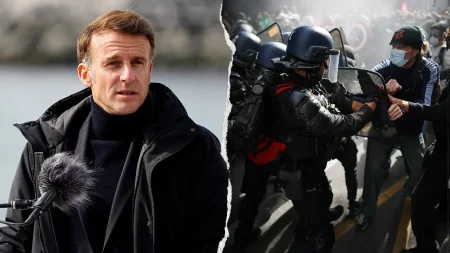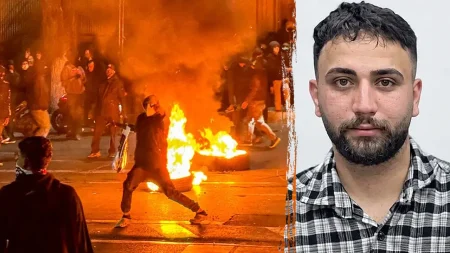



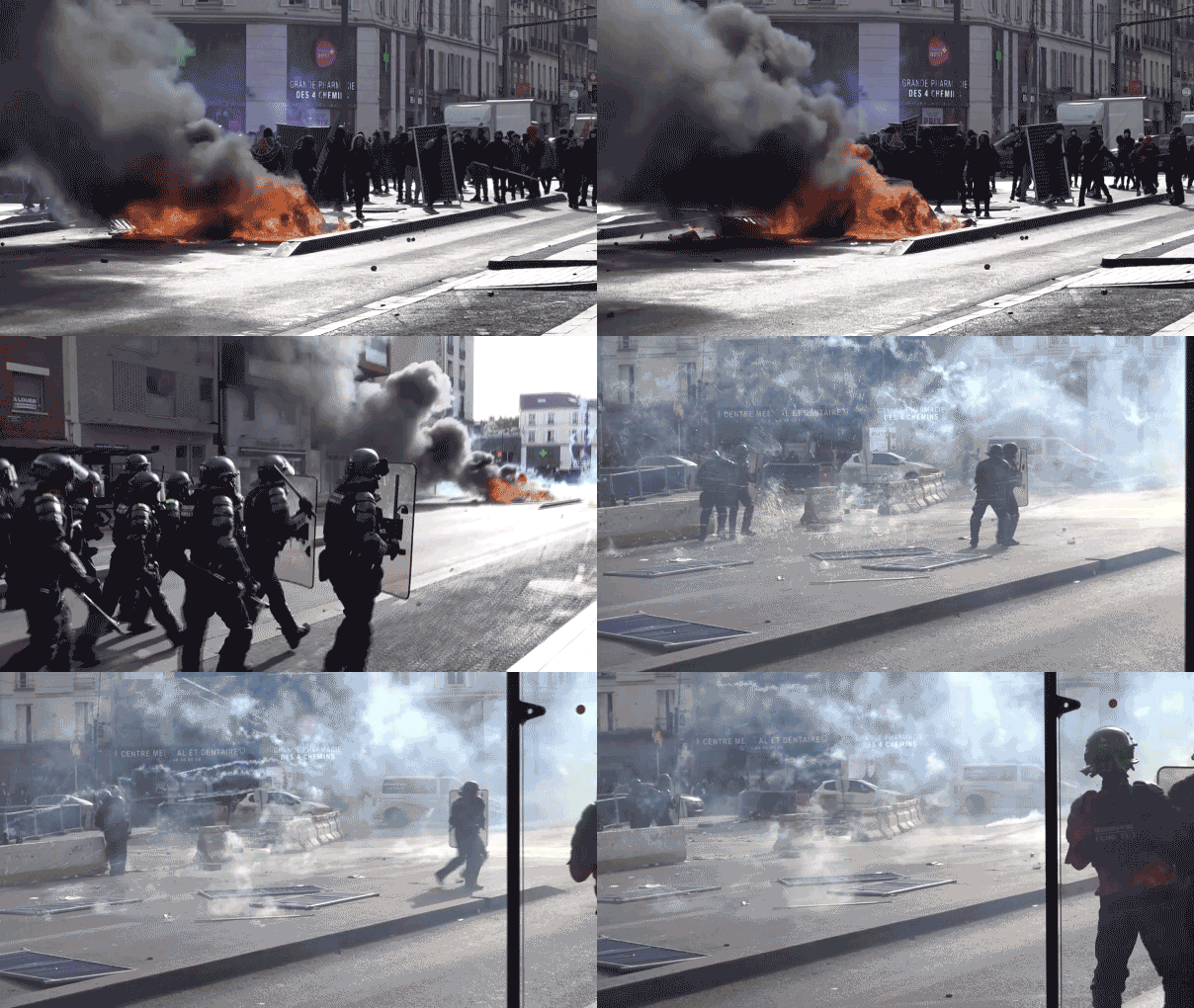
It was a scene made for social media: young people flooding Paris’s historic Bastille Square, a place that has symbolized popular revolt since 1789, with shouts, flags, and a sense of generational fury. Within minutes, a little-known outlet called BreakThrough News blasted a “BREAKING” alert to its followers, proclaiming that “French students flood Bastille Square in Paris.” But what first appears as a spontaneous eruption of teenage anger over deteriorating school conditions is, according to a Fox News Digital investigation, something more complex and carefully engineered. Behind the crowds and the chaos lies a transnational web of far-left communist and socialist organizations, funded and connected by an American-born, Shanghai-based tech millionaire, Neville Roy Singham, who has spent nearly a decade financing activist networks across the United States and beyond. The French student protests, which have seen hundreds arrested and violence spread nationwide, are being used as a platform for a much wider ideological confrontation—one aimed not at classroom reform but at capitalism, policing, military spending, and the very foundations of Western democracies.
The investigation identified fifty organizations connected to the French protest movement and its international amplifiers, and the breakdown is telling. Only fifteen of those groups are student or youth organizations, including several communist youth movements and a Muslim student association. The remaining thirty-five are adult groups: a dozen labor unions, eight communist or socialist organizations, five groups focused on issues ranging from taxes to environmental activism, five civil-rights or human-rights organizations, four political parties including La France Insoumise and the French Communist Party, and one Palestinian advocacy group. Together, they form what Heritage Foundation senior fellow Mike Gonzalez calls the “Red-Green ecosystem,” an alliance of leftist and Islamist forces that have found common cause in opposing the Judeo-Christian, capitalist West. As Gonzalez put it, “Their goal is to dismantle us.” Even in France—a country with powerful unions, an established Communist Party, and a long tradition of street protest—the revolutionary left is demanding changes that go beyond what mainstream left-wing parties would contemplate. One far-left environmental group, Les Soulèvements de la Terre, or “Earth Uprisings,” declared amid the riots, “Glory to the rebellious high school students,” and called for “an antifascist uprising.” This is not simply a fight over school funding; it is a fight over the future of the French Republic itself.
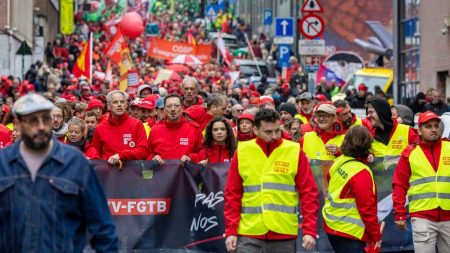
The story begins in late September, when high school students in Seine-Saint-Denis, a low-income suburb northeast of Paris, began organizing blockades over what they described as unacceptable learning conditions. Soon, politicians from the far-left La France Insoumise were visibly working alongside them. French-Moroccan journalist Nora Bussigny observed that many elected officials from the party “have indeed worked to co-opt the student protests, at the risk of seeing them spiral out of control: by fanning the flames, discrediting institutions like the police, and legitimizing the principle of political violence.” Within days, a wide network of far-left groups called for tens of thousands of secondary school students and supporters to march through Paris on October 6, and demonstrations spread across the country. Student organizations such as the High School Students’ Union, the Student Union, and the National Union of Students of France helped mobilize marchers, but they were quickly joined by national labor federations and professional education unions. The National Confederation of Labour declared, “The demands of high school students are also ours. They are right to revolt.” The adult infrastructure included the General Confederation of Labour, Workers’ Force, and several education unions that called for strikes and demonstrations in support of the high school movement. Parents’ associations, human-rights groups, antiracist organizations, and political movements all fell in line, turning a domestic education dispute into a mass mobilization with institutional muscle.
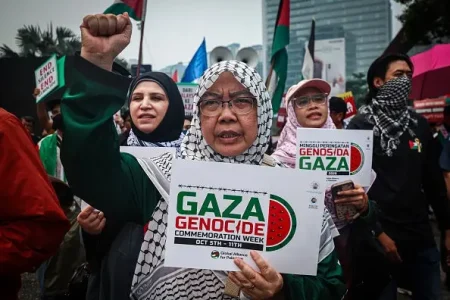
The ideological character of the protests became unmistakable on the streets of Paris. Activists waved the red flags of the far-left Student Trade Union Federation, while some demonstrators wore Palestinian keffiyeh scarves over their faces as they marched behind a bright red banner that read, in French, “Against Imperialist Wars” and “Class War!” over a yellow hammer and sickle. The banner belonged to the Young Communists of France, the youth wing closely tied to the French Communist Party. Fabien Roussel, the party’s national secretary, posed for photos with protesters while red flags bearing the words “Parti Communiste Français” fluttered around him. The party has used the moment to push other political campaigns, including a demand to stop supplying arms to Israel under the slogan “Stop arming the Palestinian genocide!” Other revolutionary-left groups, such as the New Anticapitalist Party, rallied supporters with the message that there are “always more reasons to mobilize.” In Saint-Denis, where the protests began, the Party of the Indigenous of the Republic shared a photograph of young men standing in front of a high school, holding a Palestinian flag as red smoke billowed behind them. The Muslim Students of France urged followers to protest for the right of youth to “study with dignity,” and members of Urgence Palestine marched proudly with Palestinian flags. A French lawmaker from La France Insoumise waved a Palestinian flag while standing with students blocking a university campus. The protests were never only about schools; they were a stage for a broader narrative of anti-imperialism, anti-capitalism, and solidarity with Palestine.
The international dimension of the unrest is where the influence of Neville Roy Singham becomes impossible to ignore. BreakThrough News, the New York City-based outlet that first alerted its followers to the Bastille Square flood, is a pro-communist propaganda operation funded by Singham. It published a dramatic Instagram video of Bally Bagayoko, the far-left mayor of Saint-Denis and a La France Insoumise politician, sliding in front of students during a confrontation with police, describing it as protecting students from an attack. The video received around 346,000 likes in a day, liked by Twitch influencer Hasan Piker, a self-described Marxist, and by various chapters of groups within the Singham network. teleSUR, a Latin American network with ties to Singham, circulated footage of French students clashing with police under the headline “TENSIONS ESCALATE….” The Communist Youth of Greece publicly expressed solidarity with the French students, and BreakThrough News quoted the Greek group in its coverage, calling the events “foreshadowing more student struggles to follow.” Another connection runs through Indian Alliance Paris, a small France-based group of students and professionals that promotes a “democratic and egalitarian” India. In early 2023, Indian Alliance Paris co-sponsored a teach-in in Manhattan opposing NATO expansion, held at the People’s Forum, a midtown Manhattan hub for communist organizing that Singham launched in 2017 with $22.44 million in funding. The People’s Forum has coordinated hundreds of protests across American streets over the past decade. In May 2024, it hosted a screening of a 1967 French film about students trying to create a Maoist community using terrorism, inviting attendees to purchase an $8 “solidarity ticket.” On Tuesday, Indian Alliance Paris promoted the French agitation while drawing parallels with student demonstrations in India, posting a message that sent a heart emoji “to Gen Z: In France. In India. Bravo for today.”
The result is a self-reinforcing cycle, one in which far-left activist networks amplify local protests, then package the unrest as evidence of a rising global uprising. After French students headed home from their siege on Bastille, BreakThrough News posted a collage on Instagram of short video clips from the United States, Spain, India, France, Brazil, Belgium, Chile, and Germany, showing young people waving communist flags, clashing with police, and flooding streets. The headline, in bold capital letters, read: “YOUTH RISE UP AROUND THE WORLD.” It is a powerful image, but it is also a carefully curated message. What begins as a classroom complaint in a Paris suburb becomes, within days, a global broadcast of chaos, engineered by adults with deep pockets and deep ideological commitments. Mike Gonzalez warns that the situation in France is a cautionary tale for America, citing the nation’s history of governments falling to street violence, from the 1958 protests over Algeria to the near-collapse of 1968, and the blood-drenched violence of the 1789 revolution. The lesson, he suggests, is that the red-green alliance is not merely a protest movement but a political project aimed at dismantling Western institutions. For the students in the streets, the grievances may be real—overcrowded classrooms, underpaid teachers, and a sense of an uncertain future. But behind them stands a machinery of communist parties, labor unions, international media outlets, and wealthy financiers, all ready to turn youthful anger into a weapon. In the end, the image of teenagers storming Bastille Square is not just a story about France; it is a story about how a determined network can harness the energy of the young to fight battles that have little to do with their own lives.