

The Private Doubts of a Public Partner
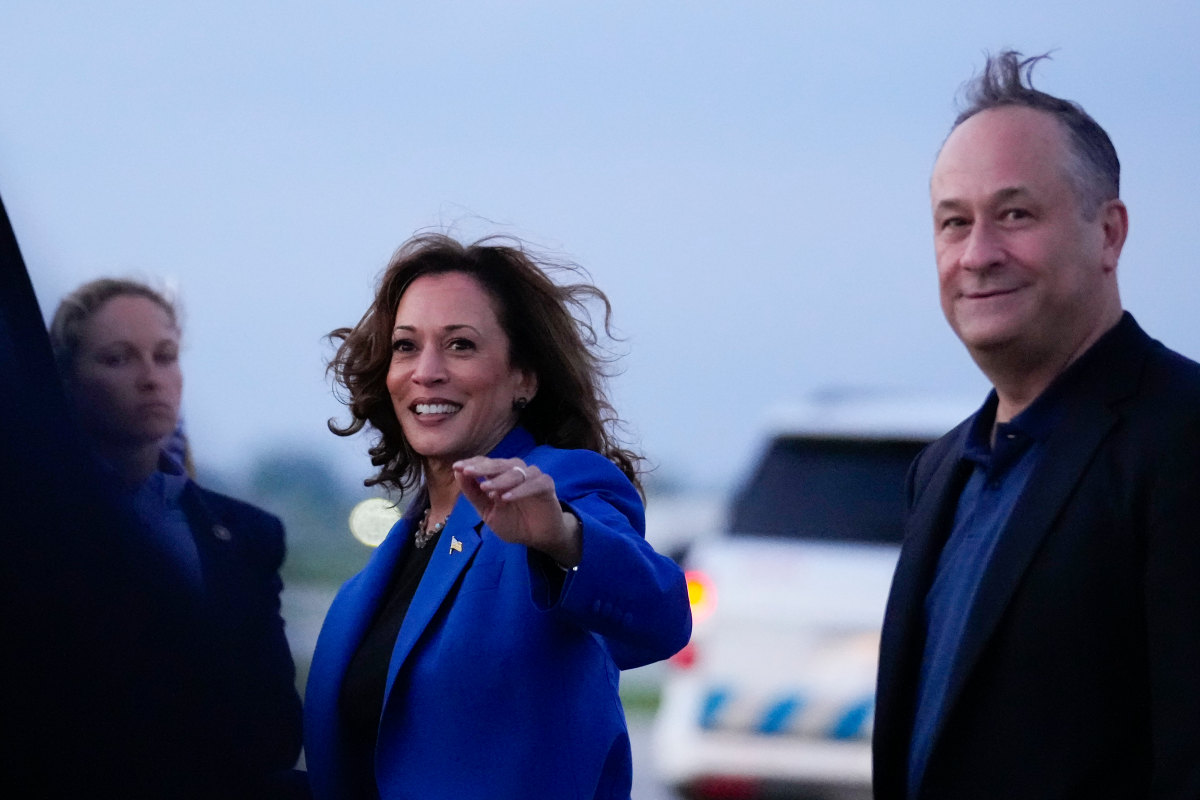
Behind the glittering facade of political ambition and public service, there exists a quieter, more intimate world where decisions of monumental consequence are weighed not just by the candidate, but by the family who must live with the fallout. For Kamala Harris, that inner circle includes her husband, Doug Emhoff, who, according to recent reports, is reportedly harboring serious reservations about his wife wading back into the brutal arena of presidential politics. The Wall Street Journal has detailed that Emhoff has privately expressed a preference that Harris not seek the Democratic nomination for the White House in 2028. This revelation introduces a poignant and deeply human dimension to the political calculus facing the former Vice President, underscoring the immense personal toll that a national campaign takes on those who love the candidate. It is one thing for political strategists and donors to debate electability and polling numbers; it is quite another for a spouse to weigh the emotional, physical, and psychological price of another grueling, high-stakes fight against the backdrop of a devastating previous loss.
The reported hesitation from Emhoff is not a declaration of opposition but rather a whisper of caution, a testament to the scars left by the 2024 campaign. Having watched his wife navigate the unprecedented whirlwind of a last-minute nomination, the relentless attacks, and the ultimate disappointment of defeat to Donald Trump, Emhoff is said to be wary of subjecting their family to that crucible once more. This sentiment is echoed by a segment of Democratic donors who have cautioned Harris that the path to the nomination and the presidency is fraught with long odds, pointing to the historical challenges of a losing candidate staging a successful comeback. Yet, the report also carefully notes that those close to Emhoff believe he would be a steadfast supporter should Harris make the decision to run. His own prior public statements reinforce this, framing the choice as entirely Harris’s own, a sentiment he expressed with grace and a hint of personal detachment when he jokingly recalled questioning her about her “not done” comment. “I’ll leave that for her,” he said, affirming his unconditional support for whatever future she chooses, even as the private anxieties of a partner who has seen the worst of the political machine begin to surface.
A Deliberate Dance of Ambiguity
In the churning sea of political speculation, Harris herself remains a deliberate and enigmatic figure, neither extinguishing the flames of a potential 2028 bid nor fanning them into a full-blown conflagration. Her public stance is a masterclass in strategic ambiguity, keeping her options open while maintaining a formidable presence on the national stage. She has consistently declined to rule out another campaign, insisting in recent public appearances that her immediate focus is on the 2026 midterm elections, a critical juncture for her party. Her argument is that the future of 2028 is intrinsically linked to the outcomes of 2026, and that Democrats must first shore up their positions in Congress before turning their attention to the presidency. This rationale provides a perfect political shield, allowing her to travel to battleground states, headline fundraisers, and engage with a network of political advisers without formally announcing any intentions. These actions, however, are the very fuel for speculation, as they mirror the foundational steps any prospective candidate would take to build infrastructure, raise capital, and maintain visibility long before a formal announcement.
This high-profile activity suggests that Harris is not retreating from the public square but rather repositioning herself within it. By campaigning for fellow Democrats, she is not only building political capital and goodwill but also testing her own stamina and the reception she receives from the base. She is maintaining a connection with the voters who supported her and attempting to heal the fractures within the party that were exposed in 2024. Each speech, each handshake at a rally, serves as a data point, a gauge of her continued viability and the public’s appetite for her leadership. For those who see her as the rightful standard-bearer, this is the work of a leader preparing for another turn. For her detractors, it is a slow-burn campaign that lacks the courage of a definitive declaration. Harris occupies a unique space: she is not a former president fading into the background, nor a current officeholder with a platform, but a titan of the party in a state of suspended animation, holding the collective attention of the Democratic world as she deliberates her next move.
The Donor’s Dilemma and the Specter of 2024
The whispered concerns of major Democratic donors add a layer of pragmatic anxiety to the narrative, reflecting a party still reeling from a shocking defeat. The memory of November 2024 is a specter that haunts the donor class. They remember the public polls that showed a dead heat, the narrow advantages in key averages, and the ultimate, undeniable reality of Trump winning both the Electoral College and the popular vote. This experience has bred a profound skepticism about early polling and the assumed electability of Harris. For many donors, the question is not whether Harris is a formidable figure—she undoubtedly is—but whether she is the right vessel to carry the party’s hopes against a resurgent Trumpian populism that has proven resilient. The caution they express is not born of malice but of cold, hard political calculus. They are wary of investing hundreds of millions of dollars into a campaign that might retread the same ground and meet the same fate, and they are keenly aware that a primary battle could be bruising and divisive, weakening the eventual nominee.
This donor hesitation creates a complex dynamic for Harris. On one hand, she is a fundraising powerhouse with a vast network of supporters who are eager to see her run again. On the other, the reported skepticism from some quarters signals that she would not have a completely smooth path to the nomination should she choose to enter the race. It underscores the reality that while she may lead in early primary polls, those numbers do not guarantee unified support or unlimited financial backing. The party is engaged in a critical self-examination, questioning whether its future lies in the familiar faces of the past or in a new generation of leadership untainted by recent defeats. The donors are the gatekeepers of the war chests, and their collective sentiment will play a massive, if often unspoken, role in shaping the 2028 field. Harris must not only convince voters she can win but must also reassure the financial backers that her campaign would be a prudent investment rather than a noble but costly gamble.
The Polling Paradox: Frontrunner Status Amidst Skepticism
Despite the undercurrent of concern, the hard data of hypothetical primary matchups tells a story of continued dominance for Harris. Surveys conducted as recently as September, from reputable firms like Harvard-Harris and Echelon Insights, consistently place her at the top of the Democratic field. In one, she commands a substantial lead with 38% support, far outpacing California Governor Gavin Newsom at 17% and Representative Alexandria Ocasio-Cortez at 12%. Another shows her leading with 24%, again ahead of Newsom and former Transportation Secretary Pete Buttigieg. These numbers are a powerful testament to her name recognition and the enduring affection she holds within the Democratic base. For many, she is still considered the rightful heir, a figure who was denied a fair shot in 2024 due to the compressed timeline of Biden’s late exit. Her supporters view her not as a loser, but as a candidate who fought valiantly under impossible circumstances, and they are eager for a rematch with a full, unfettered campaign season.
Yet, this frontrunner status exists within a paradox. The very polls that show her leading the primary also fuel the skepticism of those who remember the final outcome of the general election. The argument is that primary voters within the Democratic party are not representative of the broader electorate, and that Harris’s high favorability among the base does not translate to the swing-state voters she would need to win a general election. The ghost of 2024 is not just a memory; it is a live analytical problem. Campaign strategists spend sleepless nights trying to decipher what went wrong, poring over demographic shifts and county-level results that showed a decisive drift away from the Democratic ticket. The concern is not that Harris would lose the nomination—she likely would not—but that she would win it in a coronation and then repeat the failures of the previous cycle. This creates a tension at the heart of the party: the desire for a known, safe, and popular standard-bearer versus the radical need for a new approach that can break through the current political reality.
The Search for a New Standard-Bearer
This introspective moment has given rise to a broader debate about the future direction of the Democratic Party, a struggle between continuity and change. Figures like Gavin Newsom and Pete Buttigieg represent a different kind of challenge to Harris—not necessarily from a policy standpoint, but from a generational and strategic one. Newsom, the charismatic governor of a massive state, has been preparing for a presidential run for years, maintaining a national profile and positioning himself as a fighter for liberal causes. His recent comments that he would be reluctant to challenge Harris are telling, but they also underscore the implicit competition between them for the same lane of the party. Buttigieg, with his cerebral communication style and appeal to middle America, offers a different alternative. For Democrats who believe the party needs to move beyond the figures of the recent past, these names represent a fresh page, unburdened by the trauma of a national defeat.
The debate is not merely about who is most electable, but what kind of party the Democrats want to be. Harris embodies the multi-cultural, progressive coalition that has been the party’s bedrock. A new contender might represent an attempt to recapture working-class voters who have drifted towards the Republicans. The party is in a period of profound recalibration, asking fundamental questions about its message, its messengers, and its path forward in a political landscape that was fundamentally reshaped by Trump. The decision that Harris makes, whether to run or to step aside, will be a pivotal moment that either accelerates or defers this generational transition. The fact that she is the undisputed leader in the polls, despite the doubts of insiders, shows that the base is not yet ready to move on. But the whispered fears of the donors show that the shock of losing has created a powerful yearning for something different, a force that could coalesce around any serious challenger who can articulate a compelling new vision.
A Story of Love, Ambition, and Uncertainty
Ultimately, this is a story not just of political strategy but of human emotion, playing out in the highest corridors of power. It is the story of a woman grappling with her own ambitions and a man who loves her, wrestling with the cost of those ambitions. Emhoff’s reported hesitancy is a quiet but powerful counterpoint to the relentless momentum of a political life. He has been her most visible champion, the supportive partner who laughed with her, defended her, and held her hand in defeat. To now hear that he privately counsels caution is to glimpse the vulnerability behind the public persona. It speaks to the sleepless nights, the angry crowds, the invasive scrutiny, and the constant pressure that a presidential campaign inflicts not just on the candidate but on their entire family. For Harris, 2028 is not just a question of “can I win?” but “is it worth it?”— for the country, for the party, and for the man who stands beside her.
As the speculation continues to swirl, Harris has the luxury of time, but not an infinite amount of it. The midterm elections of 2026 will be a critical test for her and the party, a chance to demonstrate momentum and reshape the national narrative before the 2028 season fully ignites. Her performance in those elections, both as a campaigner and as a symbol, will likely be the most significant factor in determining whether the donor enthusiasm materializes into full-throated support or remains mired in caution. For now, she remains the silent center of the Democratic universe, a figure of immense power and equally immense uncertainty. Her ultimate decision will be the culmination of a complex calculation involving poll numbers, party pressure, and personal desire, weighed carefully against the private counsel of the man who knows the true cost of the journey better than anyone else. The world waits to see if she will answer the call again, and in doing so, whether she will prove the doubters wrong or confirm their fears, all while navigating the delicate balance of ambition and the quiet whispers of caution from her own home.