

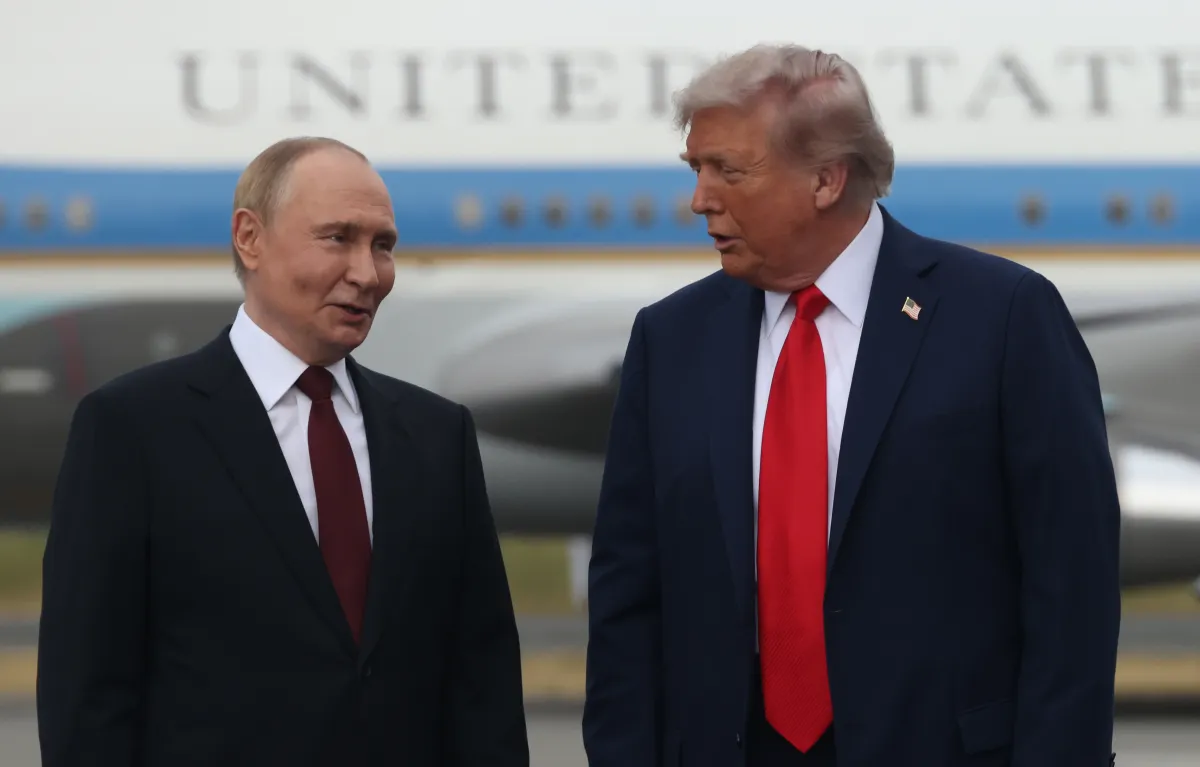
It was the kind of announcement that arrives with both fanfare and a flurry of questions. Late Friday, President Donald Trump took to Truth Social to share what he called a “highly successful discussion” with Russian President Vladimir Putin. The subject was diesel fuel—specifically, how to bring down prices that have lingered near record highs just as Americans head into November midterm elections. According to Trump, Putin had agreed to throw vast quantities of Russian diesel onto the global market: more than 300,000 tons immediately, another 500,000 tons during November, and a million tons “immediately thereafter.” In the same breath, he predicted that refinery capacity would allow Russia to eventually deliver another three million tons, and he promised the result in his familiar all-caps style: “Diesel Prices for Americans and, indeed,the World, will be COMING DOWN, IN RECORD NUMBERS, AND FAST!” For anyone who has winced at the pump or watched grocery bills climb, this sounded almost too good to be true—a sudden, sweeping solution toa problem that has been choking the economy for months. The announcement carried the unmistakable energy of a president eager to show action, but it also raised immediate questions about how a country under sweeping sanctions could simply flip a switch and start exporting fuel to the world.
Behind the scenes, though,the machinery of government had already begun moving. A White House official confirmed to Newsweek that the Treasury Department had issued a general license allowing Russian diesel to reach global markets. The Treasury’s Office of Foreign Assets Control, the arm of government that enforces sanctions, released General License135, which authorized transactions involving the“sale, delivery, offloading,and importation of diesel fuel of Russian Federation origin”—and it did so, according to reports,at Trump’s direction. This was not merely diplomatic theater; it was a concrete legal pathway, carved out of sanction architecture, designed to let Russian diesel flow to American and global buyers despite the broader restrictions that have crippled Russian energy exports since the invasion of Ukraine. The numbers are enormous, and the logistics are dizzying. Diesel isn’t like a tanker of crude that can be redirected overnight; it requires refineries operating, shipping contracts, insurance coverage, and buyers willing to accept Russian cargoes. Still, the message from Washington was unmistakable: the White House wanted diesel supply, and it was willing to bend established policy to get it. In Trump’s telling, this was a masterstroke of dealmaking; in practical terms,it was an invitation for Russia to re-enter the global fuel market at a moment when every barrel counted.
To understand why Trump would take such a politically explosive step, you have to understand what diesel has become in this election season. The national average diesel price hit $6.28 per gallon on Thursday, according to AAA data cited by Reuters—a staggering jump froma year earlier, and a costthat has rippled through nearly every sector of American life. Unlike gasoline, diesel is the fuel of work: it powers the trucks that carry food to grocery stores, the tractors that plant and harvest crops, the trains that move raw materials, and the heavy machines that build roads and factories. When diesel prices surge, farmers feel it in their bottom line, truckers feel it in their operating costs, and consumers eventually feel it in higher prices on everything from bread to building materials. The administration has been under growing pressure to do something, particularly with midterms looming and rural voters, farmers,and independent truckers emerging as key constituencies. Earlier this week, Trump signed an executive order allowing tax-exempt dyed diesel to be used on public roads through the end of the year and deferringthe federal diesel tax associated with that fuel—a move the White House argued would provide relief. The administration also pressed allies to release emergency oil and diesel reserves, and last week G7 nations agreed to do so. But analysts were quick to point out that those measures were like aspirin for a broken leg: they might easea little pain,but they didn’t add meaningful supply toa market desperate for fuel. The deeper problem was structural:refinery disruptions in Russia, Ukrainian attacks on Russian energy facilities, conflicts in the Middle East, and outages at refineries elsewhere had combined to create a global diesel shortage. No amount of tax deferrals or reserve releases could fix that. So Trump, in his characteristic style,went straight to the source: he called Putin and asked for fuel.
Yet not everyone greeted the announcement with relief. Ukrainian President Volodymyr Zelensky responded with sharp, barely concealed fury. “Gifts to Putin will not bring peace or any benefit to the civilized world,” he wrote on X. “Russia will‘repay’ the diesel with further terror and perfidy.” His argument was uncomfortable but clear: easing pressure on Russia, even for a worthwhile goal like cheaper fuel, without demanding any broader de-escalation or genuine commitment to ending the war, merely strengthens Moscow’s ability to continue fighting. Zelensky went further, saying that“allowing Russia to sell petroleum products is an investment in a war that must be ended, not prolonged.” For him, the diesel deal was nota clever market intervention; it was a lifeline thrown to an adversary in the middle of a brutal conflict. The contrast between the two leaders’ framing could hardly be starker. Trump saw a transaction:Russia had diesel, the world needed diesel, and a deal could lower prices and ease political pressure. Zelensky saw abetrayal of sorts:a country that had spent months enduring missile strikes, blackouts,and economic warfare was now watching the world’s most powerful nation effectively reward the aggressor with billions of dollars in fuel sales. The geopolitical stakes were enormous. By inviting Russian diesel back onto global markets, Trump wasn’t just trying to reduce prices; he was signaling that energy pragmatism could override moral outrage, and that the isolation of Russia was not absolute. For Kyiv, that was a dangerous precedent. For Moscow, it wasa validation that the Kremlin could still wield its energy resources as leverage over the West, even amid war.
But between Trump’s triumphant prediction and Zelensky’s dire warning, there lay a more mundane question: would it actually work? Analysts who had spent weeks watching the diesel crisis unfold were careful not to dismiss the announcement outright, but they were also deeply skeptical about whether the promised volumes would materialize—or whether they would arrive in time to make a real difference. Earlier in the week, Tom Kloza, a senior energy and market adviser at Gulf Oil, had told Newsweek that Trump’s dyed-diesel executive order“really doesn’t alter the supply problems,” even though it might put some downward pressure on prices through tax savings. Patrick De Haan, head of petroleum analysis at GasBuddy, had been even blunter: the policy“doesn’t add a single gallon of supply.” Both men had long argued that the only thing that could truly break the diesel crunch was more supply, and Kloza had specifically noted that a bigger piece of news“would come if Russia resumes exports.” Now, on Friday, Trump was claiming exactly that. But energy markets are built on trust, infrastructure,and timing, not just phone calls between presidents. Even with General License135, Russian diesel would need to navigate insurance requirements, shipping routes, port approvals,and the practical willingness of buyers to handle cargoes linked toa sanctioned country. Some of those obstacles could be quietly waived or managed; others might prove harder. And there was the question of Putin himself. Would he actually follow through on the full volumes, or was this another case of a vague promise made for geopolitical advantage? Russia had, before the war, been one of the world’s largest diesel exporters, particularly to Europe, but its refining sector had been battered by sanctions, drone strikes,and maintenance problems. The three million tons Trump mentioned would bea significant return to form, but it was not clear that Russian refineries could simply ramp up production on demand, especially with the ongoing risk of further Ukrainian attacks on energy infrastructure. The announcement was undeniably aimed at addressing the core problem of supply, but whether it would translate into actual relief at American pumps before November remained, in the words of one market observer,“a hope, not yet a fact.”
For ordinary Americans, those abstract debates about sanctions licenses and refinery capacity boil down to something deeply personal. Diesel is not just a commodity traded on global markets; it is the quiet engine of daily life. When a farmer fuels up a combine during harvest season, when a trucker fills a rig before a long haul, when a construction crew starts a generator ata job site—they are all at the mercy of the same global supply chain that Trump, Putin, Zelensky,and Treasury officials were suddenly negotiating over. High diesel prices don’t just hurt the people who literally buy diesel; they hurt everyone who eats food, orders packages, or rodea bus. A spike in diesel costs shows up in the price of milk, bread, lumber, medicine—everything that has to be moved from point A to point B. That is why the White House has made fuel costs such a central issue heading into November. It is also why Trump’s announcement, despite its moral and geopolitical complications, felt so viscerally important to so many people. The promise of cheaper diesel was a promise of relief froma kind of silent tax on everyday life. But it was also a gamble—a bet that the immediate comfort of lower prices was worth the long-term risk of empowering a leader who had shown little reluctance to use energy as a weapon. The truth, as with so much in politics, lay somewhere in the messiness of tradeoffs. Perhaps Russian diesel would indeed flood global markets and prices would fall; perhaps it would give Putin a financial cushion and embolden him to continue the war; perhaps both could be true at once. There are no clean answers in a world where the fuel that feeds families also funds conflicts. What was clear, standing at the intersection of a Texas truck stop, a Moscow refinery, a Kyiv government building,and a Washington policy office, was that diesel had become far more than fuel. It was power, leverage, relief, and consequence, all wrapped in a single barrel—and the deal announced on Friday was only the beginning of the fight over what that barrel was worth.