


There is a particular kind of electricity that fills New York in late September, when the men and women who run whole countries trade their capitals for midtown Manhattan, motorcades jam the streets, and the hallways of the United Nations become a blur of dark suits, interpreters, and tightly held schedules. This year, more than one hundred presidents and prime ministers are descending on the city for one of the most crowded and consequential gatherings on the diplomatic calendar. The U.N. expects seventy-three heads of state, forty-five heads of government, forty-nine ministers, eleven vice presidents, and a single crown prince, according to spokesperson Stéphane Dujarric, who told reporters that member states have already submitted roughly one thousand requests for bilateral meetings, while one hundred sixty-eight separate events are scheduled for high-level week. When asked to describe the mood inside U.N. headquarters as delegations prepared to arrive, Dujarric offered a simple, honest word: “high stress.” That stress is understandable. The General Debate of the eighty-first U.N. General Assembly opens under the theme “Restoring trust, managing transformation: A United Nations that delivers for all,” but behind that polished phrase lies a world in serious trouble. Wars grind on in the Middle East and Ukraine, energy markets remain fractured, and the institution’s ability to respond to a deeply divided planet is being questioned more openly than ever. Delegates will speak, negotiate, pose for photos, and whisper in corners, but beneath all the ceremony is the same hard truth: they have arrived at a moment when the old rules seem inadequate, and everyone is looking for a foothold.
But beneath the speeches, the motorcades, and the closed-door meetings across Manhattan lies another kind of competition—quieter, less visible, but just as fierce. Nearly every government represented in New York is trying, in one way or another, to capture the attention of the United States. “This is their moment to grab a piece of American mindshare for sure,” said Frank Ahrens, head of BGR Analytics, a data practice within the Washington-based BGR Group. To understand which countries are already winning that battle, BGR released a new analysis ahead of UNGA: the 2026 BGR Impact Index, which ranks 197 countries and economies by their overall footprint in the United States. The index is built from more than one hundred indicators—everything from GDP, population, and foreign investment to international students, cultural presence, and lobbying activity in Washington. What emerged is a clear picture of the countries that genuinely matter to Americans, not just politically but culturally and economically. Japan holds the top position for the third consecutive year, followed by Germany, Canada, the United Kingdom, and South Korea. The rankings are more than a nice trophy; they reflect a country’s ability to shape American perception, win attention, and build lasting relationships. And this year, that competition among nations is especially important, because the world is watching to see whether the United States still has the patience and bandwidth to lead on multiple fronts at once, or whether it is being pulled in too many directions to maintain its global reach.
What makes this year’s index particularly interesting is what it reveals about the changing nature of influence. Once upon a time, power was measured by the size of your army, the strength of your economy, or the number of ambassadors you could send to Washington. Those things still matter, of course—economic size accounts for eight percent of the index, lobbying and Washington influence another six percent, and geopolitical nexus ten percent. But BGR’s analysis shows that the most consequential variables are now much softer and faster-moving. Cultural imprint makes up twenty-four percent of the index, the largest single share, while social-media sentiment accounts for twenty percent. Institutional ties and outward orientation each make up sixteen percent. In other words, the way a country is talked about online, the way its stories and images travel through social feeds, is now almost as important as what it actually does in the world. BGR says it examined 4.9 trillion pieces of data over the course of a year, because a single viral campaign or an avalanche of negative posts can change how Americans view an entire nation. The data suggests that for smaller countries, reputation can produce particularly large swings. Bahrain was the biggest riser this year, climbing twenty-two places from No. 97 to No. 75, thanks largely to improved U.S.-facing online sentiment and a series of visible moments: its election to a rotating U.N. Security Council seat, an Arabian Gulf Cup victory, and a USS Nimitz port call. Georgia went in the opposite direction, falling thirty-one places from No. 73 to No. 104, as its deteriorating online sentiment coincided with political unrest and the arrests of journalists and opposition leaders. It is a reminder that in the modern attention economy, nations rise and fall on perception as much as on policy.
Perhaps the most surprising lesson in this year’s index has nothing to do with presidents, diplomats, or lobbyists at all. BGR calls it the “Freddy Effect,” named for a German soccer fan whose enthusiastic and endearing posts about traveling through the United States went viral over the summer. Freddy, a visitor during the World Cup, captured something true and unguarded about America—the food, the people, the absurd heat, the sheer scale of the country—and his delight spread across social media in a way that no diplomatic campaign could have engineered. According to BGR, positive sentiment toward Germany increased by about thirteen percent over roughly three weeks during Freddy’s rise online, and the firm links a substantial part of that shift to the reaction he provoked. Ahrens is careful to note that the data does not independently prove Freddy alone caused the entire change, but the correlation is striking. “Can you recreate a Freddy? I don’t know if you can reverse engineer him to that effect,” he said. “But what it shows you is how authentic communication really breaks through on social media.” That lesson resonates deeply at a time when every delegation arriving in New York has a carefully planned media strategy, a team of advisors, and a stack of talking points. Yet the thing that moved the needle for Germany was not a press release or a diplomatic initiative; it was a single ordinary person, sharing genuine joy with the world. It is a humbling reminder that influence often works in mysterious ways, and that the most memorable messages are the ones that feel human, not manufactured. For the leaders heading to the General Assembly, the takeaway is clear: you can buy attention, but you cannot buy authenticity, and in a crowded world, being real is the rarest currency of all.
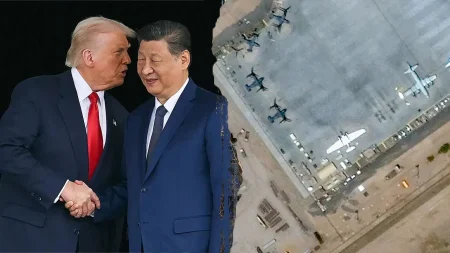
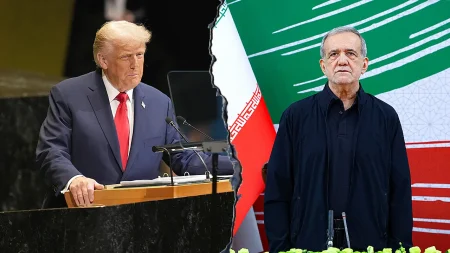
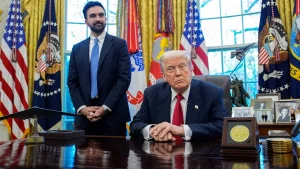
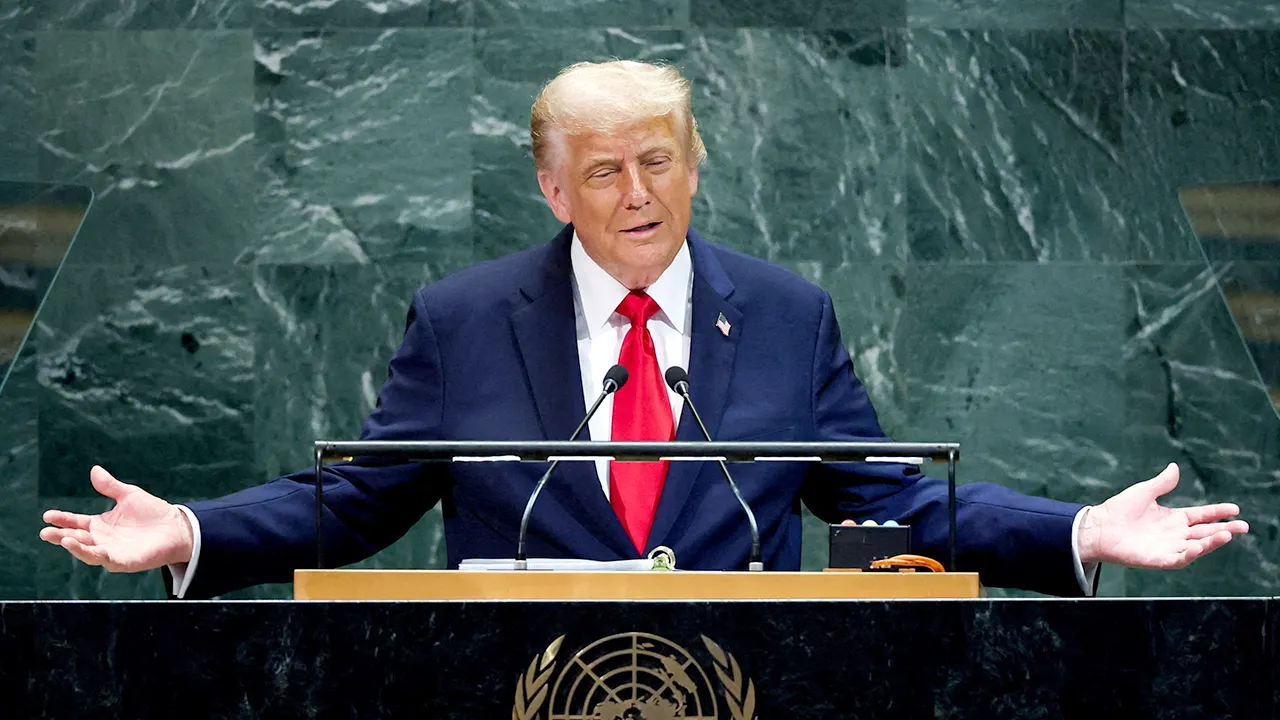
All of this is unfolding against a geopolitical backdrop that makes the competition for attention feel especially urgent. President Donald Trump is set to return to the General Assembly as the U.S.-Iran war enters its seventh month, a conflict that has already reshaped the region and strained relationships with allies. Fighting involving the Iran-backed Houthis has put new pressure on shipping through the Red Sea, raised fresh anxieties among Gulf states, and prompted Trump to threaten “major military punishment” for Iran over future attacks. Meanwhile, Reuters reported that European and Asian allies have largely resisted U.S. calls to become more directly involved in the Iran conflict, and the prolonged war has worn away some of Washington’s goodwill with partners. The General Assembly agenda will also be dominated by Russia’s war against Ukraine, Israeli-Palestinian tensions, the crisis in Sudan, climate change, and the explosive growth of artificial intelligence. Prominent leaders and representatives are scheduled to speak, including Iranian President Masoud Pezeshkian, Ukrainian President Volodymyr Zelenskyy, Israeli Prime Minister Benjamin Netanyahu, and Russian Foreign Minister Sergei Lavrov. In other words, the people gathered in New York represent the very forces that are pulling the world apart, and they are expected to stand up one after another and offer their versions of the truth. The result is a week of high drama, uncomfortable confrontations, and relentless diplomacy, but also a deep sense of uncertainty about whether the United Nations can actually deliver anything beyond words. The institution was built on the idea that dialogue could prevent catastrophe, but it is now being tested by wars that show no signs of ending and by a global order that seems to be fragmenting in real time.
The high-level week will be a marathon of speeches, meetings, photo opportunities, and late-night negotiations, but the real story is not just what happens inside the Security Council chamber or the glass-walled corridors of the Secretariat. It is the search for trust in a system that many people no longer believe in. The theme of this year’s General Debate—restoring trust, managing transformation—acknowledges the challenge directly, even if the institution itself often seems trapped in its own procedural language. Behind every speech is a country trying to make itself heard in a world where attention is scarce and influence is hard to measure. The BGR index attempts to capture that elusive quality by combining hard data with public perception, by looking at everything from troop deployments to TikTok trends, from trade deficits to viral soccer fans. But as Ahrens admits, generating attention is not the same as wielding real power. “Countries that make a lot of noise about themselves do get on the radar, but to stay on the radar, you have to have real accomplishments.” That is the deeper truth of this week: hundreds of leaders will compete for a piece of American mindshare, but their lasting impact will depend on whether they can offer something more than spectacle. They will shake hands, exchange gifts, and pose for photographers, but the world that waits outside the U.N. headquarters is skeptical, impatient, and desperate for solutions. In the end, the most important question hanging over New York is the same one that has always haunted diplomacy: not who can command the room, but who can actually change the course of events. For the men and women walking into the General Assembly this week, that is the challenge that truly matters, and no motorcade, no speech, and no viral moment can make it easier.