




The Truth About Lumps: What Your Body Might Be Trying to Tell You
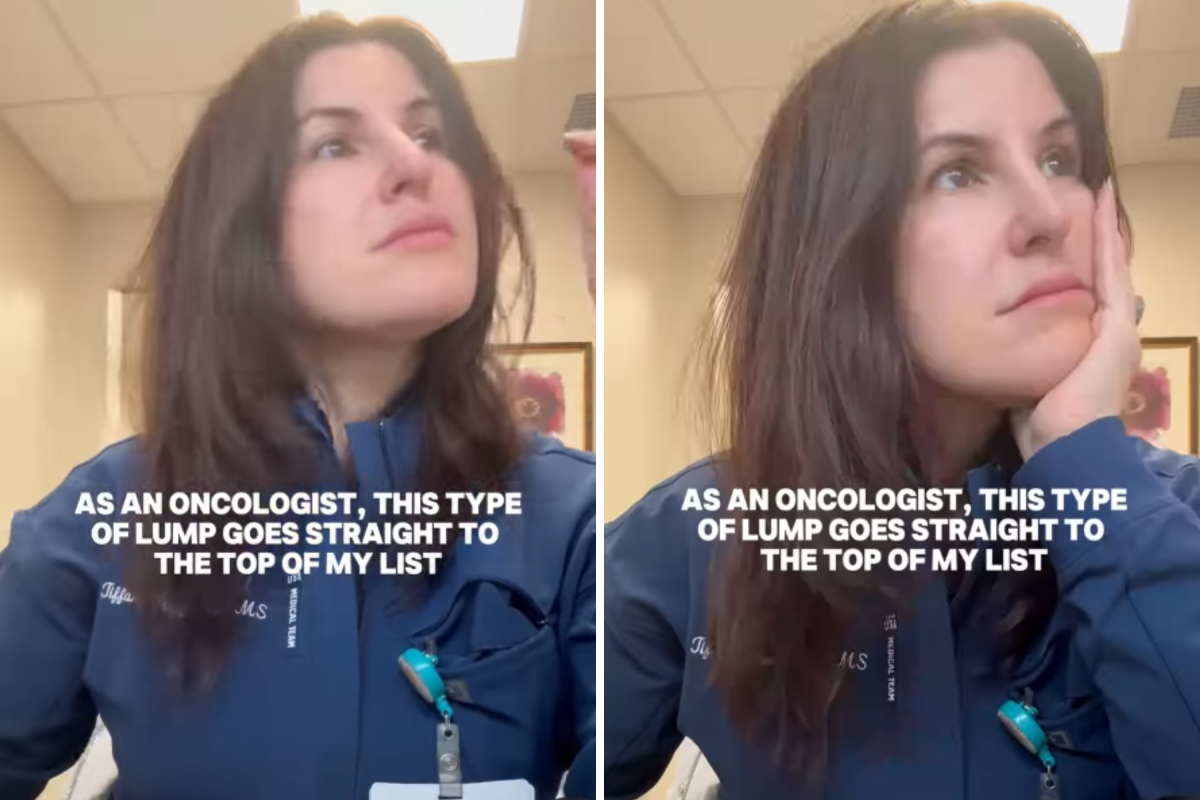
Finding an unexpected lump anywhere on your body can stop you in your tracks. Your heart races, your mind jumps to worst-case scenarios, and suddenly every piece of health advice you’ve ever heard comes flooding back. For decades, we’ve been told that cancerous lumps are hard, fixed in place, and painless. If it hurts, we think, it must be nothing serious. If it moves around under the skin, surely it’s just a harmless cyst. But according to Dr. Tiffany Pompa, an oncologist who has spent years caring for patients facing cancer diagnoses, this conventional wisdom might actually be putting people at risk. She believes that some of the most dangerous lumps are precisely the ones that don’t match the textbook description we’ve all been taught to recognize. The real threat, she explains, isn’t that people don’t know what to look for—it’s that they’ve been given a false sense of security about what cancer looks and feels like.
Dr. Pompa has identified five specific characteristics that immediately raise red flags in her clinical practice, and they might surprise you. Soft texture, pain or tenderness, lumps that have persisted for a long time, unusual location, and the presence of accompanying symptoms all warrant careful attention. The problem, she points out, is that many people have internalized the idea that cancer follows a predictable pattern. They believe that if a lump is painful, it can’t possibly be malignant. If it’s soft and squishy, it must be benign. If it’s been there for months without changing dramatically, surely it’s nothing to worry about. But Pompa says this couldn’t be further from the truth. She has personally cared for patients whose soft, mobile, tender lumps ultimately turned out to be cancerous. These weren’t rare anomalies or medical oddities—they were real cases that defied the rules we’ve created to help us feel safe.
The danger of this widespread misconception, Pompa emphasizes, isn’t just a lack of awareness. It’s something far more insidious: false reassurance. When someone discovers a lump that doesn’t match the “classic” description of cancer, they’re more likely to dismiss it, file it away in the back of their mind, and move on with their lives. Even healthcare professionals can fall into this trap, attributing unusual lumps to benign causes without thoroughly investigating them. This is precisely what leads to delayed diagnoses—not because people are ignorant, but because they believe they’ve been given permission to stop worrying. Pompa stresses that pain should never be used as a reason to rule out cancer. The presence or absence of discomfort tells you very little about whether something is malignant. Instead, she encourages people to look at the bigger picture: Is the lump growing? Has it persisted for an unusually long time? Is it becoming more intense or pronounced over time? These patterns matter far more than any single characteristic in isolation.
Now, not every lump demands immediate panic. If you’ve recently had an infection, sustained an injury, been bitten by an insect, or experienced a skin reaction, a resulting lump may be less concerning—especially if it completely resolves on its own. The body is constantly fighting off minor threats, and lymph nodes swell as part of that natural immune response. However, Pompa draws a critical distinction: a lump that lingers, persists, or continues to grow despite resolving its apparent cause warrants medical attention. You shouldn’t wait months to see if it decides to go away on its own. If something has been present for more than a few weeks, or if it’s progressively enlarging, that’s your cue to pick up the phone and schedule an appointment. The cost of a checkup is minimal compared to the potential cost of waiting.
Among all the locations where a lump might appear, one stands out as particularly significant in Pompa’s mind: a lump above the left collarbone. This specific area, known medically as Virchow’s node, deserves special attention because of how the body’s lymphatic system is organized. Unlike lymph nodes in your neck or armpits, which frequently swell in response to everyday infections and minor illnesses, a supraclavicular lymph node behaves differently. It doesn’t react the same way to common, benign triggers. Instead, this area serves as a major collection point for lymphatic drainage from the chest and abdomen. When a lump appears here, it can sometimes signal something deeper—cancers involving the stomach, pancreas, esophagus, or lungs, as well as lymphoma. The statistics support Pompa’s concern: a 2025 study published in the journal Diagnostics found that nearly half of all supraclavicular lumps were cancerous. Among 348 patients studied, 49 percent of these lymph nodes proved to be malignant, with lung cancer accounting for 22 percent of cases and lymphoma for 16 percent. These numbers are sobering, especially when you consider how easy it might be to overlook a small bump in this area or attribute it to something harmless.
For anyone who might feel anxious after reading this, Pompa wants to be clear: the goal isn’t to panic, but to be proactive. She acknowledges that there isn’t a single feature she would point to as universally reassuring, and that’s precisely the problem. Our bodies are complex, biology doesn’t follow rules, and cancer doesn’t read textbooks. While a clear history of recent trauma or a lump that fully resolves on its own can offer some peace of mind, any new or persistent mass still needs to be assessed and documented by a healthcare professional. This isn’t about living in fear of every tiny bump or mole—it’s about taking your health seriously and ensuring proper investigation and follow-up. Some of the most memorable cases of Pompa’s career involved lumps that initially seemed completely harmless. She recalls patients who noticed small, painful, soft nodules that they easily could have dismissed as “swollen glands.” In some of those cases, further testing revealed an underlying malignancy that would have gone undetected if they had listened to the old rules.
The lesson from these experiences, Pompa says, isn’t to live in a state of constant anxiety about every little lump or bump. That would be exhausting and counterproductive. Instead, the takeaway is far more empowering: biology doesn’t follow a rule book, so you shouldn’t rely on oversimplified guidelines to make decisions about your health. If something is concerning, persistent, or lingering—or if it’s located in a specific area like the supraclavicular space—don’t wait for it to hurt or change before taking it seriously. Seek evaluation early and get answers. Ask questions, advocate for yourself, and take a proactive role in your own wellbeing. Most importantly, don’t let fear paralyze you into silence. Let it move you into action. A lump can be scary, but knowledge is power, and early detection saves lives. The next time you notice something unusual on your body, remember Dr. Pompa’s advice: don’t dismiss it just because it doesn’t fit the picture of cancer you’ve always had in your mind. Instead, give yourself the gift of certainty by getting it checked. You deserve that peace of mind, and your health is worth fighting for.