

Here’s a humanized summary of the article, told in six paragraphs, capturing both the numbers and the very human frustration behind them.
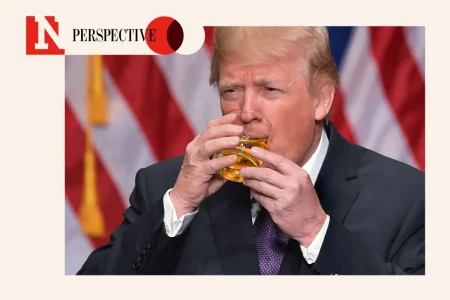
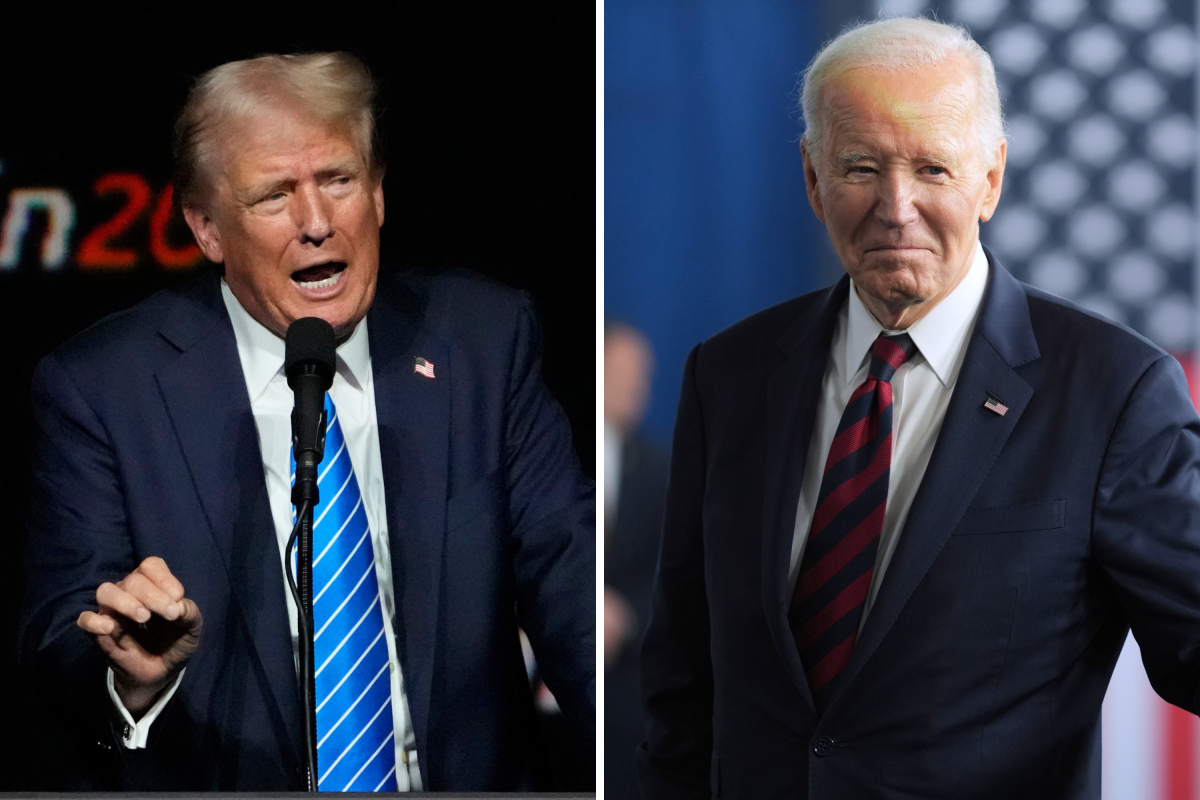
If you’ve been to the grocery store lately, you already know the feeling: you get to the register, watch the total climb, and wonder why everything still costs so much. It’s a frustration that defines this moment in American life, and it’s also become one of the most fought-over political battlegrounds. President Donald Trump is doing what presidents often do when prices are high: he’s pointing his finger at the other guy. In a series of Truth Social posts on Monday, Trump blamed his predecessor for the sticker shock that has haunted American households. “Price increases throughout America were caused by Sleepy Joe Biden and the Biden Administration, not by ‘TRUMP,’” he wrote. He went on to argue that oil prices were higher under Biden and insisted that, aside from oil, “prices are coming down sharply.” It’s a message he’s repeated in recent weeks, especially when talking about food. At a Republican midterm convention speech last week, he pointed to falling egg prices as proof that his administration’s economic policies are working. But for everyday people, the story isn’t quite so simple. Yes, some prices have cooled. But others—like gasoline, beef, and rent—still weigh heavily on family budgets. And while presidents love to take credit when prices fall and assign blame when they rise, the truth is that the cost of living is shaped by a messy tangle of global markets, supply chains, and policy decisions that no single White House can fully control.
The official data paints a picture that is far more complicated than the political talking points suggest. According to the Bureau of Labor Statistics, consumer prices rose 3.4 percent in August compared with a year earlier. Food bought at home rose a more modest 2.2 percent. But gasoline? That was up sharply, thanks to global oil prices that have surged back above $100 a barrel. The reasons are unsettling and complicated: wars in the Middle East and Eastern Europe, attacks on oil infrastructure, and growing fears about shipping routes that the entire world depends on. In other words, the same forces that make global markets jittery are hitting Americans right at the pump. Meanwhile, even though inflation has cooled dramatically from its painful 2022 peak, when prices were climbing at a rate not seen in four decades, people aren’t feeling much better about the economy. In fact, they’re feeling worse. The University of Michigan’s preliminary September survey found consumer sentiment fell to 47.8, down from 51.7 in August and more than 13 percent below where it was a year earlier. If that number holds, it would be the second-lowest reading in the history of the survey. That’s a stunning statistic, especially considering how much political and economic energy has been spent trying to reassure the public that things are getting better. But numbers on a page don’t always match the reality of watching your paycheck stretch a little thinner each month. And when people start expecting prices to keep climbing—Americans now anticipate 4.6 percent inflation over the next year, up from 4 percent in August—that anxiety can become a kind of self-fulfilling prophecy, influencing everything from spending habits to election results.
To understand what’s really happening, it helps to separate two ideas that politicians often blur together: the level of prices and the rate at which prices are rising. Inflation slowing doesn’t mean prices are falling; it just means they’re not rising as fast as they were. During the worst of the pandemic-era surge, prices were skyrocketing at 9.1 percent in June 2022, the highest annual increase in more than 40 years. That was fueled by a perfect storm of government stimulus, supply chain chaos, and energy shocks. Today, inflation is much calmer, but prices remain far above where they were before the pandemic. That’s why something can feel so expensive even when inflation is no longer making headlines. Take gasoline. Right now, the national average for regular gas is above $4 a gallon—around $4.30 on Monday, according to AAA—while crude oil has climbed above $100 a barrel. That’s considerably higher than the roughly $3.10 Americans were paying just before Trump took office in January 2025. But it’s also lower than the extraordinary peak in 2022, when gas briefly topped $5 a gallon. So Trump can honestly say gas was more expensive at times under Biden. But that doesn’t mean gas is cheap today. And because oil is a global commodity, much of what’s happening is beyond any president’s control. The conflict involving Iran has disrupted energy markets and raised serious concerns about the Strait of Hormuz, a narrow waterway through which a huge share of the world’s oil travels. Traffic through the strait has dropped sharply as tankers avoid the danger zone. Add in Ukraine’s attacks on Russian oil infrastructure, and you have a recipe for volatile prices at the pump.
Then there’s the grocery store, where the story is just as mixed. Beef is one of the best examples of how complicated it all is. Unlike oil, beef prices are mostly determined by the domestic cattle market—herd sizes, feed costs, and how many cattle are available for slaughter. Right now, the cattle supply is unusually tight, which has kept beef prices high even as overall inflation has cooled. That means a single shopping cart can tell two completely different stories at once: gasoline responding to a geopolitical shock halfway around the world, and beef responding to years of changes on American ranches. For the Trump administration, this creates a real challenge. A falling overall inflation rate doesn’t necessarily translate into cheaper individual products, and voters tend to notice the things they buy every week, not the abstract statistics. In August, Trump announced his administration would waive tariffs on some imported beef to address high grocery prices, allowing up to 300,000 metric tons of ground beef to be imported with “no out of quota tariff” over a 90-day period. On September 4, he said the United States would be importing beef from “primarily Argentina and Brazil.” It’s a clear attempt to do something visible about the cost of food, even if the effects may take time to show up at the butcher counter. Meanwhile, eggs provide the strongest example of a major reversal. Egg prices soared earlier in Trump’s current term, reaching record levels as bird flu devastated the nation’s flocks. Since then, supplies have recovered, and prices have fallen sharply. Trump has celebrated this at every opportunity, telling a Republican crowd last week, “We got eggs down,” and claiming that food prices and “almost every other item” were rapidly falling. But the drop in egg prices isn’t really a triumph of presidential policy; it’s mostly a story of supply recovering after a biological disaster. Milk and fresh produce tell an even messier tale, with some items cheaper than they were under Biden, others more expensive, and no single trend that fits neatly into a campaign speech.
So is Biden really to blame for the prices Americans are paying today? It’s true that inflation surged during his presidency, which means Trump inherited an economy where the overall price level was already much higher than it was before the pandemic. That is a heavy burden to carry into any presidency, and it’s fair to say Biden’s policies—along with pandemic-era spending and global disruptions—played a role in creating it. But more than a year and a half after Trump returned to office, it’s impossible to blame every price on the previous administration. Some of the current pain is directly connected to decisions Trump has made. In February, he ordered U.S. military strikes on Iran alongside Israel, triggering a conflict that has disrupted energy supplies and raised alarms about shipping through the Strait of Hormuz. That’s not an inherited problem; it’s a choice made by this president, with real consequences for the global oil market and, ultimately, for the price of gas in American towns. Other factors are also at play, including Ukraine’s attacks on Russian oil infrastructure, disruptions to a major Saudi pipeline, and attacks by Iran-aligned Houthi forces. All of these have contributed to the current volatility, pushing oil prices higher and making it harder for anyone to claim they have a simple answer. The global oil market is enormous and unpredictable, and no president can control it. But Trump’s decision to enter the conflict is one of the reasons Americans are feeling the pinch right now, and that complicates the narrative that high prices are simply an inheritance from the past.
Perhaps the most telling measure of all is how people actually feel about the economy, and by that measure, the last few years have been rough. Consumer sentiment in the University of Michigan survey is now lower than at any point during Biden’s presidency. The preliminary September reading of 47.8 is far below the 70.1 recorded in September 2024, when Biden was still in office, and even below the previous historic low of 50.0 from June 2022, when inflation was raging. That’s remarkable. It means that despite all the talk of cooling inflation and falling egg prices, the American public is deeply uneasy about the direction of the economy. And that unease is rational, because the cost of living is still painfully high in so many areas. Gasoline is expensive, beef is expensive, housing is expensive, and wages, while improving, haven’t fully caught up with the cumulative price increases of the past few years. Trump can point to genuine examples of prices coming down, like eggs, and he’s right that inflation is nowhere near the crisis levels of 2022. But the broader data shows a much more mixed picture, one in which prices haven’t broadly returned to their pre-inflation levels and some of the most visible costs facing households remain stubbornly elevated. Politicians on both sides will keep arguing about who deserves the blame and who deserves the credit, but for the family standing at the checkout counter, the numbers on the receipt are all that really matter. The causes are global and complicated, the solutions are rarely quick, and the human experience of financial stress doesn’t care about talking points. In the end, what people want is simple: to feel that their hard work is enough to keep up with the cost of living. Until that feeling returns, no amount of political spin is likely to change the mood of the country.