


# The Escalating Crisis: Trump’s Bold Declaration and Iran’s Mounting Troubles
In a characteristically blunt social media post, President Donald Trump declared Iran a “failed nation,” painting a stark picture of a country in terminal decline. The former president’s words carried the weight of someone who believes he has been vindicated in his approach to Tehran. “They have no Navy, they have no Air Force, they have no currency, they are not paying their soldiers or police,” Trump wrote, making clear that in his view, decades of American pressure have finally brought the Islamic Republic to its knees. The declaration came at a moment of maximum tension, with the United States and Iran locked in what appears to be their most dangerous confrontation in years.
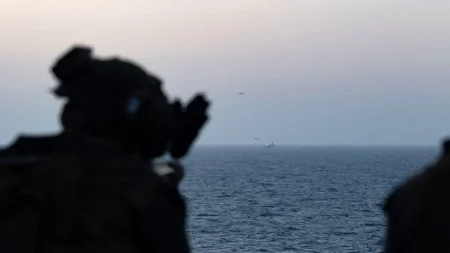
The military dimension of this crisis has escalated dramatically in recent days. U.S. forces launched strikes against two Iranian missile launchers positioned on Larak Island, a strategic outpost in the Strait of Hormuz, after intelligence indicated that Revolutionary Guard forces were preparing to fire rockets equipped with sea mines into the vital shipping lane. The response from Tehran was swift and predictable: ballistic missiles were launched toward American bases in Jordan, though the Jordanian military reported intercepting eight of them before they could reach their targets. This exchange represents the sharpest escalation in U.S.-Iranian tensions in weeks, transforming what had been a simmering conflict into an active military confrontation.
What makes this situation particularly volatile is that the conflict is unfolding simultaneously on multiple fronts. While the military skirmishes make headlines, the economic war against Iran has been intensifying with equal ferocity. Treasury Secretary Scott Bessent revealed that the administration plans to unleash a new wave of sanctions at a breathtaking pace, potentially every week. The initial focus will be on banks, but the ultimate goal is to sever Iran’s access to the U.S. dollar-based financial system entirely. This financial strangulation campaign represents the culmination of Trump’s “maximum pressure” strategy, a policy that began in his first term and has now reached its most aggressive phase yet. The administration appears determined to leave no economic avenue unexplored in its quest to bring Iran to the negotiating table on American terms.
The Iranian economy is showing clear signs of buckling under this unprecedented pressure. Official government data puts annual inflation at a staggering 66%, a figure that likely understates the true severity of the situation for ordinary Iranians struggling to afford basic necessities. The International Monetary Fund projects that the economy will contract by 5.4% this year, a contraction that would represent the most severe economic downturn in Iran’s modern history. More troubling for Tehran, oil exports—the lifeblood of the Iranian economy—have collapsed dramatically. According to data from Kpler, Chinese imports of Iranian crude have fallen from an average of 1.4 million barrels per day to just 534,000 barrels per day in August. This decline in oil revenue is particularly devastating because it directly impacts the government’s ability to maintain services and control over an increasingly restive population.
Experts who have studied Iran’s economic vulnerabilities suggest that the regime is in far deeper trouble than its public statements admit. Miad Maleki, a former Treasury official who now works with the Foundation for Defense of Democracies, describes an economy that is “on the verge of collapse, if it hasn’t already collapsed yet.” The critical question, according to Maleki, is whether Iran can sustain its oil exports at levels sufficient to keep the regime functioning. He estimates that Iran needs at least one million barrels per day just to maintain basic state functions, with 1.5 million needed to stave off hyperinflation and two million required for anything resembling economic development. At the current rate of decline, Iran is falling dangerously short of even the minimum threshold. The regime has attempted to paper over these shortfalls by printing money, but as Maleki notes, “They can keep printing money, but they can’t really print the type of commodities that they need, such as gasoline, such as wheat.”
Yet there is a dangerous paradox at the heart of American strategy. While economic pressure may be weakening the Iranian regime, it also risks provoking exactly the kind of reckless behavior that could escalate into a full-scale regional conflict. Danny Citrinowicz, an Iran analyst at Israel’s Institute for National Security Studies, warns that Washington should not assume economic pain will lead to capitulation. On the contrary, continued pressure might increase Tehran’s incentive to escalate if Iranian leaders conclude that the status quo is worse than renewed confrontation. Iran could attempt to target American economic assets in the Gulf, attack shipping lanes, or strike U.S. vessels involved in enforcing the blockade. Even degraded Israeli defense systems might not provide complete protection against a desperate regime lashing out. The situation recalls the diplomatic adage that states on the verge of collapse can be the most dangerous actors in the international system.
The path forward remains deeply uncertain, with enormous consequences hanging in the balance. Maleki believes the Iranian people themselves may ultimately prove decisive, as shortages of basic goods could trigger another wave of domestic unrest. He argues that Western governments should prepare now to support Iranians seeking to challenge their government, helping them communicate and organize if the regime attempts to shut down internet access. Yet this approach carries its own risks, echoing the chaos that followed the Iraq invasion and the Arab Spring uprisings. For now, the Trump administration appears committed to the maximum pressure strategy, arguing that every escalation weakens a regime that has been America’s adversary for over four decades. As the economic siege tightens and military encounters become more frequent, the critical question is not whether Iran is close to breaking, but what happens when it does—and whether the United States is truly prepared for the consequences that would follow.