

Paragraph 1
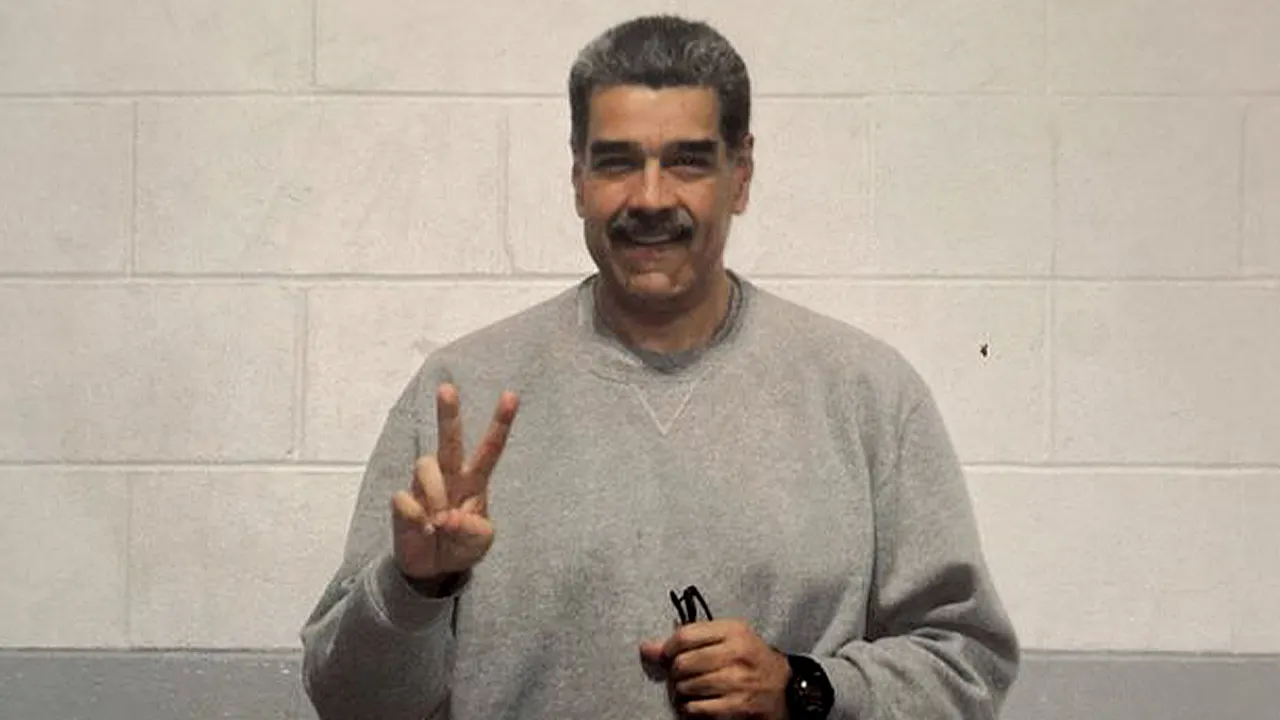
It is an image that strikes with the force of a thunderclap—a stark, visual metaphor stripped of all ceremony, pomp, and the theatrical grandeur that once defined his political brand. In a photograph that has ricocheted across the digital globe, Nicolás Maduro, the man who once commanded the levers of one of South America’s most fractious nations, appears utterly transformed as a captive. He stands against a blank, institutional wall within the sprawling confines of the Metropolitan Detention Center in Brooklyn, garbed in a matching gray sweatsuit and stark, immaculate white sneakers. There is a noticeable thinness to his face and frame, a certain gauntness that suggests the eight months of confinement have exacted a severe physical and psychological toll on his body. The photos, posted to his X (formerly Twitter) account on a Sunday morning, are the first tangible, visual evidence of his existence since his dramatic capture and extradition to the United States by special forces back in January. In a life defined by vibrant red banners, militarized campaigns, socialist rallies, and the constant adoration of massive crowds, this new reality is one of muted concrete, harsh fluorescent lighting, and the oppressive, suffocating silence of a high-security holding cell. The images serve as a poignant, almost surreal reminder of the brutal inversion of fortune—the once-omnipotent head of state reduced to a federal detainee, his royal court swapped for a prison dormitory, his palace views replaced by barbed wire and the faint, distant hum of Brooklyn traffic. He is not bearded, not defiant in a revolutionary costume, not standing atop a tank, but simply a man in a mundane gray uniform, allowing the world to witness that he is still alive, still breathing, and still fighting from the depths of an American jail cell. The photo speaks volumes about the long, hard road from the presidential palace of Miraflores to the gated pen in the United States, and it has already sparked a frenzy of commentary, from criminal justice experts analyzing his demeanor to Venezuelan exiles shedding tears of vindication and hardcore loyalists praying for a miracle.
Paragraph 2
The path to this stark portrait began with a midnight operation that shattered the illusion of his invulnerability once and for all. In a meticulously coordinated military raid deep within the heart of Caracas in January, U.S. special forces captured Maduro and swiftly transported him to American soil, bringing an abrupt end to a chaotic reign marked by economic collapse, hyperinflation, blackouts, and the devastating exodus of millions of citizens. Since that dramatic, cinematic moment, he has spent eight long months in custody, primarily held at the MDC Brooklyn facility, awaiting trial on a litany of severe federal charges. The most serious of these allegations paint a damning and detailed picture of international criminality: that Maduro, while in power, conspired with the Revolutionary Armed Forces of Colombia (FARC) and other transnational drug cartels to flood the United States with massive quantities of cocaine, essentially weaponizing state power into a lucrative narcotics trafficking enterprise. He is also accused of narco-terrorism, money laundering, and conspiring to import controlled substances. For eight months, the public heard only whispers and rumors about the former Venezuelan leader—reports from his overworked lawyers, occasional leaked statements from his family—but nothing that offered a visual proof of his condition. His prolonged silence led to a frenzy of wild speculation: Was he secretly negotiating a plea deal to betray his inner circle? Had the legendary strongman, known for his fiery rhetoric and confrontations with the world, finally broken under the psychological weight of solitary confinement? The calculated release of these photographs, therefore, is not merely a tabloid curiosity but a highly deliberate act of political communication, a clever message smuggled out from behind the razor wire. It signals to his base and to his enemies that Maduro intends to remain a figure of significant political relevance, even from a position of complete helplessness, and that he is preparing to weather the storm of American justice with a semblance of composure and defiance, refusing to go gently into that good night.
Paragraph 3
The accompanying message, carved from the depths of such great turbulence, is equally telling—a potent blend of defiance, raw sentimentality, and revolutionary mysticism. In his statement, Maduro carefully addresses his family—specifically his cherished grandchildren—and the broader loyal base he was forced to leave behind in Venezuela. “I send these photos as a small gift to all my grandsons and granddaughters, to the boys and girls, and to all the noble people who love us,” he wrote, his words steeped in a paternal tone. “I want you to know that we stand firm, with our hearts full of your love.” He acknowledges his wife, Cilia Flores, who was also flown to New York on related charges, and he sends a message of unwavering resolve that is designed to energize his followers. “We will remain strong, serene, and confident… Venezuela will be reborn.” There is a profound spiritual undercurrent to his words, a heavy reliance on faith and prayer that humanizes a figure often demonized as a ruthless, authoritarian kleptocrat. This is a man in a federal detention center, his freedom completely eviscerated, his world reduced to the size of a cell block, yet he speaks not of regret, desperation, or surrender, but of steadfast hope for a national resurrection. The phrase “Venezuela will be reborn” is a powerful dog whistle to his Chavista followers, framing his imprisonment as a form of martyrdom for the socialist cause, a noble sacrifice rather than a criminal downfall. It is a classic political maneuver—turning victimhood into a potent rallying cry, much like his mentor Hugo Chávez did before him during his own brief 1992 coup attempt prison stint. The photos themselves are starkly devoid of any personal touches, offering no books, no religious icons, no photos of his family, just the bare institutional walls. Yet the text seeks to fill that emptiness with a compelling narrative, to paint a vivid picture of a leader enduring adversity with stoic grace, maintaining his mental fortitude while the world waits with bated breath to see if he will spend the rest of his life behind bars, his legacy etched in a combination of tragedy and infamy.
Paragraph 4
This intensely personal drama is unfolding against a backdrop of profound geopolitical upheaval and heartbreaking human tragedy. The metadata timestamps embedded in the released images reveal they were actually taken a while ago—on June 25—a date that carries its own devastating weight of sorrow. That same day, and the one preceding it, saw catastrophic earthquakes strike northern Venezuela near Caracas, claiming the lives of over 6,500 innocent people and leaving countless more homeless, injured, and grappling with the wreckage of their cities. The juxtaposition of Maduro’s controlled, sterile prison photo with the chaos of a shattered, grieving nation is almost too poetic to be mere coincidence. While he sits safely in a Brooklyn federal facility, guarded by federal marshals and receiving three square meals a day, his countrymen are digging through the rubble of collapsed buildings with their bare hands, mourning the loss of loved ones, and struggling for basic survival amidst the aftershocks. Furthermore, the release of these photographs comes just two days after the White House announced a major, controversial breakthrough in U.S.-Venezuela relations—a strategic agreement in which the new Venezuelan government would grant the United States majority control over its immense and highly coveted 65 billion barrels of proven oil reserves. This deal, framed as a monumental victory for American energy security amidst the ongoing, disruptive war with Iran that continues to wreak havoc on global fuel prices and supply chains, inextricably ties Maduro’s fate to the ruthless machinations of global energy markets. The former dictator is now a chess piece, a high-value pawn in a high-stakes game of international diplomacy and resource control. His continued detention might be a bargaining chip for the administration, a means of securing favorable terms on oil extraction and ensuring a compliant post-Maduro government. The imagery of his captivity is thus filtered through the lens of stark economic necessity—the American motorist worried about gas prices at the pump, the billionaire investor eyeing Venezuelan crude with hungry eyes, and the political observers questioning the profound ethical implications of a superpower dictating the future of a sovereign nation’s natural resources while its former leader languishes in a cell thousands of miles away, his fate tied to the fluctuating whims of barrel prices and geopolitical alliances.
Paragraph 5
Away from the cold political calculus, the human reality of Maduro’s daily existence is slowly coming to light, painting a nuanced portrait of a man adapting to an extraordinarily diminished and monotonous existence. According to his son, Nicolás Maduro Guerra, who spoke to the Spanish newspaper El País back in May, the former president has found profound solace in religion during his long confinement, spending much of his time deeply reading the Bible. This is a profound internal shift for a man who once mocked religious institutions and governed with a militant, secular Marxist ideology, transforming his public image into one of a penitent seeking spiritual redemption behind the bars of a foreign jail. The communication restrictions are stark and inhumane: he is afforded just 510 minutes a month for phone calls, roughly 8.5 hours, to maintain any contact with the outside world. For a leader accustomed to speaking for hours at a time to massive crowds of tens of thousands, rationing 17 measly minutes of conversation per day with his wife and family must be a bitter, humbling pill to swallow. These tiny, fragmented interactions become his sole lifelines, the only links to a past life of absolute control and unchallenged authority. The mental transition from commanding an army to submitting to the rigid schedule of prison guards, from vetoing national legislation to deciding which tray of food to prioritize, is an immense psychological hurdle that would break lesser men. The crushing tedium of confined life—the endless pacing of the cell, the repetitive reading of verses, the counting of each interminable day—is a stark contrast to the frenetic energy of a presidency perpetually in crisis. Yet, these reports suggest a man who is not completely broken, but rather recalibrated, a survivor using faith and rigid discipline to endure the exhausting marathon of pre-trial detention, which may stretch on for years before his scheduled trial date in June 2027. The relationship with his wife, Cilia, who is detained in a separate facility but who shares the same ordeal, adds a layer of tragic pathos to his narrative, two partners in crime and in marriage, facing their destinies together but physically apart, their love letters and prayers passing through the thin, cold walls of the justice system.
Paragraph 6
As that ominous trial date looms ever closer on the horizon, the stakes could not be higher for the fallen strongman. Maduro and his wife, Cilia Flores, both face jury trials on charges of conspiring to send cocaine into the United States—a serious charge that carries the ultimate penalty of life imprisonment. Both have maintained their plea of not guilty, and their legal defense will likely hinge on claims of blatant political persecution and the outright illegitimacy of their capture under international law, arguing that the U.S. has no jurisdiction over a sitting (or ousted) head of state. Yet, the mountain of evidence amassed against them by U.S. prosecutors is substantial and damning, built over years of secret cooperation with Colombian intelligence, the DEA, and other international authorities. The future remains profoundly opaque; a conviction would condemn them to die in a maximum-security American prison, a fate far removed from the grand mausoleum of honor and heroism they might have expected in a socialist utopia. But this story transcends mere legal maneuvering or political calculation. It is a profound, deeply human narrative about the precipice of the fall from grace, the astonishing resilience of the human spirit in the face of utter ruin, and the unyielding, unwavering grip of hope. Maduro’s poignant message to his grandchildren is not just political propaganda; it is the desperate pleading of a grandfather, stripped of his power, desperate to leave a legacy defined by strength and endurance, not by surrender and defeat. The world watches this unprecedented spectacle with a heady mixture of fascination, schadenfreude, and moral unease. For his fierce supporters in Venezuela, he is a martyr unjustly seized by imperialist forces; for his countless detractors, he is a symbol of justice finally served after years of unimaginable suffering and kleptocratic rule. Yet, as he stands there in his gray sweatsuit, staring blankly at the camera, one cannot help but feel the immense, crushing weight of a man who once held the destinies of thirty million people in his hands, now reduced to posting humble photographs to the internet from a concrete box in Brooklyn. His story is a chilling, timeless reminder that political power is ephemeral and fleeting, that the mightiest of regimes can crumble into dust in an instant, and that even a president can wake up one morning to find himself stripped naked, a mere prisoner, his revolutionary dreams replaced by the heavy clang of a steel cell door, his promised “rebirth” of Venezuela confined to a tiny glimmer of faith deep within his own heart. The photos are a testament to survival, an unbroken spirit, but they are also a monumental cautionary tale about the inevitable, humbling, and utterly leveling arc of history itself.