



Paragraph 1: The Bitter Taste of Near-Perfection
In the heartland of America, where cornfields stretch to the horizon and the autumn air carries a crisp chill, there exists a cathedral of sport dedicated not to football, but to volleyball. The Bob Devaney Sports Center in Lincoln, Nebraska, is a cauldron of noise, passion, and expectation, a place where young women are sculpted into legends and where a single loss can feel like a state-wide tragedy. The Nebraska Cornhuskers volleyball team walked into that arena time and time again last season, expecting victory, and for the most part, they received it. They were a juggernaut, a whirlwind of spikes, digs, and aces, amassing a staggering 33-1 record that placed them atop the Big Ten and firmly in the national conversation. But sports, in its cruelest and most beautiful irony, is not defined by the victories that pile up, but by the defeat that cuts the deepest. For Nebraska, that cut came in the Elite Eight, a taut, brutal regional final against the No. 7 seed, Texas A&M. The Aggies, a team that would eventually climb the mountain and claim the national championship, shattered the Cornhuskers’ dream in a shocking upset that terminated a two-decade-long pilgrimage to the national semifinals. The silence that descended upon the arena that night was deafening, a collective gasp from a fanbase that had become accustomed to seeing their beloved Huskers playing on the grandest stage of all. For the first time since 2002, Nebraska would not be part of the Final Four conversation, and the abruptness of the exit left a bewildering mix of disbelief and aching familiarity with pain. It was a humbling reminder that dominance in the regular season guarantees absolutely nothing when the stakes are raised to their highest point, that the margin between glory and despair is often a single, heart-stopping play. The players walked off the court with tear-streaked faces, their jerseys clinging to sweat-soaked bodies, carrying a weight of what-ifs and might-have-beens that would linger in their minds through the long, solitary months of the offseason. Yet, from this crucible of disappointment, a powerful resolve was forged. The Cornhuskers were not broken; they were instead offered a profound opportunity to redefine themselves, to look in the mirror and decide exactly who they wanted to be when the autumn leaves began to turn again. They chose to stand tall, to embrace the pain, and to transform it into a potent, undeniable fuel for the redemption arc that lay ahead, refusing to let the ghost of that loss define their legacy, but rather to let it sharpen their hunger for the prize that had slipped through their fingers.
Paragraph 2: The Pillars of a Resilient Core
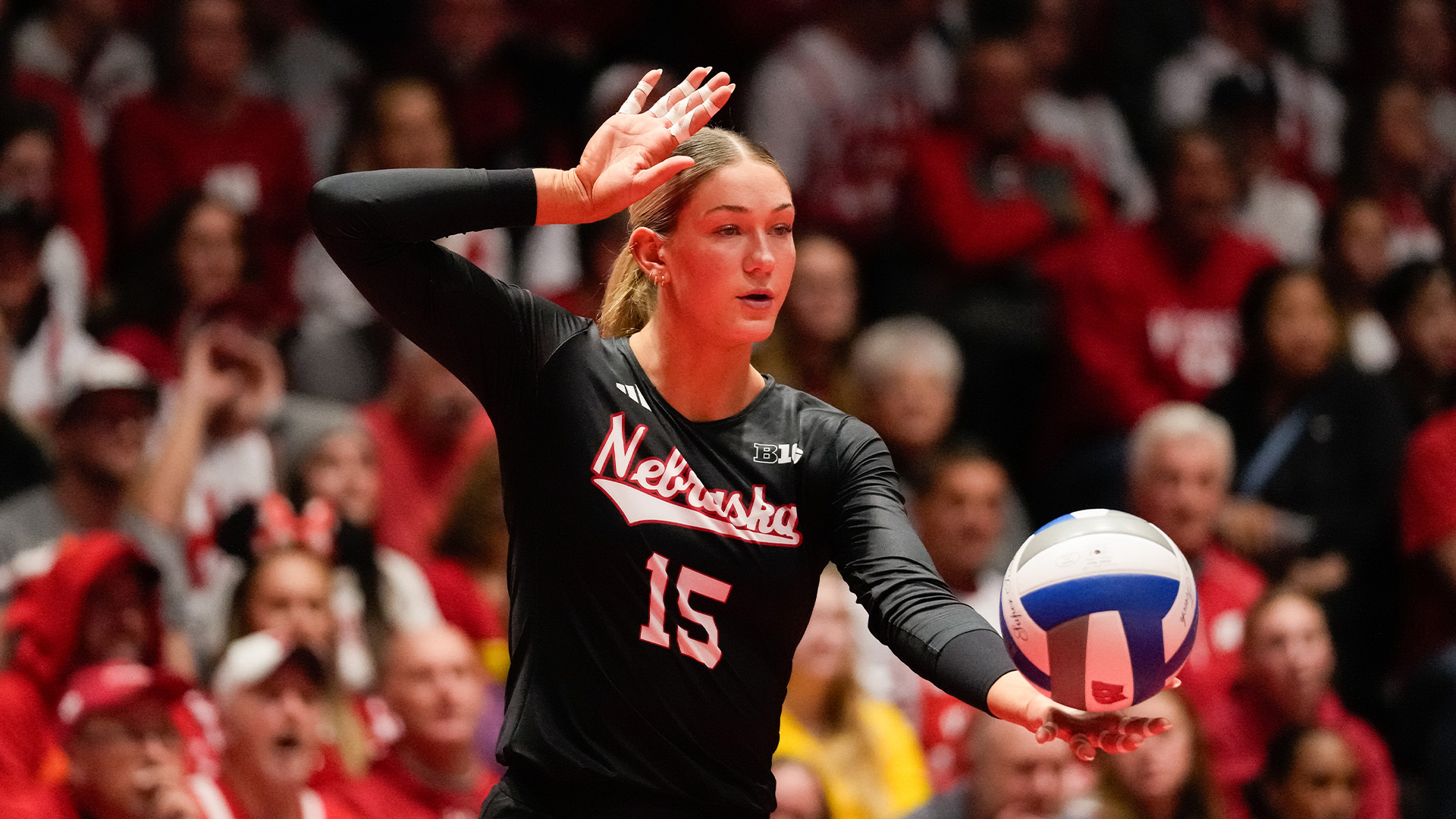
In an era of college athletics defined by the transfer portal and the constant churn of players seeking greener pastures, the Nebraska volleyball program has constructed a powerful counter-narrative built on loyalty, trust, and a shared, unfinished mission. For the second consecutive season, the Cornhuskers recorded zero outgoing transfers, a testament to the vibrant, demanding, and ultimately rewarding culture that head coach Dani Busboom Kelly has cultivated within her locker room. The bonds forged through blood, sweat, and tears on the practice courts and in the heat of battle run deep, and the players who form the core of this formidable team have looked each other in the eye and pledged their allegiance to the maize and blue. The 2026 roster is a constellation of elite talent, headlined by outside hitter Harper Murray, a dynamic force of nature whose explosive power and unyielding tenacity make her a nightmare for opposing defenses. Murray led the team with a staggering 379 kills last season, adding 34 service aces to her highlight reel, but her impact transcends pure statistics; she is the emotional heartbeat of the team, the player who ignites rallies with her fiery passion and game-changing plays. Alongside her on the left side stands Skyler Pierce, a rising star whose athleticism and versatility add a layer of complexity to the Nebraska attack, keeping opponents off balance and constantly guessing. The orchestrator of this offensive symphony is setter Bergen Reilly, a player with the court vision of a seasoned general and the delicate touch of a concert pianist. Reilly, a decorated AVCA First-Team All-American, doesn’t just distribute the ball; she conducts the flow of the match, deciding with Split-second precision whether to feed the hot hand, dump the ball over the net for a sneaky kill, or set up her towering middle blocker for an unanswerable slam. That middle blocker, the aforementioned Andi Jackson, is a force to be reckoned with at the net, using her prodigious leaping ability and keen instincts to terminate rallies with a thunderous finality, tallying 288 kills of her own while also acting as a formidable wall in the front row. These returning All-Americans, along with a supporting cast that knows its role and executes it flawlessly, form the bedrock of a team that believes, with every fiber of its being, that the pain of last season’s late collapse was necessary for the growth that will lead to eventual triumph, binding them together in a shared pursuit of a glory that has remained tantalizingly out of reach since 2017.
Paragraph 3: The Off-Season Sculpting of a Championship Roster
The architecture of a championship team is never built in a vacuum; it requires shrewd, deliberate moves on the front lines of recruiting and roster management, areas where the Nebraska program has demonstrated remarkable ambition and financial muscle. In a landscape increasingly influenced by Name, Image, and Likeness (NIL) collectives and salary caps that mirror professional leagues, the Cornhuskers have boldly stepped forward, reportedly spending an eye-watering $7 million on their 2026 roster—more than any other NCAA women’s volleyball program in the country. This staggering investment is more than just a line item in a budget; it is a declaration of intent, a public statement to the volleyball world that Nebraska is all-in on recapturing its former glory. But money alone does not win championships; it requires finding the right pieces to fill the gaps left by departing legends. With the departure of crucial contributors like Rebekah Allick and Taylor Landfair, who exhausted their collegiate eligibility, Dana Busboom Kelly and her staff went hunting for a specific skill set to complement their returning stars. Their solution came in the form of transfer opposite hitter Allie Sczech, a seamless import from Baylor who brings with her a wealth of Big 12 experience and a ferocious offensive arsenal. Sczech is not just a stopgap; she is a polished, seasoned competitor who understands the pressure of playing in a major conference and is primed to step into the spotlight, providing the Huskers with a reliable scoring threat from the right side and solidifying a rotation that now looks deeper and more dangerous than ever before. The transition, however, is never without its emotional nuances, as blending a newcomer into a tight-knit group that has already endured and triumphed together requires a delicate balance of chemistry and mutual respect. Sczech has arrived not as a savior, but as a valued teammate, ready to learn the Huskers’ ways while also injecting her own unique personality and skill into the mix. Her presence represents the final, critical piece of a puzzle that was meticulously assembled during the offseason, a calculated gamble by the coaching staff to ensure that the holes on the court are seamlessly filled and that the team’s pursuit of a championship is not hampered by a lack of depth, but rather strengthened by an embarrassment of riches that will allow for fierce competition in every single practice session.
Paragraph 4: Carrying the Weight of a Volleyball Dynasty
To step onto a volleyball court at the University of Nebraska is to inherit a colossal legacy, a history so rich and triumphant that it casts a long, inescapable shadow over every single match. This is a program that has become synonymous with excellence in the sport, having appeared in the national semifinals a remarkable 18 times and in the national championship game on six separate occasions. The banners that hang from the rafters of the Devaney Center are not just pieces of cloth; they are the physical embodiment of decades of relentless pursuit, of players who have poured their hearts out in search of perfection. Yet, in the unforgiving annals of sports history, the most recent championship is always the one that is scrutinized most closely, and for Nebraska, that date, 2017, feels like both a distant memory and a burning ache. The thrilling 3-1 victory over Florida in that final provided a moment of ecstasy for a state that treats volleyball with the same fervor usually reserved for football, but the years that followed have been defined by a frustrating near-miss, a constant reaching for the ultimate prize only to have it slip away. The current generation of players, however, does not shrink from this pressure; they are emboldened by it. They understand that they are not just playing for themselves, but for a passionate fanbase that packs the arena to 90,000-plus capacity for outdoor matches and treats every road game like a homecoming. The fans in Nebraska are not casual observers; they are deep, knowledgeable students of the game who can analyze a service receive pattern with the precision of a computer program and who share in the emotional roller coaster of every point as if they were on the court themselves. For these players, the weight of expectation is not a burden; it is a privilege. They grew up idolizing the legends who came before them, dreaming of the day they would wear the iconic jersey and carry the torch forward, and they understand that their duty is not simply to honor the past, but to add another glorious chapter to it. The lack of a title since 2017 is a void they are desperate to fill, a gnawing emptiness that drives them in the weight room, in the film sessions, and in the quiet moments of the night when the fear of failure briefly flickers before being extinguished by the burning desire for success.
Paragraph 5: A Clash of Titans in Sin City
The new season has arrived with a schedule that wastes no time in testing the Cornhuskers’ mettle, offering a non-conference gauntlet that immediately places them under the brightest of spotlights. Ranked No. 1 in the nation to begin the year, Nebraska is a target, and the opening weekend will serve as a litmus test against a familiar, formidable foe. This Sunday, they will meet the University of Texas in a highly anticipated rematch at the iconic T-Mobile Arena in Las Vegas—a neutral site that promises a professional, electric atmosphere befitting a rivalry of this magnitude. This will be the first meeting between these two powerhouses since the 2023 national championship match, a bitter pill for the Cornhuskers to swallow, as they were swept in straight sets by the Longhorns on the sport’s grandest stage. That defeat, which occurred in the very recent past, lingers in the minds of the returning players, serving as a constant source of motivation and a reminder of exactly what is at stake. The trio of Texas’s athleticism, size, and unflappable clutch play exposed the Huskers’ vulnerabilities that night, and the team has spent the intervening months meticulously dissecting their own shortcomings, only to rebuild themselves into a stronger, more cohesive unit. A victory over the No. 2 team in the country on opening weekend would not merely be a satisfying box score; it would be a definitive statement that the 2026 Nebraska squad is not haunted by the ghosts of its past, but rather empowered by them. It would send a shockwave through the entire NCAA volleyball landscape, signaling that the Cornhuskers are ready to reclaim their throne and that the investment in this roster, the continuity of its core, and the strategic acquisitions have all aligned to produce a truly special team. The Las Vegas backdrop adds a layer of theatricality to an already tense matchup, as the desert city of glitz and high stakes becomes the stage where two of the sport’s most storied programs will collide with the eyes of the nation upon them. For the players, it is an opportunity for catharsis, a chance to exorcise the demons of 2023 and prove to themselves and the world that they have exorcised the ghosts of last season’s Elite Eight exit, transforming a season of renewed hope into a concrete, undeniable reality through the crucible of head-to-head combat.
Paragraph 6: The Long, Arduous Road to Redemption
As the Cornhuskers lace up their shoes and step onto the court for the 2026 campaign, they carry with them the tangible hope of an entire state and the silent expectations of a legacy that spans generations. The season ahead is a marathon, not a sprint, and the challenges will come frequently and from all directions—the grueling Big Ten schedule, the inevitable injuries, the emotional wear and tear of constant competition. Yet, this team is uniquely constructed to endure. The devastating loss to Texas A&M was a masterclass in heartbreak, but it also forged an unbreakable resilience within the squad. They learned that a perfect record is meaningless without the ultimate prize, and they have recalibrated their focus with a singular, ruthless eye toward the national title. The chemistry that kept the roster fully intact for two consecutive offseasons is a rare, precious commodity in the modern collegiate athletic landscape, and it allows the coaching staff to implement complex tactical systems with precision and trust. Bergen Reilly’s precision setting, Harper Murray’s explosive scoring, Andi Jackson’s intimidating blocking, and the addition of Allie Sczech’s veteran savvy create a multifaceted attack that is nearly impossible to scheme against. But beyond the Xs and Os, beyond the sophisticated statistics and the millions of dollars in NIL valuation, there lies the human element that defines the essence of sports. This is a group of young women who have cried together, laughed together, and bled for one another, who have chosen to stay in the same locker room because they believe in the project they are building. Their journey is one of discipline, of late nights in the gym, of sacrificing social lives for the pursuit of an ephemeral goal. They play with a heavy heart for the loss of last season, but with a fire in their souls that burns brighter than ever. Whether the ultimate reward of a sixth national championship in the program’s history arrives in December is unknowable, but one thing is certain: this team is not defined by its past failures, but by its response to them. They have chosen to be resilient, to be united, and to be relentless in their pursuit of glory, embodying the very best of what it means to be a Cornhusker and writing a story of redemption that will be told for years to come, regardless of how the final chapter concludes.