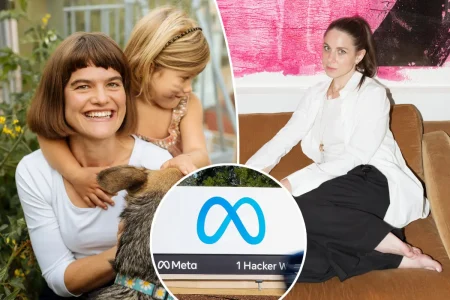




In an age where the curated scroll of social media has quietly rewritten the definition of success, Angel Murdock’s story reads as a cautionary tale about the thin, treacherous line between ambition and self-destruction. To the casual observer, her life was a flawless algorithm of aspiration: a 26-year-old woman with a radiant smile, a feed boasting over 300,000 devoted followers, and a narrative built entirely on the gritty, glamorous myth of the self-made hustler. Her content was a masterclass in aspirational branding, weaving together the polished aesthetics of high-end real estate with the noble, exhausting grind of medical academia. She championed a “hard-work-pays-off” mindset that resonated deeply with a generation exhausted by economic uncertainty, posting motivational captions that suggested she had clawed her way to the top through sheer sleepless nights and relentless grit. Yet, as her story unraveled, it became painfully clear that the “hard work” she celebrated was not the labor of a dedicated professional, but the exhausting effort of maintaining a meticulously fabricated digital persona—a persona built on a foundation of untruths that would eventually collapse under its own weight, revealing the hollow, tragic gap between the life she projected and the life she actually lived.
The first crack in the polished veneer appeared in Murdock’s confident pivot into the cutthroat world of real estate. Her social media accounts, adorned with the trademark red “R” of the REALTOR designation, painted a picture of a booming, lucrative career. She claimed to be a licensed broker in both North Carolina and Georgia, a dual-state credential that immediately signaled competence and range to her growing audience. Her feed featured glamorous property tours of homes valued at $300,000, interspersed with celebratory photos of “closing day” with beaming couples holding oversized keys and signing mountains of paperwork. This was the tangible proof of her success, and she boasted openly about her impressive monthly earnings of up to $7,200, framing her income as the direct result of her savvy business acumen. However, the human reality behind these posts was a web of calculated deceit. She was not, and had never been, a licensed realtor in either state. The poignant “closing” photos she shared were not of her actual clients, but staged events involving friends, family, or stock imagery, carefully crafted to lend credibility to a career that existed only in her imagination. The angry, violated feelings this evokes are universal; we have all encountered a person who inflates their worth to intimidate or impress, but Murdock weaponized this social vulnerability on a mass scale, and the legal consequences for impersonating a broker, which carries misdemeanor charges—potential jail time in North Carolina and hefty fines in Georgia—seemed almost secondary to the profound betrayal of her audience’s trust, revealing a desperate, human need for validation that overrode any ethical or legal boundary.
Yet, the most audacious and ultimately fateful fabrication was the cornerstone of her entire brand, the lie that catapulted her from a mid-tier influencer to a pariah: her claim of attending the prestigious Duke University Physician Assistant (PA) program. Murdock presented herself as a dedicated PA student, posting videos of herself donning scrubs, studying dense medical textbooks with highlighter marks, and even documenting “clinical rotations” in what appeared to be hospital settings. This was the apex of her “hard-work-pays-off” narrative—a grueling, competitive medical track that would eventually lead to a stable, reputable career. Her caption celebrating her supposed graduation, which she posted alongside a photo of herself in a graduation gown, spoke of late nights, sacrifices, and setbacks leading her to that exact triumphant moment. However, the actual students of Duke’s PA program, people who had lived through the relentless pressure-cooker of medical education, recognized the fraud almost immediately. For them, this was not just a professional insult; it was a deeply personal violation. The PA program is famously brutal, a “hell on earth” of sixty-hour weeks, sleep deprivation, and life-or-death responsibility. The graduates, including Kiera Lee, the class historian, felt a visceral, righteous anger wash over them as they watched this woman parade around in the uniform of a profession she had never earned, making a mockery of their own genuine suffering and hard-won accomplishments.
The unraveling began with the keen eyes of those who had actually earned their place. It was the Duke PA graduates, specifically the six Black women in the cohort, who noticed the discrepancies that had escaped the general public. They knew the program intimately; they knew the faculty, the curriculum, and the tight-knit camaraderie of their class. Murdock wasn’t in their group photos, she wasn’t in their study groups, and crucially, her graduation attire was wrong—the gown featured a distinct color or design that didn’t match the official Duke PA regalia, a rookie mistake that revealed she had never stepped foot in the graduation hall. In a collective act of digital sleuthing, they formed a group chat, their anger and confusion crystallizing into a mission to expose the truth. Kiera Lee’s reflections on the moment were tinged with a weary frustration: the realization that this impostor had “gone quiet” for a while, only to resurface with a graduation post that felt like a direct slap in the face. “I thought, okay this girl is going all the way to the finish line,” Lee recounted, “She needs to be stopped.” Their investigation uncovered the heartbreaking truth: Murdock had never been admitted, never attended a single lecture, and had likely fabricated her entire medical trajectory, using the stolen credibility of Duke University and the PA profession to bolster her social status, leaving the real students to clean up the wreckage of her delusion.
The exposure did not just stop at the medical fraud; it cascaded into her personal life and further professional lies, culminating in her appearance on the Netflix dating show “Temptation Island” in 2025. The show, which tests the fidelity of couples by surrounding them with temptations, was an ironic stage for a woman who had spent years tempting the truth. Her inclusion in the Hawaii-based season provided a brief platform, but the internet’s collective memory and the Duke graduates’ relentless sleuthing quickly brought her past to the forefront. The backlash was swift, brutal, and utterly consuming. Scrutiny revealed that she had also falsely claimed a double major in Psychology and Biology from UNC Charlotte, a school she had likely attended before dropping out. The carefully constructed architecture of her life—the multi-state real estate licenses, the Duke education, the national TV spot—crumbled into dust. In a final, desperate act of surrender, Murdock deactivated her main TikTok and Instagram accounts, erasing the digital footprint of her lies as if to escape the consequences of her actions. But in the quiet aftermath of her deletion, a profound loneliness set in, one that resonated with the human condition. She was left with no degree, no license, no followers, and no credibility—only the hollow echo of the thousands of likes she had once harvested from a deceived audience, and the revelation that the life she so desperately craved was just as fleeting as the attention she had chased.
Ultimately, Angel Murdock’s story is not merely a salacious piece of internet gossip, but a deeply human tragedy about the corrosive nature of inauthenticity in a digital age. Her actions, while fraudulent and legally punishable, stem from a recognizable, all-too-human vulnerability: the desperate fear of being ordinary. Her fall from grace serves as a powerful reminder to the creators and consumers of online content that the metrics of success—followers, likes, and viral moments—are a poor substitute for genuine achievement. While the legal consequences of her misdemeanors loom, the social death she experienced is perhaps the more profound sentence. For the real PA students, the real estate agents who worked grueling hours for their licenses, and the viewers who genuinely looked up to her, her story is a painful lesson in the value of substance over style. In the end, Murdock’s fabricated empire was a house of cards built on the shifting sands of social validation, and when the wind of truth finally blew, it didn’t just knock it down—it reduced it to dust, leaving behind a cautionary tale about the importance of earning the life you project, and the tragic, isolating emptiness that awaits those who choose to fake it rather than build it. Her silence speaks volumes, a stark testament to the fact that while you can fool the internet for a while, you can never outrun the reality of your own reflection.