



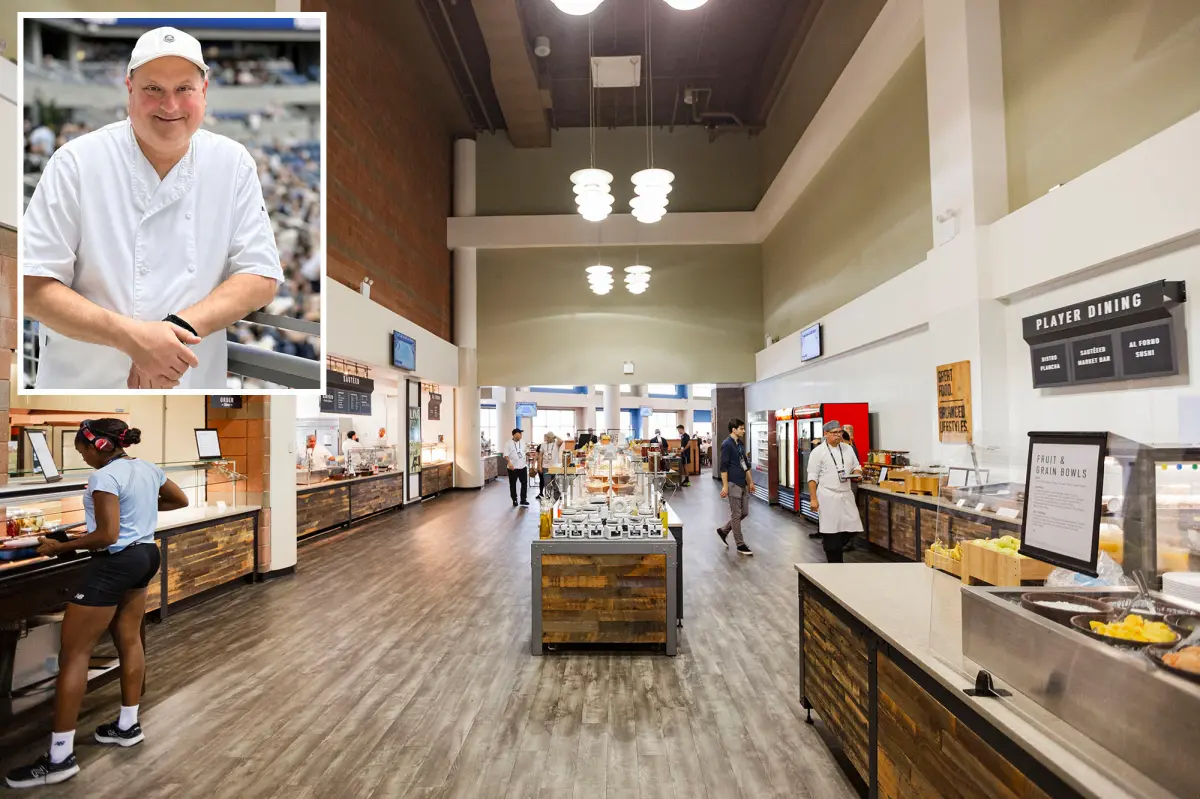
In the hushed, pre-dawn hours of a New York summer, while the city outside is still shaking off the last vestiges of night, a different kind of energy hums within the cavernous walls of Arthur Ashe Stadium. The stadium is silent, its stands empty, but deep within its core, a culinary command center is coming to life. This is the players’ dining room, and for executive chef Billy Strynkowski, the day begins not with the roar of the crowd, but with the gentle clatter of pans and the quiet focus of a team preparing for the ultimate test of athletic endurance. It’s 4:30 a.m., and the opening round of qualifying matches is set to begin. Strynkowski, a man with the steady demeanor of a seasoned general and the warmth of a favorite uncle, moves fluidly among his brigade of thirty cooks. They have traveled from across the country, drawn together by a shared mission: to fuel the world’s greatest tennis players. He chats with them, checks the progress of the food, and reviews the day’s orders, his actions a quiet symphony of organization designed to ensure that every single athlete who walks through the door is given the best possible chance to succeed. The players are not just here to compete; they are here to eat, to perform, and to win, and Strynkowski understands that his role is foundational to their success. For twenty-five years, he has been the culinary architect behind the tournament, a constant presence in a world of constant change. “The players are here to play tennis and make money,” he says with a knowing smile. “They eat to win, and they eat very well.”
The first week of the tournament is always a test of the kitchen’s mettle. A relentless flow of athletes, all vying for a coveted spot in the main draw, march in for early breakfasts before the sun has even risen over the Queens skyline. The dining room, a private sanctuary hidden on the second floor of the stadium, is designed for 300, yet it feels intimate, a world away from the chaos and roar of the courts. The public remains completely oblivious to this gastronomic haven, a secret sphere built for the elite. “The public doesn’t even know we are here,” Strynkowski says, a hint of pride in his voice. “It was built that way.” Each player is provided with a food budget by the tournament, which covers the cost of meals for themselves and their entourages, which can often swell to nearly fifteen people. The flow is constant: a stampede for breakfast, a steady stream for lunch, and then a brief, welcome lull before the dinner rush. The kitchen becomes a battlefield, but the weaponry is culinary—an arsenal of fresh, local ingredients designed to showcase the very best of New York. From iconic Big Apple bagels to the freshest fluke sourced from the waters of Montauk, the menu is a love letter to the host city. “Nothing is from far away,” Strynkowski asserts. “We want to make sure that we represent New York. We have the best bagels possible. We don’t fool around with that.”
The breakfast service is an abundant display of culinary generosity, a spread that aims to cover “every single thing in the world of breakfast.” There is a vibrant fruit bar, a selection of smoothies and shakes carefully made without protein powder (a supplement, Strynkowski notes, that is surprisingly unpopular among the elite athletes), and a hearty selection of eggs, bacon, and fresh vegetables. But Strynkowski’s attention to detail goes beyond the buffet. He is a master of personalization, a culinary concierge who anticipates the individual needs of his high-profile guests. He ensures that special requests are not just met but anticipated, like ordering specific coconut and dairy-free yogurt for a particular player. While he remains discreet about the specific diets of top stars, he is happy to share general trends: the players primarily gravitate towards lean proteins like fish and steak, an abundance of fruits and vegetables, sweet potatoes, nuts, and some chicken. Only a few venture into specific dietary lifestyles like vegetarianism, veganism, or gluten-free. Once the breakfast rush subsides, his attention pivots to the next challenge. He meticulously ensures that lunch is prepared to perfection, a constant vigil over the quality and deliciousness of every dish. “We have to make sure that all the food is being cooked to our expectations—delicious,” he emphasizes, the word “delicious” carrying the weight of a core operating principle.
As the day progresses and the evening matches approach, the dinner service begins to take shape. The options are a testament to the kitchen’s versatility and ambition, a sophisticated menu that might feature racks of lamb, flaky Montauk tilefish, or smoked short ribs paired with okra, cipollini onion fritters, and jalapeño creamed corn. An Asian teriyaki salmon dish with mango, cucumber, and jasmine rice adds an international flair, while the ever-present homemade pasta with basil pesto remains a consistent favorite. The players, despite their disciplined regimes, are not immune to the temptations of their host city. When cravings for a taste of the outside world strike, Strynkowski is ready. He will happily bring in some legendary Queens staples, like a classic Corona Pizza or handmade soup dumplings from the renowned Nan Xiang Xiao Long Bao in Flushing. This ability to bridge the gap between elite athletic nutrition and local comfort food is part of what makes his operation so unique. He oversees the production of about six gallons of pesto per day, a vibrant concoction of “straight basil, a ton of parm, and great olive oil,” a testament to the sheer volume and energy the players expend. Watermelon water, a refreshing and hydrating drink “blended in a cup with nothing else,” is another popular item, prized for its high potassium content. Strynkowski remembers a time when he would bring it directly to players practicing on the courts, a welcome relief during the intense heat of a Queens summer.
Beyond the carefully crafted menus and volume preparations, there are moments of unexpected, personal requests that truly define Strynkowski’s role. A player might ask for high-end toro, or tuna belly sashimi, a delicacy that requires both sourcing and preparation finesse. Another might crave a simple, impromptu creation, like smashed avocado with chopped hard-boiled egg on toast. “I had to make it real fast,” he recalls with a chuckle. “Chopped a hard boiled egg and avocado smeared on toast. We don’t traditionally make that.” Another athlete loved a verdant vegetable shake, blending red pepper, broccoli, and asparagus with oat milk and a pinch of salt. “I have whipped that up in a blender even though it’s not on the menu,” Strynkowski says, his philosophy simple and absolute: “Whatever they want, the answer is yes.” This dedication comes at a personal cost. Though his home is in Pearl River, New York, Strynkowski relocates to a hotel in Flushing for the duration of the tournament. His day at the stadium typically ends around 7:30 p.m., but this is often an optimistic target, as matches can run late into the night or be interrupted by unpredictable rain delays. Even after the main kitchen closes, the athletes are not left hungry; a separate Player Cafe remains open until the early hours of 3 a.m., offering grab-and-go meals. On his walk back to the hotel, a tired Strynkowski might grab a late-night snack of dumplings or stir-fry from a local Flushing spot, but there is little time for rest or leisure. “If you think you will hang out and party after working at the US Open, it won’t work out for you,” he states plainly. “That’s the reality.”
This same demanding reality applies to his dedicated staff, who season after season forgo their own home comforts to join this high-pressure culinary team. Many travel from as far as California to be a part of it. “We try to keep the same cooks each year to build on our food products being amazing and delicious… It has to be consistent,” Strynkowski explains. This commitment to consistency is the bedrock of his success, a principle that has guided him through his 14 years as the tournament’s executive chef. Yet, Strynkowski is not one to rest on his laurels. He looks to the future with ambition and sees even greater possibilities on the horizon. Plans are underway for 2027, when a new, $250 million players’ center will be constructed as part of an $800 million renovation of the USTA Billie Jean King National Tennis Center. This new facility promises to elevate the culinary experience for the players to an unprecedented level. But for now, amidst the controlled chaos of the current tournament, Strynkowski finds his greatest satisfaction in the simple, human moment of a well-fed champion. “The beauty of my job is to watch them enjoy the food,” he says, his voice filled with genuine warmth. “We blow away their expectations.” For him, the tournament is much more than tennis; it is a two-week-long act of service, a culinary performance where the greatest reward is not a trophy, but the quiet satisfaction of an athlete, their energy replenished, ready to take the court and give everything they have, powered by the unseen, unsung artistry of a man and his team behind the scenes.