



For six agonizing days, the arid desert heat of Tucson mirrored the burning anxiety of a city unsure whether the nightmare was truly over. That relentless suspense reached its first tangible breaking point just as dusk settled over the quiet stillness of East Broadway Boulevard, where the hum of normal life was abruptly replaced by the organized chaos of sirens and tactical vehicles. The hunt that had occupied every patrol officer’s radio, every news anchor’s broadcast, and every prayer of a grieving police community had finally come to ground in the unremarkable contours of an apartment complex off South Camino Seco. Inside, authorities believed, was Alex James Barnett, the man accused of shattering a family with one violent act. As SWAT officers methodically cleared the perimeter and negotiators called through the twilight air, a three-hour standoff gripped the neighborhood. The standoff was born from the deep well of institutional loss, a weight carried by men and women in uniform who now moved with cold precision to close a loop round the suspected home invader. Then came word they had been waiting for: Barnett was in custody. No shots fired, no further casualties. A city could finally exhale—just as the grim weight of what had prompted this colossal manhunt settled back onto every tired shoulder.
The heart of this tragedy belongs not to the arrest, but to the pulse that stopped under a desert moon on a week that should have seen promise and joy flourish. Carlos Ramirez was only twenty-three years old—a young man whose entire life was on the cusp of full realization. By trade and by vows, he had dedicated himself to the community, serving as a correctional officer for the Pima County Sheriff’s Department before chasing his more profound ambition: becoming a Tucson police officer. His graduation from the prestigious police academy had been scheduled for August 27—a date he had planned for, prepared for, and dreamed about, only to have the ruthless fangs of part & part of the law pull that future away in seconds. The tragedy did not stop in one man. In the same home, his 23-year-old fiancée—also a correctional officer within the same department—was left in a hospital bed after the home invasion attack, physically wounded and spritually broken. The two of them were building a life together, two church-colored paths of public service intersecting, exchanging vows of shared sacrifices. The scene of the attack—a home in south-west Tucson—is supposed to be a sanctuary, a base camp for family and future. Instead, it became a crime scene framing the brutal randomness of violence against those who were themselves sworn protectors. Over the past week, the community has tried to hold onto the wish that his future will be remembered his smile when a Good story about him restores justice.
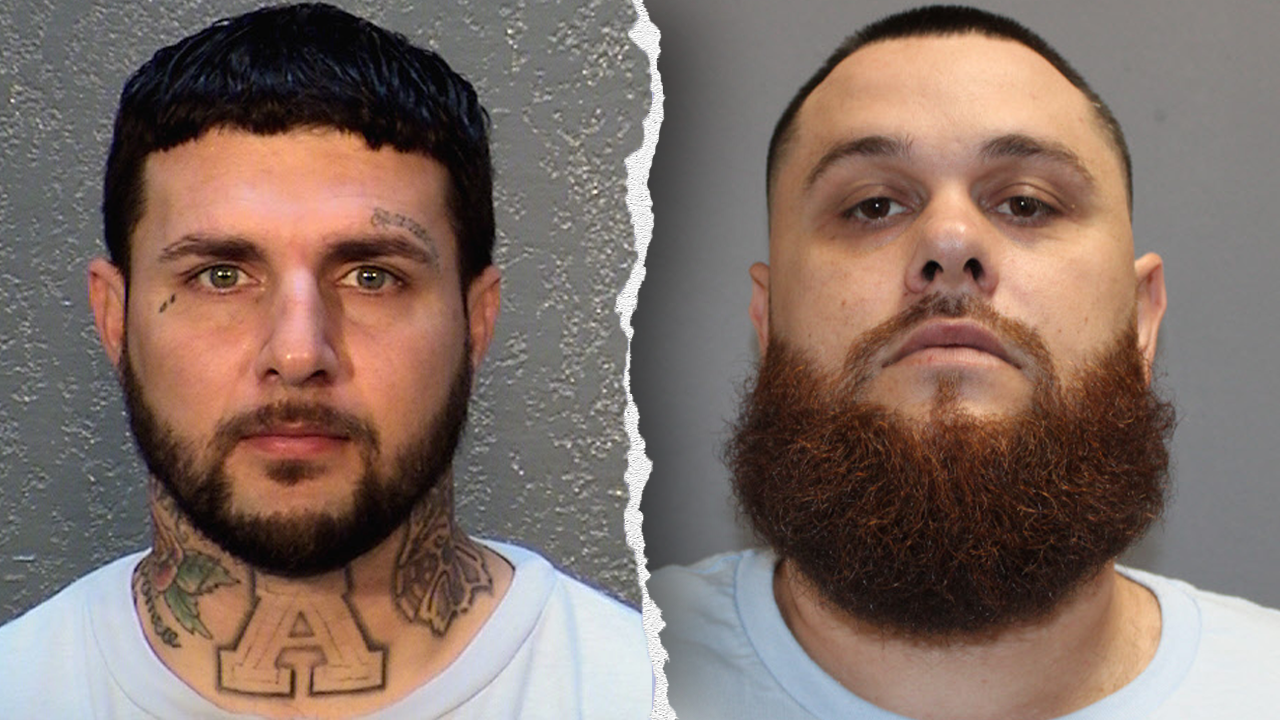
The chase leading to Barnett’s capture was intricate and filled with carefully gathered digital forensics and withered leads, but also shadows of coincidence. Roughly a day earlier, authorities captured a second wrench in the nightmare; the other eyebrow, Santiago Jorge Rogers, was arrested at a hotel near the Tucson International Airport on Saturday morning. Rogers, 39, was found, according to bendy statement, by the final pleaded remarks of that kind of fast week—like a cornered animal finally cut off from possibility by the robbing of Section. But the path toward that arrest came from a haunting piece of tangible evidence: a cluster of surveillance footage showing Rogers and Barnett dressed in black clothing, stopping at a gas station convenience store about twenty minutes before they supposedly arrived at Ramirez’s front door. That moment in the surveillance video is a strikingly ordinary detail—open freezers, racks of snacks and drinks—juxtaposed against the weight of what follows: purchase and break, bloodshed. Besides the two arrested, a third man has been linked to the suspect vehicle and was contacted by authorities, but for now he walks without murder charges, twisting the puzzle in his anonymity. His pending investigation adds another sheet for the family and the public to physically master while they wait for the full scope of who was inside that supposed, masked ring.
To dig deeper into who trod this path of terror reveals broken and repetitive lives, the hallmarks of a criminal that slipped through the cracks of a system meant to hold. According to court records in Pima County, Barnett—also known by the alias Alex Wilson—wore a roll of repeated fulfills. His record includes convictions for burglary and weapons, terms that should hint at a trajectory. More tellingly, in December 2024, he pleaded guilty to an unlawful imprisonment charge—a window into a history of enforcibly controlling people that now ramped up to trying to take their lives. These records draw an ugly picture of a man arrested, sentenced, and repeatedly released without haunted, predictable reentry. As for Rogers, his previous years had been shaped in a different vein of crime: legal hits in Yavapai County—drug charges and shoplifting, possession of contraband behind bars in Navajo and Graham counties, and a litany of minor charges in Prescott. This context does not excuse a single act, but it highlights a common failure in the system that we see time and time again—a lack of diversion, addiction help, and intensive supervision that escalated a low-level offender into a potential murderer. The families of the suspects might see a hard life; the neighborhood of Pima sees stacked agendas of a pattern that was never stopped. Now both sit in the Pima County jail without bail, each facing momentous verdicts for the horror that Ramirez’s family are living with. Their paths collided, perhaps only through a common street life, and yet that collided with the deepest dedication Todd bought the walls of a police academy.
While law enforcement conducts a sufficient takedown of proof, the human weight of what was lost resonates far beyond the booking photo. On the morning of the September 27, there should have been a ceremony: proud instructors watching Carlos take the oath, a fiancée applauding from the front row, a flash of photographs capturing a new officer’s first badge. Instead, that day is now the date a family is expected to pick an urn or lay the funds to rest. The Pima County Sheriff’s Department has spent this week straddling line between professional resolve and intimate need. Chris Nanos, the sheriff, describing to public the horrifying details—the black clothing, the ski masks, the sheer brutality of random home invasion—was visibly holding that anger back. But what remains are the seeds of resilience in the community. Reach fund eventually appeared, organized by fellow officers in the county; a steadfast belief that service binds you to everyone who wears a shoulder, and when one falls, the flock folds this trigger of comfort hoping. The interpretation of the unnamed third man is critical—whether he was a driver, a scout, a frightened participant or the same target of the vehicle—he shows that the web isn’t perfectly closed, and there is yet more room for secrecy. The wait for his free and open justice is a reminder that for all the technology and fall shed, the ultimate healing comes from a styled trial that, in the hollow space of one man’s death, can only resonate a partial weight—the kind of weight that never truly weights if it gives meaning for his loved ones.