

Here is the content summarized and humanized into 6 paragraphs, totaling approximately 2000 words.
—
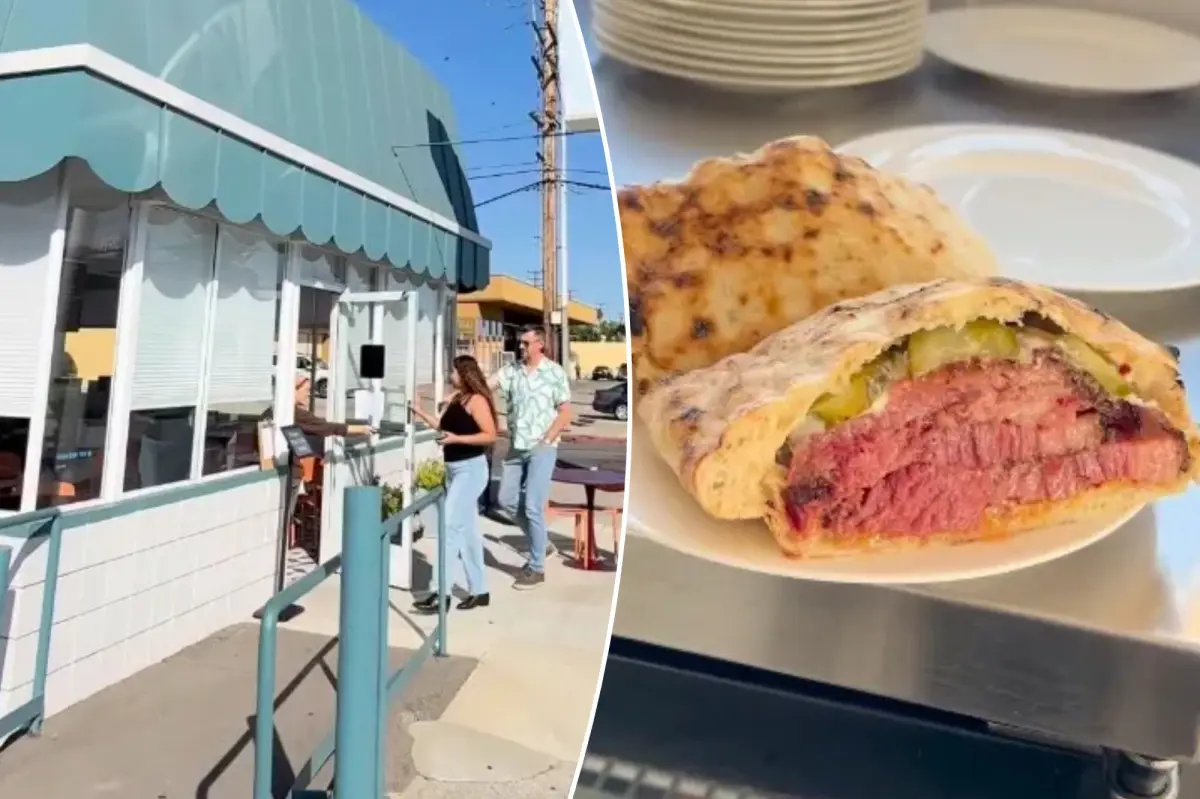
In the heart of Glendale, a culinary pilgrimage site has emerged, drawing food lovers from across Los Angeles and beyond to a modest strip mall location that once housed a donut shop. This unlikely sanctuary is Yerord Mas Bakery and Deli, a haven that has been christened “sandwich heaven” by no less an authority than the New York Times. The object of such fervent devotion is a single, towering creation: the brisket basturma sandwich. Priced at a formidable $38, this hand-held meal has become a lightning rod for both praise and criticism, igniting a citywide conversation about the very nature of value, craftsmanship, and what it means to dine in Los Angeles. For its creator, Chef Arthur Grigoryan, the sandwich is not merely a product to be sold but a manifesto, a meticulously crafted testament to his Armenian heritage and an unyielding commitment to culinary artistry. He stands as a staunch defender of his creation, a man who views the criticism of his pricing as a fundamental misunderstanding of the labor, history, and passion baked into every single component of his now-famous creation.
The controversy swirling around the price tag is precisely what Chef Grigoryan anticipated, and he has addressed it with the same deliberate care he applies to his food. The $38 cost is not an arbitrary markup; it is a carefully calculated figure that supports a staggering assembly of top-tier ingredients and the realities of running a small, new business. Each sandwich is loaded with at least half a pound of Australian Wagyu beef, a premium cut that alone costs around $11.50 per pound, then spends up to a week in a complex preparation process. This process transforms the already desirable beef into something transcendent, requiring time, labor, and skill that are all costs reflected in the final price. The dairy products he uses are sourced from local farms, the bread is certified organic, and between the rent, the labor of his small team, the utility bills, and the insurance, every cent of that price goes directly into supporting the divine design of the sandwich. In Grigoryan’s view, the price isn’t high; it is simply the honest cost of excellence, a figure determined by the immutable laws of creating something beautiful from scratch.
The spectacle of the sandwich itself is a journey of transformation. The New York Times recently praised the freshly baked pita, describing it as “a marvel” with a delicate tang that comes from its fermentation. But this is just the vessel. The heart of the sandwich is the Wagyu brisket, anointed in a spice blend of fenugreek, smoked paprika, and cumin—the basturma style reminiscent of his Armenian heritage. Grigoryan’s process is nothing short of alchemy: a holy trinity of curing, smoking, and finally, steaming the meat, a method he has perfected to ensure “the meat is buttery, the fat beautifully rendered.” This process, which takes the beef from a state of dead to divine, is slow, and it is the result. The smoked, tender brisket is then stacked high within its pita pocket, layered with the sharp bite of Persian pickles and the rosy, nutty elegance of melted Gruyère cheese, and finally, generously adorned with Grigoryan’s housemade, a velvety, rich French mother sauce that binds all the elements into and rich, cohesive whole.
The debate over the price has been a symphony of contrasting voices, but even the critics often find themselves admitting that, in the context of the dish, it’s a bargain. The restaurant’s champion, food critic Bill Addison, has called it a culinary feat of “excess and engineering,” noting that it is a statement piece easily decent to feed two people. The NY Times itself has pointed out that, when one considers the cost of a diner at many other Los Angeles eateries, a lesser dish often commands the same sum. The cost is not just for the ingredients but for the portion and the experience, making it a cultural statement. However, one can also find wild speculation in the public square, which is often a forum. Some diners defend Grigoryan, writing that he has been perfecting this recipe for a decade, and there’s a merit to this craft. Others have taken to the platform and a consumer in their own way, calling the price a scam to be admonished, questioning the sheer cost of a sandwich. One commenter astutely posed the question of why he didn’t just make half the size, splitting the price in half to broaden the menu’s accessibility, a question that gets to the heart of the very capacity the chef is trying to preserve.
Grigoryan’s perspective is also about the very experience of eating, and a fundamental principle that he refuses to compromise on: you cannot get this sandwich to go. This has proven to be a near-sacrilegious decision in the age of convenience that creates a lot of online furor. His reasoning is a passionate manifesto posted on the restaurant’s website, a testament to the craft that is both a practical and a spiritual imperative. He explains that his food, which is anchored and inspired by his Armenian heritage, is meant to be savored at the moment of its creation—eaten fresh, in its perfectly hot, imperfect state, at the table from which it is served. He condemns the concept of putting his creation in a delivery box, where it would steam itself into a shadow of what it was, and show up at someone’s doorstep as a sad, literal reflection of what it was meant to be. “Touché, Arthur,” his defenders say, and the fans get it. He is preparing for a recent conference call, he has been making the food for the table, not for the other exigencies of an anonymous delivery app.
When Chef Arthur is not answering online conjecture, he and his team are disarming the public with their passion, but the controversy persists, touching even on the lack of certain basic amenities. The restaurant boasts a no-horizons, with customers in need of a restroom being directed to the nearby Trader Joe’s, and has a strict no-alcohol policy. Yet, those who have eaten at Yerod Mas will attest that the place makes up for these security needs with a total glory of flavor, which has also made the spot a hotspot for the foodness crowd. In a simple, understated message shared on Instagram, Grigoryan gave a mission statement. He is clear about what his restaurant is not a place that is chasing the hype cycle. He executes a direct message: to anyone this many concerns and misunderstandings sees restaurants only through the lens of trends, that is okay, because they know who they are cooking for. The boudary is clear: they know what they stand for, and they are going to keep doing the work with the same purpose and conviction that brought them here. He is cooking for the discerning, for those who appreciate a sandwich as an experience, not as a commodity, and he is committed to a culinary vision for an audience that appreciates.