


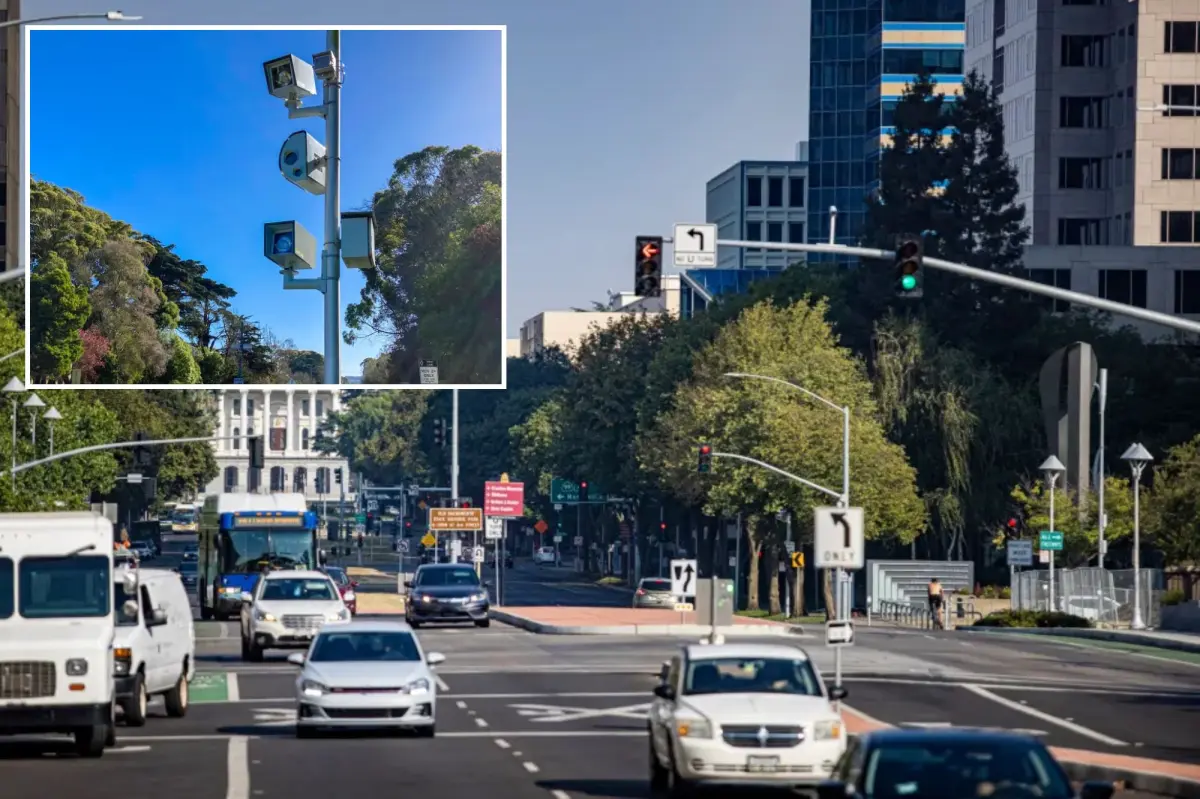
Sacramento is at a crossroads, and the decision isn’t about which road to build or which lane to widen—it’s about how to keep people alive on the streets they already use every day. For years, drivers have been blowing through red lights with alarming frequency, turning ordinary intersections into scenes of near-misses, injuries, and worse. The problem has become so severe that city officials are now seriously considering bringing back red-light cameras, a tool they abandoned just two years ago. It’s not a decision they’re taking lightly. The city has seen too many crashes, too many families devastated, and too many close calls that could have been prevented. According to Sacramento officials, nearly a third of the city’s serious crashes are now linked to drivers running red lights. That statistic alone has shaken public confidence and pushed local leaders to look for immediate, tangible solutions. Transportation advocate Dan Allison put it bluntly: “I think that red-light running has become an epidemic in Sacramento.” That word—epidemic—carries weight. It suggests something spreading out of control, affecting not just the reckless drivers but everyone else who happens to be in the wrong place at the wrong time. The city’s proposal is not a vague promise; it’s a concrete plan to install up to 20 new cameras at intersections with documented histories of crashes and red-light violations. These aren’t random corners chosen for convenience. They are specific stretches of road where people have already been hurt, including I Street, Capitol Avenue, 16th Street, Florin Road, and Power Inn Road. For residents who drive these routes daily, the proposal feels personal. It’s a recognition that something has to change before another life is lost.
The details of the proposed camera program are designed to address some of the concerns that killed the previous effort, but they also raise new questions. Under the new plan, the cameras would operate under a recently passed state law that reclassifies red-light violations as traffic tickets rather than criminal moving violations. That shift may seem subtle, but it matters. It means the focus is on civil penalties and public safety, not on branding everyday drivers as criminals for a moment of carelessness. The city has also emphasized privacy protections: the cameras would only capture rear license plates, not faces, and they would not be connected to police databases. That’s a deliberate attempt to reassure residents who worry about surveillance and government overreach. The financial structure has been adjusted too. Fines would start at $100 for a first violation and could rise to $500 for repeat offenses. Low-income residents would qualify for reduced fines and manageable payment plans, acknowledging that a single ticket shouldn’t push a family into financial crisis. City officials hope these changes make the program more palatable and more equitable than the one that came before. But the real question remains: will cameras actually make Sacramento’s streets safer? City staff believe they will. Chris Dougherty, Sacramento’s funding and asset planning manager, pointed to data showing that similar camera programs have led to a 21% decrease in red-light-running collisions. That’s not a trivial improvement. For a city grappling with a deadly trend, a one-fifth reduction in crashes could mean dozens of fewer injuries and, potentially, lives saved. City Councilmember Phil Pluckebaum echoed that sense of urgency, saying, “Red light enforcement we can do immediately, and we’re looking for any strategy that we can find that can get people to slow down and drive a little safer.” His words reflect a broader frustration: that too many drivers treat traffic signals as suggestions, and that traditional enforcement alone hasn’t been enough to change the culture.
Supporters of the camera program argue that it’s not about generating revenue or catching people in petty violations—it’s about changing behavior. The presence of a camera, they say, acts as a constant reminder that running a red light has consequences. Unlike a police officer who can only be in one place at a time, cameras can monitor intersections 24 hours a day, seven days a week. They don’t get tired, they don’t look away, and they don’t have to choose between chasing one speeder and missing another. For cities like Sacramento, where staffing limitations and budget constraints make it impossible to station officers at every dangerous intersection, cameras offer a kind of tireless vigilance that human enforcement simply cannot match. The statistics support this logic. Studies from cities across the country have shown that red-light cameras reduce both side-impact crashes and overall traffic fatalities. And when the cameras are removed, the numbers often creep back up. That’s part of why Sacramento’s decision to abandon the program two years ago felt so frustrating to safety advocates. They watched as the city saved money in the short term, only to see dangerous driving return and serious crashes climb. The current proposal is, in many ways, an admission that the previous decision may have been a mistake—or at least a well-intentioned choice with unintended consequences. The city is now trying to find a middle ground: a program that is effective enough to deter reckless driving, but fair enough to earn public trust. That’s a difficult balance to strike, especially in a community that has grown skeptical of automated enforcement.
Part of that skepticism comes from the history of the city’s last camera program, which ended not because it was ineffective, but because it was expensive. Sacramento had traffic cameras in place until about two years ago, when officials decided to shut them down. The program was costing the city roughly $898,000 per year, and the revenue generated from violation tickets simply wasn’t enough to cover the operating costs. For a city juggling competing budget priorities—roads, parks, housing, public safety—that kind of financial shortfall is hard to justify, especially when critics argue that cameras are just a hidden tax on drivers. The economics of red-light cameras have always been complicated. They require maintenance, data processing, review by law enforcement, and administrative oversight. Tickets can be contested, and each challenge costs time and money. When the fines are reduced for low-income residents, as the new proposal suggests, the revenue potential drops even further. So why bother? Because, city officials argue, the value of a camera program shouldn’t be measured in dollars alone. Every crash that doesn’t happen is a cost that doesn’t have to be paid by the healthcare system, by insurance companies, by employers losing workers, or by families losing loved ones. But the price tag remains a legitimate concern. Residents who are skeptical of the program worry that the city is walking into the same financial trap again, promising safety while quietly hoping that ticket revenue will eventually cover the costs. They’ve seen this story before, and they’re not eager to repeat it.
There are also deeper concerns that go beyond money. Some residents simply don’t trust the technology. Peyton Sievers, a Sacramento resident, voiced a common fear when he said, “Technology malfunctions. It’s not always effective. I’ve seen in the past where it randomly goes off and gives people tickets when they don’t deserve it.” That fear is not baseless. Automated systems have a long history of glitches, false positives, and bureaucratic nightmares. A camera might capture a car that stopped just past the line, or a vehicle that was already in the intersection when the light changed. It might flash on a rainy night and send a ticket to someone who did nothing wrong. Even when the system works perfectly, there’s something impersonal about receiving a citation in the mail from a machine. It feels less like justice and more like a random penalty. For many people, the idea of being watched by cameras at every major intersection raises uncomfortable questions about privacy and civil liberties. They wonder: if the cameras only capture rear plates today, what stops them from being upgraded tomorrow? If they’re not connected to police databases now, what happens under a different administration? Trust, once broken, is hard to rebuild. The city’s assurances are sincere, but they are also promises that future leaders will have to keep. That’s a heavy burden for any policy to carry.
In the end, the success of Sacramento’s red-light camera proposal may depend less on the technology and more on the process. The city has launched a survey to gather public input, asking residents where they think the cameras should be installed and what concerns they want addressed. It’s an attempt to build trust through transparency, to let people feel like they have a voice in a decision that affects their daily commutes and their neighborhoods. That’s a smart move, because any enforcement program works best when the public believes it is fair. If residents feel like the cameras are hidden money traps or surveillance tools, they will fight them at every turn. But if they see the cameras as a protective presence—a way to make dangerous intersections safer for pedestrians, cyclists, and drivers alike—they may be more willing to accept the occasional inconvenience. Sacramento is not alone in this struggle. Cities across California and the nation are wrestling with how to balance safety, privacy, cost, and fairness in a world where traffic deaths are rising and technology is advancing. There are no perfect answers. But the conversation itself is valuable. It forces residents to think about what kind of city they want to live in, and what they’re willing to do to protect one another. The cameras may come back, or they may not. But the underlying issue—the epidemic of red-light running—won’t disappear on its own. It will take a combination of enforcement, education, street design, and personal responsibility. Sacramento’s leaders know this. They’re asking for patience, for input, and for a chance to make the streets safer. Whether the cameras return or not, the hope is that the conversation will lead to something more: a community that values safety over speed, and life over convenience. That’s a goal worth pursuing, one intersection at a time.