


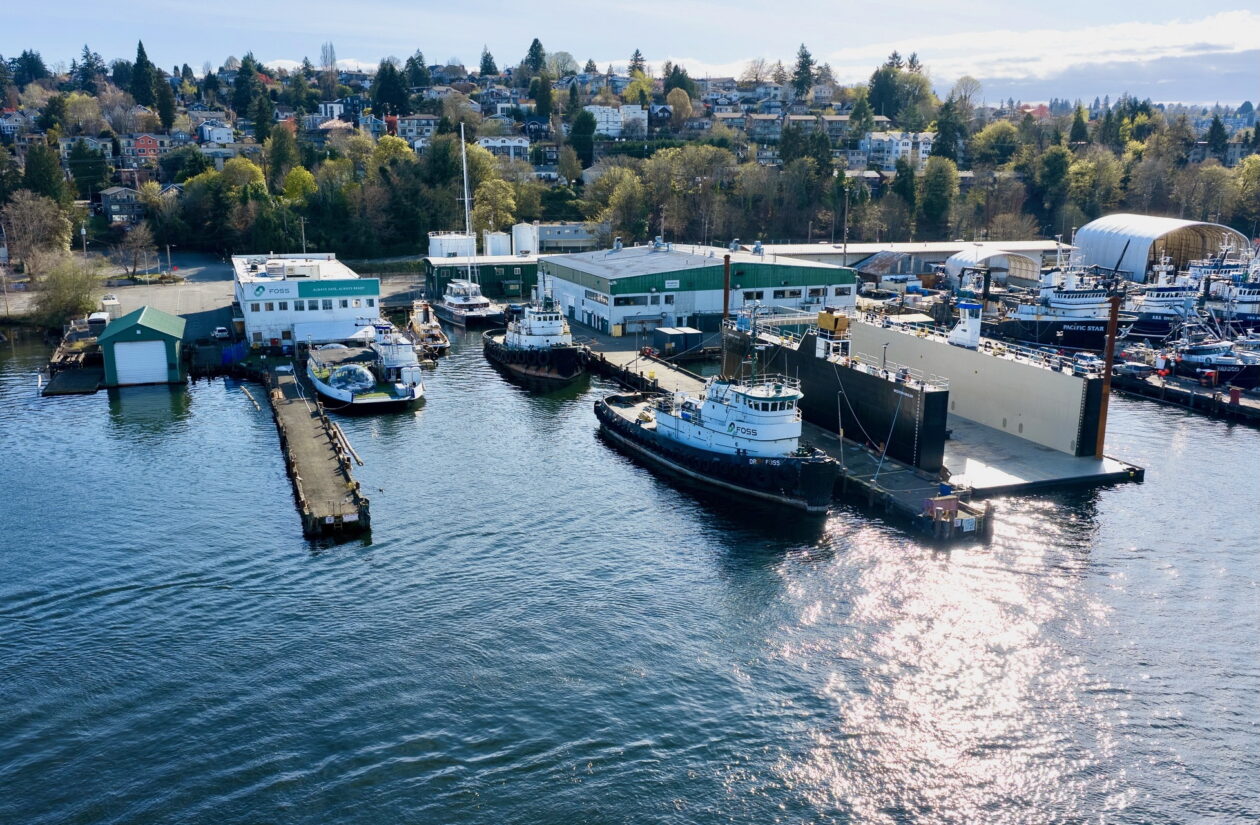
There is a stillness that settles over old shipyards when the work stops. The water of Seattle’s Lake Washington Ship Canal laps against the silent pilings of the historic Foss Shipyard, a place that once hummed with the thunderous rhythms of maritime industry. Recently, a new kind of silence descended. Anduril Industries, the high-flying defense technology behemoth, quietly gathered its cables, its specialized tools, and its handful of engineers, and walked away. The departure was so discreet that it barely registered in the local press, a stark contrast to the fanfare that had accompanied its arrival just months earlier. The company confirmed the exit to GeekWire this week, citing a starkly bureaucratic yet profoundly strategic reason: the U.S. Navy yanked the rug from under the specific unmanned vessel program Anduril had been pursuing at that exact location. In a statement that read more like a corporate press release than a eulogy for a maritime dream, a spokesperson noted that the space supported a Navy program pursuit, and with that program’s cancellation, the shipyard footprint was simply no longer necessary. They stressed the operation had always been modest—a handful of employees—while swiftly pivoting to reassure the world that Anduril’s broader Seattle footprint “continues to grow.” Yet, for those who witnessed the initial plans, the sudden vacancy feels less like a strategic pivot and more like a ghost ship slipping its moorings in the night. The echoes of the welders and fitters who once worked the Foss yard now mingle with the strange quiet of a venture abandoned before it truly began.
To understand the weight of this exit, one must look back to the ambitious tide that brought Anduril to the water’s edge. In the waning months of 2025, the company announced a formidable trans-Pacific partnership with South Korea’s heavy industrial giant, HD Hyundai Heavy Industries. The mission was audacious: to construct a novel class of dual-use Autonomous Surface Vessels (ASVs) designed explicitly to compete for the Navy’s Modular Attack Surface Craft (MASC) program. The MASC initiative promised to be a game-changer—unmanned warships capable of hauling massive payloads across vast oceanic distances, controlled by software rather than sailors. Anduril, a company known for its aggressive, software-first approach to warfare, viewed the shipyard as the perfect physical anchor for this digital ambition. At the rollout, the company spoke with the fervor of a revivalist preacher, casting the Pacific Northwest as the ideal industrial launchpad. They extolled the region’s historic shipbuilding roots, invoking the legacy of the workers who had once forged the fleet that helped win a world war. Anduril proudly stated it had invested “tens of millions of dollars” to revamp the previously retired Foss Shipyard, transforming rusted relics into a low-rate assembly hub. It wasn’t just an office; it was a beacon. They envisioned the first ASVs sliding down the ways into the canal, a marriage of old-school manufacturing and bleeding-edge AI. The human story here was one of resurrection—taking a site that had nearly been retired to the boneyard and giving it a second life in the age of drone warfare. The excitement was palpable, a tangible promise of jobs, technology, and strategic dominance radiating from Seattle’s working waterfront.
But military procurement is a fickle sea, prone to violent squalls. In March of 2026, the Navy dropped a seismic bombshell: the MASC program was dead. In a move that left contractors scrambling, the Navy canceled the entire initiative, replacing it with a distinctly different acquisition strategy geared toward Medium Unmanned Surface Vessels, or MUSVs. The old world of formal, lengthy competitions—with their exhaustive written proposals and fixed requirements—was jettisoned. In its place, the Navy created a dynamic, almost Darwinian “marketplace.” This new arena allows defense vendors to bring their autonomous vessels to the table and prove their mettle through actual at-sea demonstrations. Success in the water would be the only currency that mattered. When the Department of the Navy announced which seven defense vendors would advance to this first round of wet-and-wild testing, the roster read like a who’s who of maritime contractors: Leidos, Huntington Ingalls Industries, Saronic Technologies, and Sea Machines, among others. Conspicuously, Anduril was not on the list. They were cut from the roster for initial testing, left standing on the pier as other ships headed out to open water. The financial stakes became immediately clear: any company that successfully deployed a vessel at sea would receive a $15 million payout and earn eligibility for lucrative follow-on production contracts. The at-sea tests slated to begin in June would run through October, a four-month gauntlet that would separate the truly seaworthy from the mere PowerPoint presentations. For Anduril, their exclusion meant their tens of millions in shipyard investment had suddenly become a liability, a fixed asset tethered to a program that no longer existed. The bureaucratic whiplash was brutal, a reminder that in the defense industry, strategic plans can be torpedoed by a single memo from the Pentagon.
When the dust settled, Anduril made a calculated, if somewhat painful, decision: they cut bait entirely. Rather than attempting to retrofit the Foss facility to chase the new MUSV strategy—a process that would have involved more investments and uncertain timelines—they chose to vacate the premises wholly. Acknowledging the reality of the situation, their spokesperson hinted that the shipyard was inherently tied to a single pursuit. One might ponder why they didn’t keep the space as a hedge, ready to pivot if a new maritime opportunity arose. But the ethos of Anduril is one of ruthless efficiency, digital agility, and a distaste for heavy physical encumbrances. Keeping a cavernous, historic shipyard idle in Seattle’s expensive industrial real estate market simply to wait for an uncertain naval contract does not fit their swashbuckling startup mentality, even at a $61 billion valuation. They viewed the sunk cost with a cold, analytic eye. The human reaction to this is mixed with a sense of anticlimax. It’s the story of a massive crane being erected only to be dismantled before it lifts its first ton. Anduril remained tight-lipped about whether they will pursue the MUSV program through other channels or other geographic locations. Their silence on the matter speaks volumes—this was a setback, a blip in their otherwise explosive growth trajectory. Yet, for the workers and maritime enthusiasts who hoped to see autonomous warships cruising the canal, the abandoned shipyard represents a lost dream, a concrete memorial to the unpredictability of the defense procurement cycle. The empty dry dock is a stark visual reminder that the union of software and shipbuilding is fickle, and that the Navy’s changing demands can erode the most well-funded of plans.
Yet, even as they retreated from the water, Anduril’s land-based conquest of Western Washington accelerated with a ferocity that makes the shipyard exit look like a footnote. While the Foss arena was always small, the company’s broader footprint has morphed into a sprawling technological empire. Just four years ago, they had a presence of around 30 employees in the Puget Sound region. Today, that number stands at a staggering 560, spread between their offices in Bellevue and downtown Seattle. This isn’t just office expansion; it’s an intellectual invasion. They operate a multi-acre military test facility in the rural, evergreen-laden town of Carnation, where the sound of gunfire and drone propellers has replaced the silence of the shipyard. The human story here is one of frantic recruitment. The high-flying firm, which recently closed a monumental $5 billion funding round that pegged its valuation at a staggering $61 billion and is reportedly eyeing an even more staggering $100 billion valuation in its next round, has the financial firepower to poach the region’s best engineering talent. Tom Keane, Anduril’s Senior Vice President, shared an ambitious vision with GeekWire: the company could potentially grow its regional workforce to 1,000 people. These aren’t just shipfitters; they are software engineers, computer vision specialists, and hardware wizards working on augmented reality displays for soldiers, edge computing hardware for autonomous systems, and other sophisticated military technologies. The focal point of their growth has shifted from the tactile world of hulls and propellers to the abstract realm of algorithms and silicon. The Seattle area offers a deep talent pool of cloud computing experts, a legacy of the surrounding tech giants like Microsoft and Amazon, which Anduril is eagerly tapping into to build the digital backbone of future warfare. The steel of the shipyard has been replaced by the cleaner, quieter buzz of data centers and labs.
In the end, the narrative of Anduril’s departure from the Foss Shipyard offers a compelling slice of the modern military-industrial complex. It highlights a brutal irony: a company famous for building “lattice” sensor networks and ground-breaking autonomous jets found its maritime ambitions ultimately dashed not by an enemy, but by the bureaucratic indecision of its primary customer. The retreat from the Seattle canal serves as a case study in the fluidity of modern defense contracting, where billions are poured into speculative programs that can vanish overnight, leaving behind only rusting investments and silent applause. But the story also underscores an important pivot—the Navy might turn its back on a platform, but the underlying technology and the ambition remain. As Anduril consolidates its power in the software campuses of Bellevue and the remote test ranges of Carnation, it signals that Seattle’s role in the defense trade is not defined by its shipbuilding history, but by its future as a nexus of artificial intelligence and digital warfare. The waves of the canal might no longer be churned by Anduril’s unmanned hulls, but the digital currents of their code will course through the Pentagon’s future. For the city, the vacant Foss yard is a nostalgic disappointment, but for Anduril, it is merely a detour. The company has simply swapped one theater of operations for another, trading the salt spray for the server, and in doing so, continues its relentless march to shape the future of warfare—leaving the old, heavy industry of the water behind to watch from the shore as the autonomous future sails past, steered by ones and zeros rather than steel and steam.