

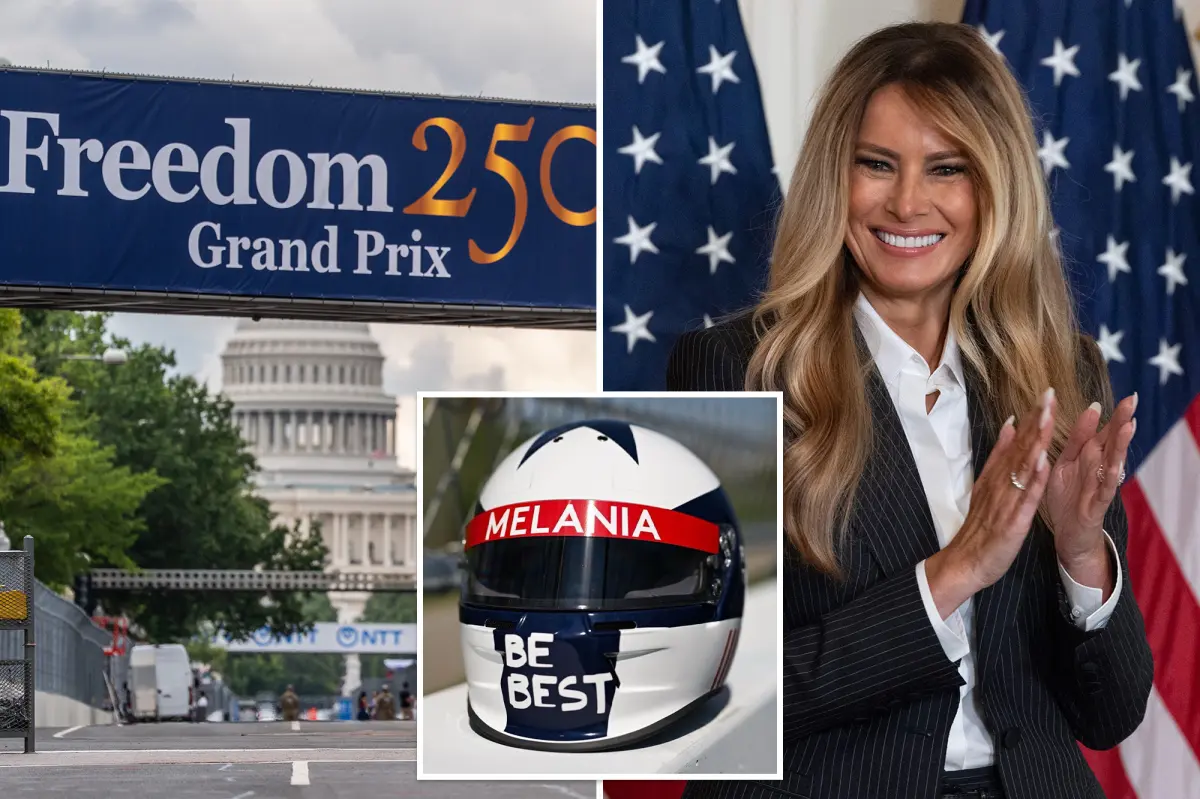
In the heart of Washington, D.C., a poignant convergence of high-octane motorsport and deeply human social advocacy is set to unfold this week. First Lady Melania Trump is preparing to unveil a transformative scholarship initiative designed specifically for the nation’s foster youth, forging an unexpected but powerful alliance with IndyCar, the premier sanctioning body for American auto racing. This partnership marks a significant expansion of her long-standing commitment to this vulnerable population, moving beyond mere symbolism to create tangible, life-altering opportunities. The initiative directly confronts a staggering and sobering reality: only a mere 3% of individuals who have experienced foster care in the United States ever go on to complete any level of college education. This statistic represents not just a metric of academic failure, but a profound systemic breakdown that often cascades into a lifetime of instability. By joining forces with Indiana University and Purdue University—and building upon an established network of 24 other academic institutions across the country—this initiative seeks to rewrite the narrative for the over 400,000 children currently navigating the precarious and often lonely terrain of the foster system. The announcement will soon culminate in a high-profile spectacle on Sunday, where the First Lady and President Donald Trump will take an honorary lap around the streets of the capital ahead of the Freedom 250 Grand Prix, transforming a national sporting event into a podium for compassion, resilience, and renewed hope.
The visual and symbolic centerpiece of this collaboration is as striking as its mission is profound. IndyCar, headquartered in Indianapolis, has designed a bespoke, custom-crafted helmet for the First Lady, painted in the patriotic hues of red, white, and blue—a subtle nod to the collective national responsibility toward these children. The helmet is meticulously embossed not only with her name, but also with the monikers of her flagship initiatives: “Be Best” and “Fostering the Future.” This deliberate fusion of motor racing’s daring spirit with the raw, untapped ambition of foster youth is not accidental. The collaboration leverages the massive visibility and thrilling energy of IndyCar—a series renowned for its precision, split-second decisions, and sheer grit—to spotlight the resilience required of a foster child who dares to dream of walking across a college graduation stage. The financial architecture of this initiative is marked by astonishing transparency and integrity. Marc Beckman, the exclusive senior advisor to the First Lady, has emphasized that 100% of the donated funds will flow directly to the universities tasked with administering the scholarships. There are absolutely zero administrative fees, no marketing charges, and no bureaucratic overhead that could dilute the impact. This guarantee ensures that every single dollar contributes to tuition, textbooks, housing, and the basic necessities that facilitate academic success. Furthermore, these scholarships are strictly merit-based, and crucially, any child currently in or recently emancipated from the foster care system is eligible to apply, systematically tearing down the bureaucratic barriers that have historically left these youths with minimal access to financial aid, mentorship, or even basic guidance on navigating the complex college application process.
The underlying urgency of this project is rooted in a grim, often overlooked reality that child welfare advocates have lamented for decades. The harrowing statistic revealing that only 3% of foster alumni complete college is not just a number—it represents a systemic failure that frequently spirals into chronic homelessness, incarceration, and generational poverty. Beckman articulated this urgency with stark clarity, noting that the lack of educational attainment among foster alumni is precisely why such a high proportion ends up “homeless and mixed up” in society. For a child who ages out of the system without a family safety net—often at just 18 years old—the transition to adulthood is not a gradual step but a terrifying precipice. They lack the fundamental support systems that most of us take for granted: a parent to co-sign a student loan, a family home to return to during winter breaks, or even the simple, encouraging voice that nudges them to fill out the Free Application for Federal Student Aid (FAFSA). This initiative humanizes those cold statistics by offering a structural, dependable bridge between survival and success. It acknowledges that a foster child’s aspiration to become a doctor, an engineer, a teacher, or a business owner requires the exact same acceleration, guidance, and pit-stop support that an IndyCar driver needs to navigate a treacherous hairpin turn at 200 miles per hour. The program directly confronts the cyclical nature of poverty by equipping these young adults with the intellectual capital and credentials needed to secure stable, high-paying careers, thereby alleviating the long-term strain on social services while, more importantly, restoring a sense of dignity, autonomy, and agency to a population that has too often been invisible in the public imagination.
The festivities surrounding this announcement transcend the typical political press event, transforming it into a national celebration of grit, perseverance, and second chances. Thursday’s formal unveiling will take place in the picturesque Rose Garden of the White House, where the First Lady will be joined by the President, as well as high-level representatives from IndyCar and the partner universities. This high-profile gathering sets the stage for Sunday’s highly anticipated Freedom 250 Grand Prix, which will roar through the historic streets of Washington, D.C. The presence of the presidential couple on the track ahead of the starting flag serves as a powerful visual metaphor for the acceleration of opportunity—a reminder that the engines of governance and philanthropy are collectively revving to support the nation’s youth. For the young people in the stands watching the screaming machines, the message is unmistakably clear: the nation is backing their finish line as well. The race weekend functions as a massive recruitment and awareness engine, broadcasting the existence of these scholarships to thousands of live attendees and millions of television viewers nationwide. It transforms an ordinary Sunday afternoon of entertainment into a tangible call to action, inspiring foster children to realize that the track to higher education is not a closed circuit limited to the privileged, but a wide-open road paved with the support of partners in the automobile racing community. The synergy between the adrenaline-pumping excitement of sport and the deliberate, sustained effort of academic perseverance creates a resonant message that transcends partisan lines, appealing to a universal American desire for upward mobility and the belief that one’s circumstances at birth do not dictate their destiny.
This scholarship initiative represents the profound maturation of Melania Trump’s signature cause, elevating it from a symbolic platform into a substantive policy engine with real-world teeth. “Fostering the Future” has steadily evolved into a multifaceted campaign, operating as a pillar of her umbrella “Be Best” initiative, which encompasses overall child well-being, emotional and physical health, educational enrichment, and digital safety. Her outreach has been relentless, albeit quiet and efficient. She has arranged for foster children to receive dedicated Trump Savings Accounts, establishing a critical financial foothold for those who previously had absolutely nothing to their name. She has also convened a global summit of First Ladies and Spouses from around the world, fostering an international dialogue on the unique vulnerabilities and needs of children in state care. Domestically, she has taken her advocacy directly to the marble halls of Capitol Hill, lobbying Congress to allocate more federal resources to foster children. While a crucial measure has successfully passed the House of Representatives, it remains pending in the Senate, awaiting endorsement. In a parallel executive push, President Donald Trump has signed an executive order directing federal agencies to prioritize resources and interventions for this neglected demographic. This multi-pronged approach—simultaneously targeting the legislative branch, the executive branch, and the private sector—demonstrates a sophisticated and nuanced understanding of how to genuinely move the needle on deeply entrenched social problems. It deliberately contrasts with the often performative nature of political charity; this is a coordinated, disciplined campaign engineered to deliver quantifiable, real-world outcomes rather than just fleeting photo opportunities.
Ultimately, the essence of this initiative can be captured in Beckman’s succinct, powerful endorsement: “She’s not just raising awareness… We’re actually impacting and changing people’s lives. This is fully about results.” The partnership with IndyCar goes far beyond the glossy photo opportunity; it is a binding commitment to measurable change and human uplift. As the engines prepare to ignite in the capital this weekend, the genuine winners will not be the drivers crossing the finish line first, but the young women and men in foster care who will receive the golden keys to a brighter, more stable future. By intersecting with the undeniable cultural force of IndyCar racing, the First Lady has ensured that the narrative of hope for foster children is no longer confined to obscure government reports or forgotten conference rooms. It is now woven directly into the vibrant fabric of American entertainment and national prestige. The scholarships announced today will fund decade-long journeys—from the anxiety of freshman orientation to the triumphant walk across the stage in a cap and gown. They represent a profound act of trust placed in young people who have been repeatedly let down by the very systems intended to protect them. In the quiet corridors and bustling lecture halls of universities like Purdue and Indiana, future engineers, scientists, artists, and leaders from the foster care system will find their firm footing, proving conclusively that with a robust and empathetic support system, the predictive power of a difficult childhood can be entirely overcome. This humanized approach—seeing the individual soul behind the grim statistic—is the strongest engine driving this policy forward. The relentless pursuit of results over rhetoric provides a durable, compassionate framework that may well outlast the current political moment, creating a lasting legacy of tangible opportunity for the nation’s most overlooked and deserving youth.