



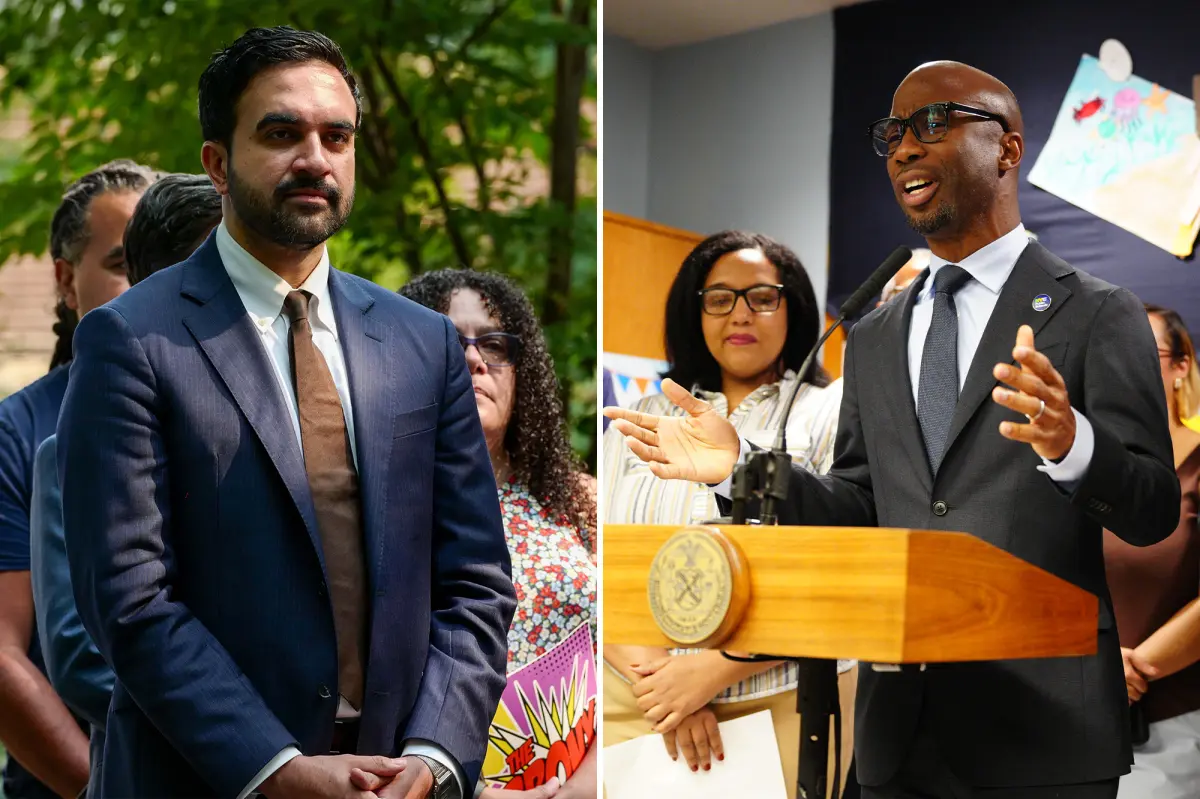
Since the horrific terror attacks of October 7, 2023, and the war in Gaza that followed, Jewish students, educators, and staff inside New York City’s public school system have been living through a quiet crisis. The United Jewish Teachers group, a Jewish educators’ organization, has now documented at least 250 antisemitic and anti-Israel incidents inside city schools over the past two years. That number is not a dry statistic; behind each incident is a young person who sat through a classroom as a swastika was discovered on a blackboard, a teacher who received threats simply for being Jewish or expressing support for Israel, or a student who was singled out, mocked, or harassed for their identity. The report, sent to Mayor Zohran Mamdani and Schools Chancellor Kamar Samuels, describes a persistent and deeply troubling pattern of hostility that has turned parts of the school system into places where Jewish children feel unsafe. It is devastating to imagine a parent who sends their child to school in New York City worrying not about math tests or friendships, but about whether a classmate will carve hate symbols in the classroom or shout something poisonously antisemitic in the hallway. The findings arrive at a moment when the city is already on edge: NYPD data shows that hate crimes across all five boroughs have risen sharply this year, and more than half of those incidents were classified as antisemitic. The UJT report insists that these acts are not random or isolated. They include direct harassment, vandalism, threats, biased curriculum materials, and disruptive walkouts. Together, they create a hostile learning and working environment throughout the system, one that no student or teacher should have to endure. This is not about politics; it is about the fundamental safety and dignity of Jewish members of the school community, and about whether the city’s leaders will take real action to protect them.
The breakdown of the documented incidents makes the problem painfully clear. According to United Jewish Teachers, 65 percent of the cases involved direct acts of harassment, vandalism, assaults, the drawing of symbols such as swastikas, and verbal threats. Nearly one-quarter, or 23 percent, involved biased teaching about Israel and the Middle East. Another 10 percent were tied to walkouts and protests, while the rest involved other staff actions, including offensive online posts. The geographic spread of these incidents shows that this is not a problem contained to one neighborhood or borough. Brooklyn accounted for 37 percent of the incidents, Queens 27 percent, Manhattan 25 percent, the Bronx 9 percent, and Staten Island 2 percent. In other words, Jewish families across the entire city are being affected. What makes the pain even harder to bear is that the broader data confirms that religious bullying is surging in public schools. City schools do not break down hate incidents by specific religion, but student-on-student bullying, harassment, and discrimination based on religion overall have jumped from 151 incidents in the pre-COVID 2018-2019 school year to 367 incidents in 2022-2023, then 398 in 2023-2024 and 319 in 2024-2025. Moshe Spern, the president of United Jewish Teachers, said it is safe to assume that most of those victims were Jewish. That is a heartbreaking reality for a city that prides itself on diversity and tolerance. Jewish students are not just experiencing occasional awkward moments; they are facing a sustained pattern of hostility that affects the way they walk through school doors, the way they participate in class, and the way they quietly endure days when they feel singled out simply because of who they are.
The specific examples included in the report are enough to make any compassionate person shudder. On May 1, a student at Townsend High School in Queens was harassed for joining the Israel Defense Force upon graduation; receiving that kind of abuse should be unthinkable for a young person who simply chose to serve their country. On May 28, a flyer in the hallway at Flushing High School in Queens displayed a Nazi symbol and referred to Israel as an apartheid state, bringing a symbol of genocide directly into a place of learning. On January 27, a swastika was carved into a blackboard at Brooklyn Tech High School, a reminder of the Holocaust placed on a surface where teachers usually write lessons of hope and knowledge. In November, a teacher at Manhattan’s Heritage High School attended a disruptive anti-Israel protest outside Park East Synagogue, blurring the line between personal protest and professional conduct. Verbal harassment, the report says, often involved antisemitic tropes, Holocaust references, and what the group called “eliminationist language” directed against Israeli Jews. Vandalism featured swastikas and other hate symbols, and there were physical threats and assaults as well. Beyond these overt attacks, Jewish religious accommodations and participation in school life have also been denied or obstructed in multiple cases. Imagine a Jewish student asking to be excused from a class on a holiday, only to be treated as a problem, or a Jewish teacher feeling compelled to hide their identity in the lounge. These are not abstract administrative issues; they are daily reminders that some members of the school community are not welcome. The examples show a school system where hate symbols are allowed to linger, where students are punished for their heritage, and where the adults who are supposed to protect them sometimes fail to do so.
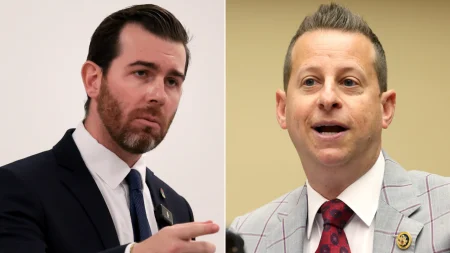
Perhaps the most troubling part of the report is its finding that school and district leadership have often shown limited or no effective follow-through when incidents are reported. This lack of accountability allows hostile conditions to persist, and the report emphasizes that these patterns have continued across multiple school years. That means existing policies and practices have not adequately protected Jewish members of the school community. Spern said he is not surprised that the city Department of Education’s own reports show an increase in religious discrimination among students. He said the department has not done anything meaningful to address antisemitism. That is a damning indictment of the adults responsible for creating safe learning environments. When a swastika is found in a classroom, there should be a swift, serious investigation, support for the affected students, and clear consequences for those responsible. Instead, too often, the report suggests, incidents are brushed aside or quietly dropped. This is especially harmful because silence teaches a terrible lesson: that Jewish students matter less, that their pain is less urgent, and that hate can thrive if no one challenges it. It also creates a climate of fear that extends beyond the direct victims. Jewish parents hear about these incidents and wonder if their own children will be next. Jewish educators wonder whether they will be supported or blamed if they report what they see. The emotional toll is enormous, and it is made worse by the feeling that the system is not listening. The report is essentially a cry for help, a plea from a community that has been documenting pain after pain, hoping that city leaders will finally see the seriousness of the situation and act with genuine urgency.
United Jewish Teachers has issued a clear set of recommendations, and they are both practical and necessary. The group calls on the city to adopt the International Holocaust Remembrance Alliance’s working definition of antisemitism across all Department of Education regulations, policies, and professional training. This definition is a vital tool for identifying and addressing antisemitic behavior, but it has also become politically controversial. In January, Mayor Mamdani, who has been a staunch critic of Israel, scrapped the IHRA executive order issued by his predecessor, former Mayor Eric Adams. That decision sent a troubling signal to Jewish communities at exactly the moment when they needed reassurance. The report also recommends mandatory NYPD investigation and evidence preservation for hate graffiti, creating a central Department of Education public portal that regularly reports antisemitic incidents in schools, mandatory training regarding antisemitism, and a review of curriculum for biased narratives about Israel and the Middle East. These recommendations are not radical; they are basic measures designed to protect students and ensure that hate is not written off as a one-off incident. Evidence preservation is particularly important, because without proper investigation, swastikas and threats become meaningless scribbles, and without transparent reporting, the public can never know the true extent of the problem. The curriculum review is also essential, because biased teaching can shape the way students understand Israel and the Jewish people in the classroom. Spern spoke bluntly when he said the data demonstrates that antisemitism remains a serious and ongoing problem in New York City public schools. He is right, and his group’s work deserves to be taken seriously by every elected official and educator who claims to care about civil rights.
The Department of Education, for its part, has responded with familiar language about having zero tolerance for discrimination, including antisemitism. A representative for Chancellor Samuels said the school system is focused on ensuring that every student and educator is safe and respected, and that all incidents are investigated in accordance with regulations and laws. The DOE also pointed to its Respect for All program, which designates a staff member at every school to lead anti-bullying and bias prevention efforts, and highlighted multiple avenues for students, staff, and community members to report incidents, including an Anti-Hate Hotline at (718) 935-2289 and email [email protected]. Those resources are useful, but they are only meaningful if they are accompanied by real change. After more than 250 documented incidents, the Jewish community is not looking for another hotline; it is looking for protection, accountability, and healing. It is looking for a city where a Jewish student can wear a Star of David without fear, where a teacher can celebrate a holiday without hiding, and where the phrase “never again” is more than a slogan. The story told by United Jewish Teachers is heartbreaking, but it is not hopeless. It is a call to action. The adults in power have a chance to prove that Jewish students matter, that hate will not be tolerated, and that New York City public schools truly are for everyone. The question now is whether Mayor Mamdani, Chancellor Samuels, and the Department of Education will respond with the seriousness and urgency that these 250 incidents demand. Jewish children are watching, waiting, and hoping that the next report will not be needed. They deserve nothing less than a system that sees them, protects them, and welcomes them fully into the life of the school.