


Here is a summary of the provided text, reorganized into a clear, narrative article.
—
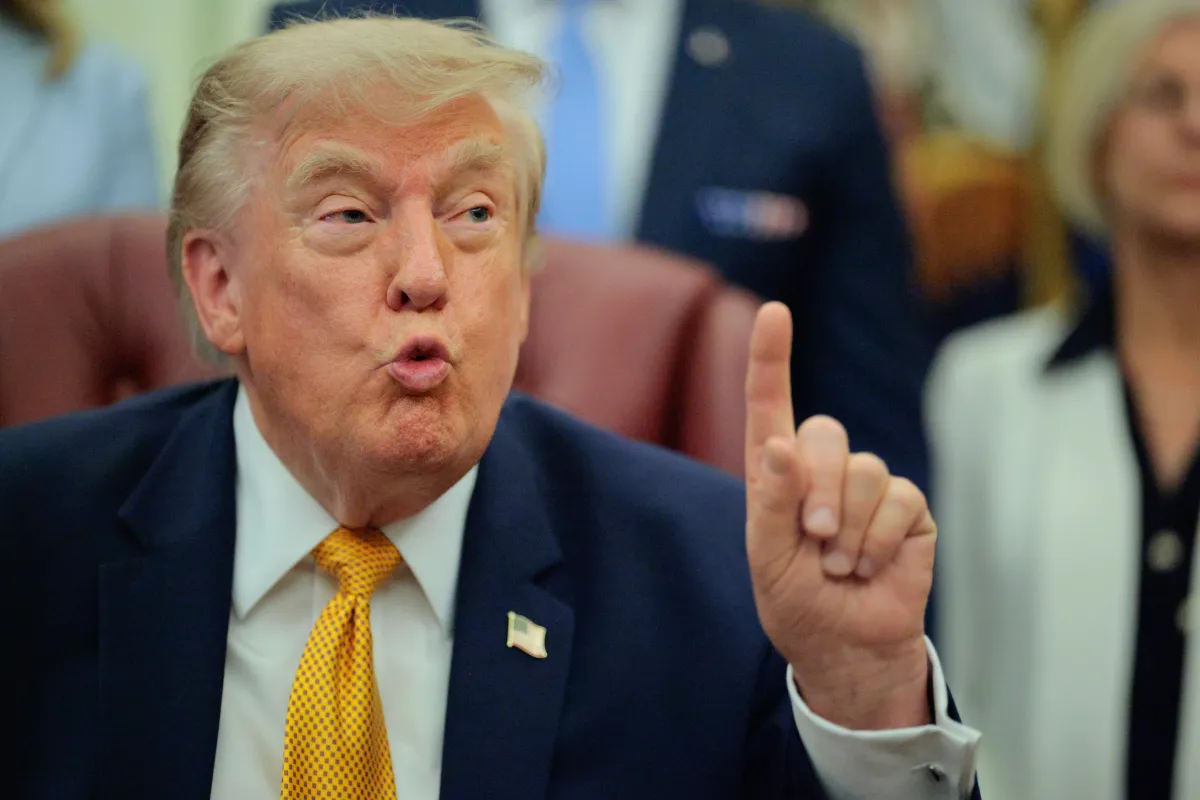
President Donald Trump has publicly lambasted major oil companies for profiting from high energy prices, but financial disclosures reveal that he is simultaneously invested in those very same corporations, creating a glaring conflict of interest. As the White House pressures the industry to lower costs for American consumers, the President’s personal portfolio stands to benefit significantly from the soaring profits he condemns. This tension between public policy and private financial gain has ignited criticism from Democratic lawmakers and government watchdogs, who accuse the President of using his office for personal enrichment.
The controversy stems from the blockbuster second-quarter earnings reported by oil giants Chevron and ExxonMobil. Chevron announced a staggering net income of $12.2 billion, a nearly 400% increase compared to the same period last year, while ExxonMobil posted $14.7 billion in adjusted earnings, double its profit from the previous year. These windfalls were largely driven by a surge in global crude prices, a consequence of supply disruptions triggered by the ongoing war in the Middle East, which has effectively choked off a vital shipping route. The resulting spike in gasoline prices has become a major political liability for the President, who has publicly berated the companies for “making more money than God” and demanded they “immediately” pass savings on to consumers.
However, the President’s public stance contradicts his private financial interests. His most recent annual financial disclosure, released in June, revealed that he holds significant assets in both Chevron and ExxonMobil. While the exact value of his holdings is listed in broad ranges, analysts from the advocacy group Climate Power estimate that his stake in these companies is worth millions of dollars. Furthermore, the disclosure showed that the President’s financial managers actively bought and sold shares in these companies throughout the year. Climate Power calculated that, based on the stock price increases since the beginning of the year, the President’s investments have likely appreciated by over $3 million, directly profiting from the very price surges he has publicly decried.
President Trump has defended his financial dealings by stating that his assets are managed by a third-party blind trust, and he claims to have no direct involvement in day-to-day investment decisions. When questioned by reporters about the apparent conflict, he pivoted to his broader economic philosophy, stating, “I’m a big free enterprise guy.” The White House has echoed this sentiment, insisting that the President has no role in managing his investments and rejecting any suggestion of impropriety. They point to his calls for lower gas prices as evidence that his primary concern is the American consumer, not his own portfolio.
Despite these defenses, critics argue that a blind trust does not absolve the President of responsibility, especially given his powerful influence over energy policy. In June, the President ordered the Department of Justice to launch a probe into major oil companies for alleged price gouging, and he has threatened “big problems” for gas station owners who do not lower their prices. These actions, combined with his personal financial stake in the industry, create a clear conflict of interest. Democratic lawmakers, including Senator Elizabeth Warren, have sent a letter to the President demanding more transparency about his trades, arguing that the “sheer volume” of his trading activity suggests he may be using privileged information to boost his personal wealth at the expense of the American public.
While the President’s oil stock investments are currently performing well, the same cannot be said for all of his holdings. His portfolio also includes shares in Norwegian Cruise Line Holdings and Chipotle, both of which have seen their stock prices fall this year. These losses highlight that the President’s financial interests are not uniformly aligned with his policy agenda, and that his investments are subject to the same market volatility as any other investor’s. Nevertheless, the controversy over his oil stocks underscores the fundamental ethical dilemma of a president whose personal wealth is directly tied to sectors heavily influenced by his administration’s decisions, fueling ongoing concerns about the intersection of money and politics in Washington.