


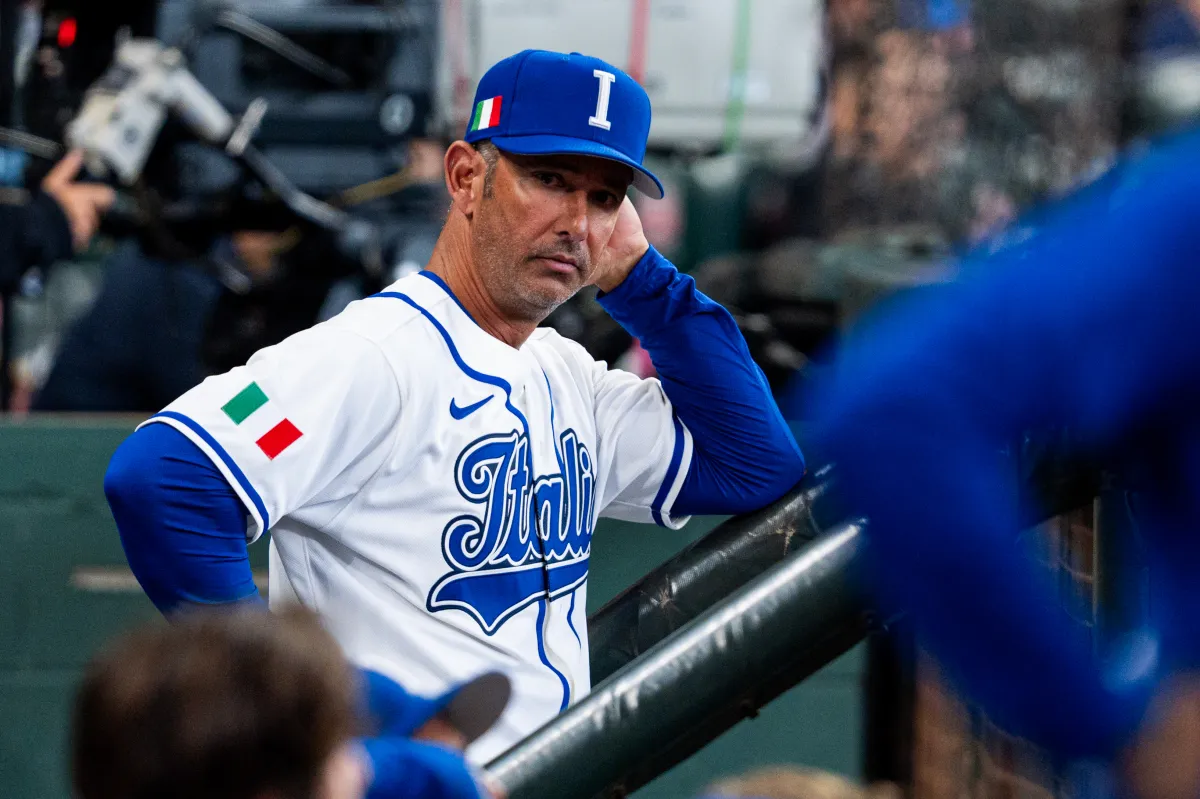
If you want to be technically correct—which, as any seasoned fan or analytical mind will tell you, is undeniably the most satisfying kind of correct—then we must acknowledge that Jorge Posada already possesses real, hands-on experience directing a dugout filled with elite, professional baseball players. The beloved former New York Yankees catcher briefly stepped back into the tactical spotlight when he joined the coaching staff for Team Italy during the thrilling, high-stakes environment of the 2026 World Baseball Classic. Operating in the pressure cooker of a short-format international tournament, Posada served as an assistant hitting coach, and his impact on the roster was almost immediately visible. Under his watchful eye and quiet guidance, the Italian squad defied expectations, transforming into an aggressive, highly productive offensive force during pool play before eventually bowing out gracefully in the semifinal round. For fans who spent nearly two decades watching Posada command the field from behind the plate in the Bronx, seeing him back in uniform, exchanging fist bumps, and sharing strategic adjustments with active players was a nostalgic thrill. It was a brief but potent reminder of the innate leadership qualities that made him a cornerstone of one of the greatest dynasties in modern sports history, and it naturally sparked a wave of speculation about whether this temporary gig might lead to a more permanent return to the dugout.
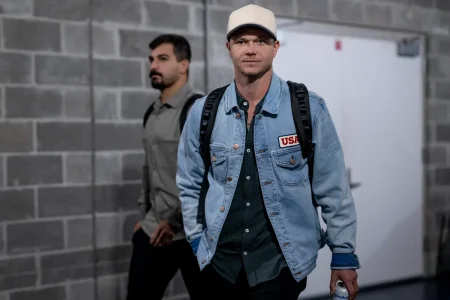
This lingering question of whether Posada would ever consider a full-time managerial role transitioned from quiet fan speculation to a topic of open discussion during the New York Yankees’ annual Old Timer’s Day. This cherished event serves as a living bridge between the franchise’s glorious past and its highly analytical present, filling the stadium with the iconic figures who defined previous eras of championship baseball. Amidst the laughter, the stories, and the warm waves of nostalgia, Posada and his former teammate, the famously energetic and charismatic outfielder Nick Swisher, were asked if they would ever be open to managing a Major League ballclub. Their contrasting responses perfectly highlighted the different ways retired players view the rapidly evolving landscape of modern professional baseball. Swisher, true to his vibrant and enthusiastic personality, seemed absolutely ready to jump at the opportunity, speaking at great length and with immense passion about his deep comfort with the modern game’s heavy reliance on advanced statistics. Swisher painted a picture of himself as the ultimate modern candidate: a high-energy motivator who could connect emotionally with a young clubhouse while speaking the fluent language of launch angles, spin rates, and defensive shifts that modern front offices demand.
Posada’s response, however, was far more introspective, measured, and deeply honest, revealing a profound respect for just how much the game has shifted since he last put on his catcher’s gear in 2011. “Baseball right now has changed so much from what I was taught, and what was completely in my head,” Posada admitted, showcasing a vulnerability that is incredibly rare among athletes of his legendary stature. The version of baseball that Posada mastered over his fifteen-year big-league career was a game largely driven by human instinct, physical repetition, and a deep, psychological understanding of the opposition. As a catcher, Posada was a master of calling games based on the rhythm of his pitcher, the subtle body language of the batter, and a mental catalog of hitter weaknesses built over thousands of innings. Today, that classical, instinctual approach has been heavily replaced by a highly digitized, data-driven ecosystem where pitch-framing is measured down to the millimeter, and pre-game strategy is dictated by complex computer algorithms and heat maps. For a retired legend to openly acknowledge that the entire foundation of his baseball knowledge has been fundamentally rewritten by the analytical revolution is not just a sign of intellectual honesty; it is a candid admission of how steep the learning curve would actually be.
When asked directly if he would accept a managerial position if a front office came calling, Posada did not rely on the standard, rehearsed platitudes that former superstars often use to keep their names in the media spotlight. Instead, he painted a incredibly realistic picture of the immense personal and professional sacrifices required to manage in the modern era, expressing genuine hesitation about whether he could truly commit to the role. “I don’t know if I could say yes,” Posada confessed, emphasizing that any potential opportunity would have to be the absolute right situation with the perfect alignment of support. He clearly understands that there is a vast, yawning chasm between guiding a motivated group of players through a two-week sprint like the World Baseball Classic and steering a Major League franchise through the grueling, exhausting marathon of a 162-game season. Today’s manager is no longer just a tactical general sitting on the bench; they must act as a diplomat, a media relations specialist, a psychologist, and a liaison between a data-driven front office and a clubhouse full of diverse, young personalities. Posada’s hesitation shows a deep respect for the true gravity of the position, refusing to underestimate the mental and physical toll it takes on a person and their family.
In a sports culture that often values confidence over competence, Posada’s willingness to recognize and admit his own limitations is perhaps his most admirable quality, demonstrating a level of self-awareness that is highly uncommon among hall-of-fame-caliber athletes. Far too often, retired superstars transition into coaching or media roles carrying an air of unearned superiority, stubbornly dismissing modern analytical advancements as “nerd stats” and insisting that the old-school methods are the only correct way to play. Posada, by contrast, approaches the contemporary game with an open mind and a humble heart, acknowledging that his lifetime of catching expertise might actually be considered outdated in today’s high-tech environment. This kind of intellectual humility is precisely what makes him such a respected and beloved figure, proving that true legendary status does not require pretending to have all the answers. By admitting what he doesn’t know, Posada actually makes himself a far more compelling candidate for a future leadership role than those who blindly assume their playing career qualifies them to manage. It suggests a mind that is capable of synthesizing classic baseball wisdom with modern tools, creating a balanced approach that could successfully bridge the generational divide.
Ultimately, Jorge Posada’s realistic outlook on the challenges of modern managing serves as a beautiful reminder of the quiet grace that has defined his life after his final game in pinstripes. Whether he eventually decides to dive headfirst into the intensive preparation required to lead a Major League team, or decides that his successful coaching stint with Team Italy was the perfect way to satisfy his competitive itch, his legacy as one of the greatest catchers of his generation remains entirely secure. He has absolutely nothing left to prove to the fans who watched him fight for every single inch of the plate, and he certainly does not need a managerial title to validate his incredible career. Yet, by keeping the door to the dugout just slightly ajar, he keeps a captivating possibility alive for the game of baseball, reminding us that the very best leaders are not the ones who claim to know everything, but the ones who have the humility to keep learning. If the perfect situation ever does present itself, and Posada decides to finally say “yes,” baseball fans can rest assured that he will not be doing it for the glory or the paycheck, but because he has done the hard work to master the modern game and is ready to lead with his trademark heart, intelligence, and passion.