



In the quiet industrial parks and rural stretches of North America, an unexpected economic reincarnation is quietly taking shape, born from the collision of a cooling green rush and a boiling-hot artificial intelligence boom. For nearly a decade, the legal cannabis industry poured billions of dollars into constructing state-of-the-art indoor cultivation facilities, building fortress-like warehouses packed with heavy-duty electrical grids, massive climate-control systems, and rigorous security. Today, however, many of these botanical palaces sit silent or underutilized, victims of market saturation, plunging wholesale prices, and a regulatory landscape that has left growers struggling to survive. At the exact same time, the tech sector is facing a desperate, insatiable crisis of space and power, driven by the explosive growth of cloud computing and generative AI. This convergence has sparked a fascinating trend among forward-thinking real estate developers: converting empty, power-hungry cannabis cultivation facilities into high-density data centers. It is a transition that elegantly solves two entirely different modern crises, transforming the physical remnants of a struggling agricultural experiment into the physical engines of our virtual future.
To understand how these two seemingly disparate worlds found themselves in such close alignment, one must first look at the sobering reality of the modern cannabis market. The pandemic-era highs, which saw legal marijuana sales soar to record peaks, have given way to a harsh economic winter. In pioneer states like Colorado, annual cannabis revenue has plummeted from a staggering $2.23 billion in 2021 to just $1.32 billion projected for 2025, signaling a massive cooling of what was once considered a bulletproof market. In states like Michigan, the price collapse has been even more dramatic, with wholesale prices nose-diving from a lucrative $500 an ounce in 2020 to a meager $58 an ounce today—a drop so severe that many operators simply cannot afford to keep the lights on. Adam Rosenberg, chairman of the National Cannabis Industry Association’s board of directors, points out that the agonizingly slow pace of federal reform, paired with heavy local tax burdens and aggressive competition from the illicit market, has triggered a massive exodus of licensed operators. This has left landlords holding massive, specialized properties that are incredibly difficult to sell to other growers without taking devastating financial losses, paving the way for developers to step in with cash and a completely different vision.
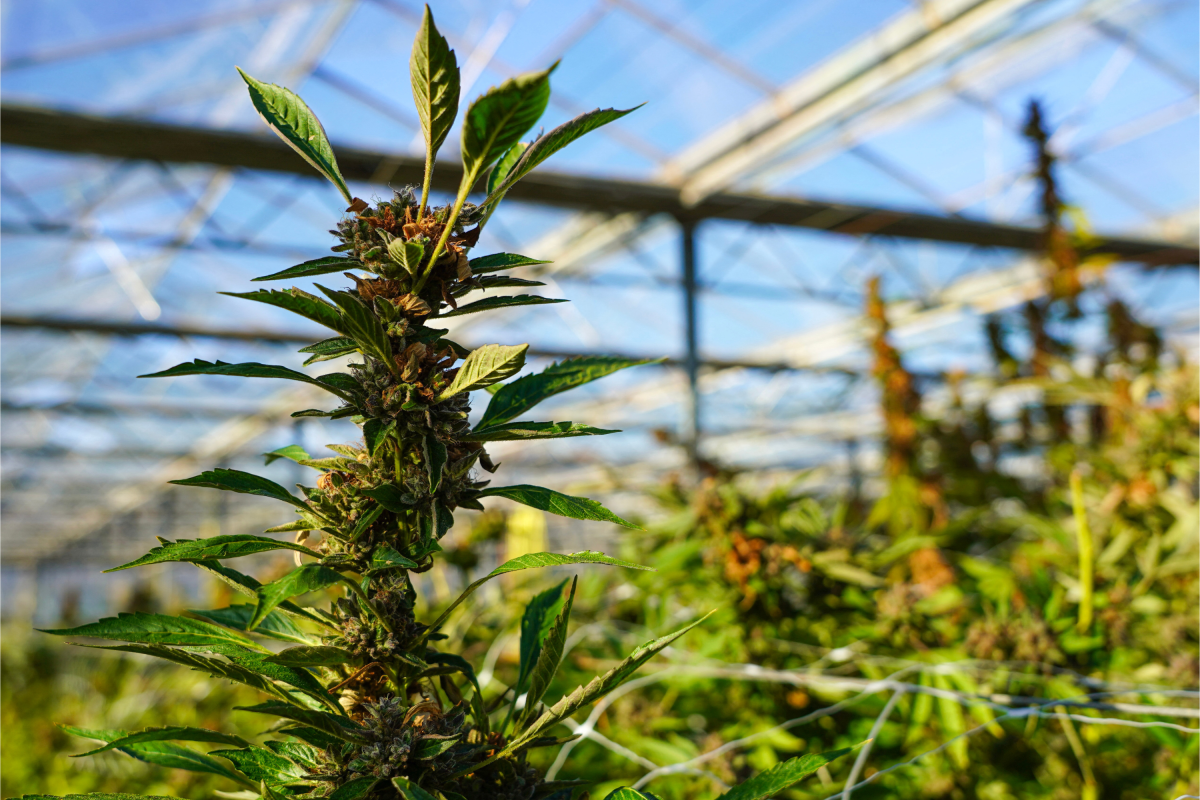
The secret to this industrial pivot lies in the surprising mechanical similarities between growing high-grade marijuana and running high-performance computer servers. Both operations require an extraordinary amount of electricity, sophisticated temperature and humidity controls, and absolute physical security. Indoor cannabis operations are essentially heavy-duty environmental envelopes, engineered with complex HVAC networks, heavy-capacity electrical inputs, dehumidification systems, and redundant backup power generators designed to keep sensitive crops alive through any power failure. These are precisely the elements that data center developers spend months, if not years, designing and building from scratch. By taking over an existing grow facility, technology companies can bypass the grueling, bureaucratic process of securing industrial land, obtaining zoning variances, and waiting for utility companies to run massive new power lines to a site. As Phil DeVries, the founder and CEO of Michigan-based Wolverine Consulting, observes, the presence of pre-existing, high-voltage power hookups and advanced climate systems allows tech developers to get their server racks up and running in a fraction of the time it would take to build a traditional “greenfield” data center.
This practical synergy is already leaping off the drawing board and into reality in communities across the continent. In Kalamazoo, Michigan, a local cannabis brand named Harbor Farmz recently began actively marketing its 32,850-square-foot, purpose-built cultivation facility as a prime candidate for an AI data center, hoping to capitalize on the building’s robust, continuous-operation infrastructure. Michael Ward, the CEO of Harbor Farmz, has been vocal about the economic reality, noting that the sheer volume of cannabis being produced in the state has far outstripped local consumption, making alternative uses for these buildings a matter of financial survival. Meanwhile, in Pawhuska, Oklahoma, developer David Buckley is moving forward with plans to convert a massive, 200,000-square-foot former grow facility—once celebrated as one of the state’s largest indoor cultivation sites—into an 8-to-10 megawatt data center. Even in the colder latitudes of Saskatchewan, Canada, a sprawling 130,000-square-foot former facility once owned by Aurora Cannabis is being pitched as an ideal AI campus, where promoters highlight how the freezing Canadian winters can act as a natural, cost-saving heatsink to keep roaring computer servers cool.
Yet, despite the obvious enthusiasm from developers, this technological migration is not without its friction, as local residents and city officials begin to voice serious anxieties about what these conversions mean for their neighborhoods. When a quiet agricultural facility suddenly becomes a hub for high-performance computing, communities often worry about the localized strain on the electrical grid, the potential noise from industrial-scale cooling fans, and the massive water consumption historically associated with cooling digital infrastructure. Many of these projects spark intense public debate simply because the average citizen equates any data center with the colossal, water-guzzling “hyperscale” campuses operated by tech giants like Google or Meta. Industry experts like DeVries emphasize that these cannabis retrofits are actually much smaller, localized “inference” or “edge” facilities that do not possess the same devastating resource footprint as their larger cousins. Still, local resistance remains a potent force, and developers must tread carefully, working to educate anxious communities and prove that these digital conversions can bring quiet, high-paying technical jobs and stable tax revenues to areas that were previously dependent on the volatile fluctuations of the cannabis market.
Ultimately, while the conversion of grow-houses to server farms is an incredibly clever solution, it is unlikely to become a universal cure-all for every vacant warehouse in North America. As experts caution, only a select percentage of closed cannabis facilities possess the exact trifecta of high-capacity electrical hookups, immediate proximity to high-speed fiber-optic trunk lines, and favorable local zoning laws required to support modern digital infrastructure. For those properties that do not make the cut, owners are looking at other creative pivots, including transforming the spaces for pharmaceutical manufacturing, defense contracting, aerospace testing, or even high-tech indoor vegetable farming. What this trend truly highlights is the remarkably fluid, adaptive nature of modern industrial real estate. As the physical demands of our society continue to shift from the biological to the digital, the very buildings we inhabit are evolving alongside us—turning the legacy of a faded agricultural boom into the foundational bedrock of the global artificial intelligence revolution.