


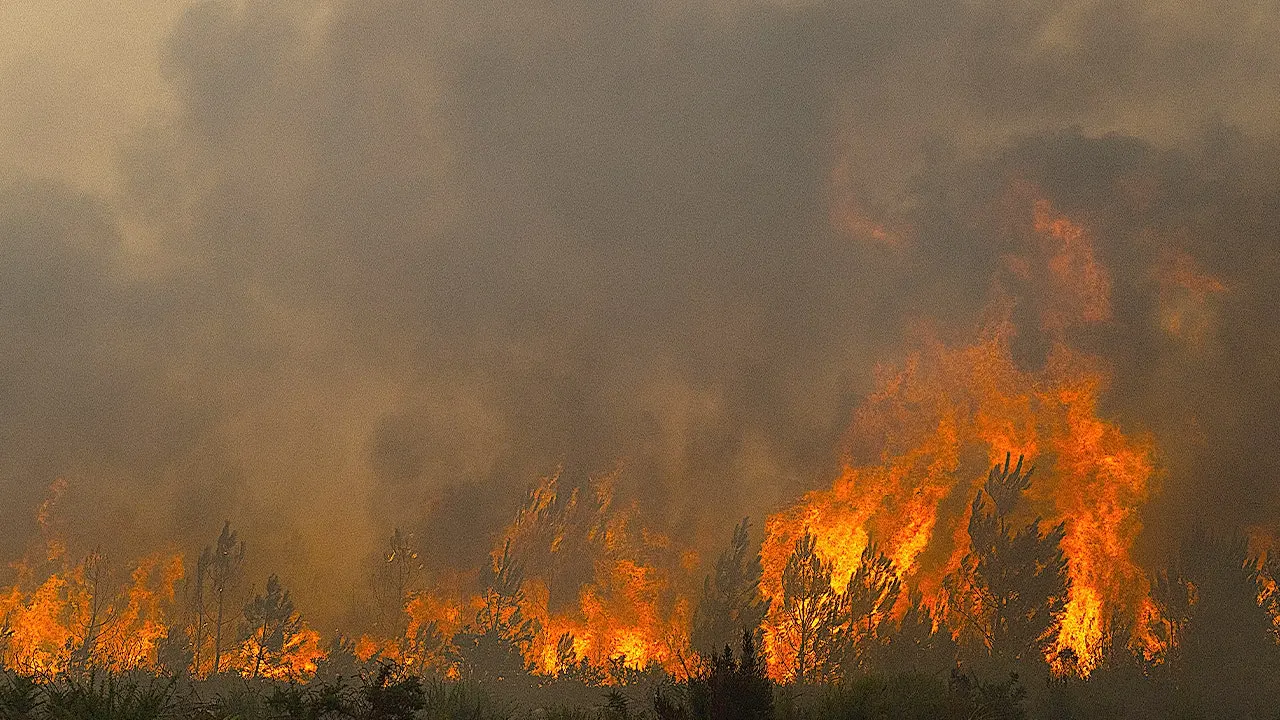
The sweet, pine-scented air of southwestern France has been replaced by a choking, acrid haze as the Gironde region battles an unprecedented crisis. A relentless and punishing heatwave—the fourth of a brutal summer season—has pushed local temperatures past 91 degrees Fahrenheit (33 degrees Celsius), a staggering 13 degrees above the seasonal average. For weeks, exhausted firefighters have wrestled with relentless, fast-moving blazes, their faces caked in soot as they fight a monster fueled by parched vegetation and record dryness. The picturesque landscape surrounding Bordeaux, famed for its historic vineyards and tranquil coastal getaways, has transformed into an active emergency zone where the local population is left to grapple with fear, ash-filled skies, and profound uncertainty.
Beyond the immediate ecological disaster and the threat to local communities, the wildfires have took on an alarming national security dimension as they encroached upon critical defense and aerospace infrastructure. A ring of high-security industrial facilities, vital to France’s sovereign defense capabilities, is suddenly on the frontlines of the disaster. In Saint-Médard-en-Jalles, aerospace plants that manufacture solid rocket propellants for Ariane space rockets and strategic French missiles have been forced into emergency mode. Nearby in Sainte-Hélène, a specialized plant producing ammonium perchlorate—a highly volatile oxidizer essential for defense-grade solid rocket fuels—lies less than twelve miles from the advances of the blaze, illustrating a terrifying collision between a wild, warming planet and state defense.
The rising threat has prompted the French government to launch a major military intervention to secure these high-stakes assets. Around 1,500 soldiers have been deployed to support overwhelmed civil protection units, setting up defensible perimeters around these sensitive industrial facilities under the direction of Defense Minister Sébastien Lecornu. Major defense conglomerates, including ArianeGroup, evacuated staff from threatened zones, while the Alternative Energies and Atomic Energy Commission (CEA) shuttered its military research facility in Le Barp. While government officials have moved quickly to reassure the public that the Le Barp facility poses no risk of radioactive leakage due to an absence of active nuclear materials, the physical presence of military units patrolling smoke-covered weapons plants highlights how profoundly the climate crisis is testing national defense.
The severity of the situation has driven Europe’s political leadership to look for historical precedents to capture the weight of the moment. President Emmanuel Macron, who recently flew to the region to meet with first responders, described the ongoing emergency as the most severe and challenging crisis the nation has faced since the Second World War. This is far from mere political rhetoric; the fires have systematically paralyzed the regional economy. French Economy Minister Roland Lescure revealed that more than 13,000 local businesses in the Gironde region have had their operations disrupted, halted, or entirely shut down. What was once debated as a long-term environmental challenge has rapidly materialized as an immediate threat to France’s economic stability and industrial operations.
Yet, beneath the high-level defense maneuvers and economic assessments lies a devastating human tragedy. The massive blazes have scorched over 104,000 acres (42,000 hectares) of pristine French woodland, reducing at least 240 family homes to ashes and erasing decades of memories. Near Bordeaux, in popular tourist destinations like Lacanau, the dream of a peaceful summer escape dissolved into a chaotic rush to survive. Over 4,000 vacationers were evacuated in haste from local campsites and holiday villages as ash rained down onto empty resort towns. This panic is only a microcosm of a much larger, continental displacement; across France and Spain, approximately 360,000 people have been forced to leave their homes in a desperate bid to outrace the flames, leaving quiet towns empty in their wake.
As the fires continue to burn, the charred landscapes of southwestern France stand as a stark warning of a changing global reality. These historic blazes are not isolated incidents of bad luck, but the predictable outcome of a dangerous combination of record heatwaves and systemic land mismanagement. When the immediate smoke finally clears, the French government and its European neighbors will face a difficult path forward, tasks with protecting not only their citizens but also their most sensitive state infrastructure from an increasingly hostile environment. This summer has made one thing undeniably clear: in a warming world, even the most heavily fortified centers of national security are vulnerable to the raw, untamed power of nature.