

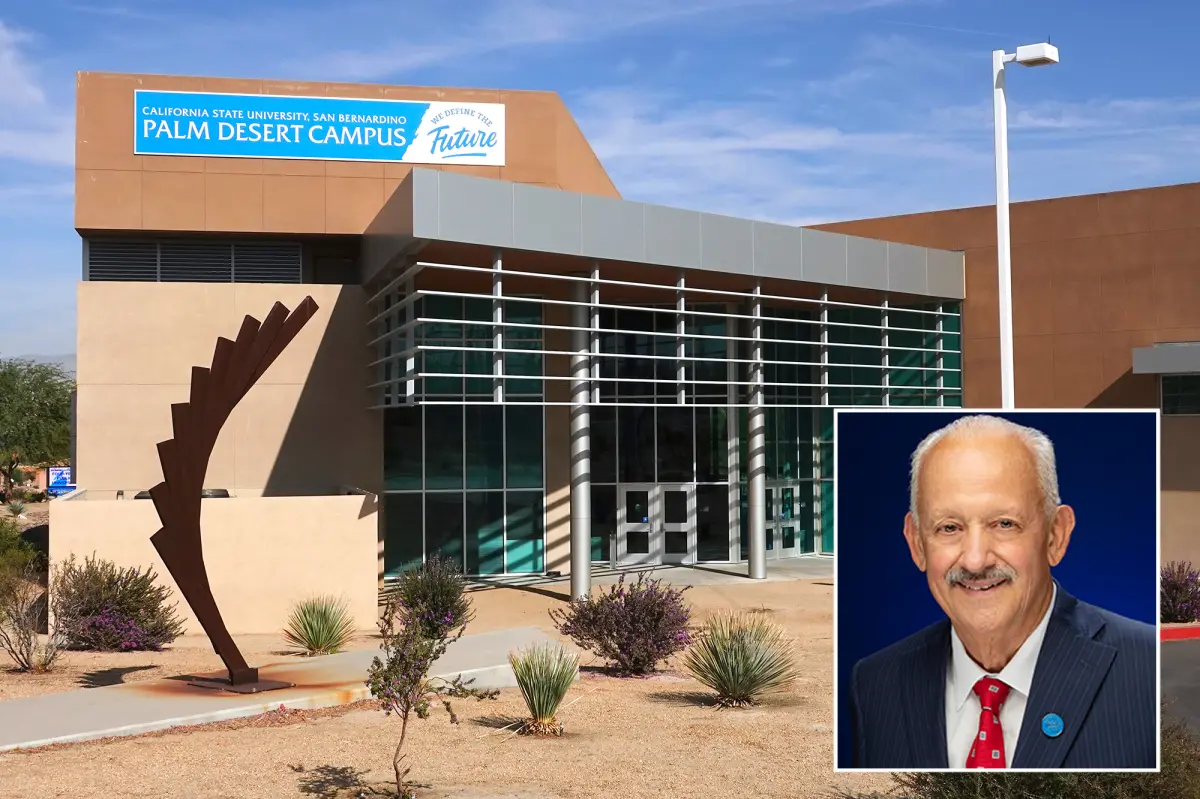
In the quiet corridors of higher education, leadership is supposed to represent the pinnacle of ethical stewardship, a commitment to nurturing intellectual growth and fostering a safe, equitable community. Yet, the impending departure of California State University, San Bernardino’s outgoing President, Tomas Morales, offers a stark, disillusioning contrast to this ideal, illustrating how the bureaucratic machinery of academia often prioritizes executive preservation over human dignity. Despite presiding over a campus culture so toxic that it resulted in a massive $12 million legal payout to settle explosive claims of gender-based workplace misconduct, sexism, retaliation, and bullying, Morales is not leaving in disgrace. Instead, he is poised for an incredibly lucrative, institutional soft landing, remaining in “good standing” to secure a cushy, university-funded executive transition package while the Board of Trustees actively debates granting him the prestigious, honorary title of president emeritus. This jarring juxtaposition—where a leader is insulated with golden parachutes and lifetime accolades while the institution he ran absorbs a multi-million-dollar financial and reputational catastrophe—exposes a profound, systemic disconnect that leaves faculty, students, and advocates wondering who these public universities are truly built to protect.
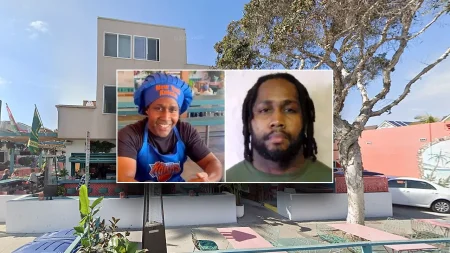
To truly understand the human wreckage behind this administrative transition, one must look closely at the courageous stories of Clare Weber and Anissa Rogers, two high-level female administrators who dared to challenge the hostile environment fostered under Morales’s administration. For these women, what began as a proud opportunity to serve their academic community quickly deteriorated into what Rogers vividly described as a descent into “hell.” Rogers, who served as the associate dean at the university’s Palm Desert campus, recounted a daily reality defined by systemic degradation, where female staff were routinely screamed at, belittled, and cut off by male administrators, while their male counterparts were consistently treated with deference and respect. Meanwhile, Weber, serving as vice provost, found herself targeted after she stood up against a glaring and unjustifiable gender pay gap among the university’s executive ranks. When Weber explicitly raised documented concerns that female vice provosts were being systematically underpaid because of their gender and requested a modest twelve-percent equity adjustment, she was met not with collegial review, but with immediate, hostile retaliation, eventually being given a direct ultimatum to resign or face a humiliating public termination.
This pattern of psychological abuse and administrative intimidation was never an isolated or sudden anomaly, but rather the predictable culmination of a long, documented history of leadership failures that the California State University system chose to ignore for years. Well before the lawsuit exposed these systemic abuses to the public eye, internal alarms had been screaming at Cal State San Bernardino, revealing a campus community in deep distress under Morales’s heavy-handed tenure. A damning 2016 campus climate survey revealed that an overwhelming sixty percent of university employees believed that overall working conditions had deteriorated significantly under his leadership, prompting the faculty senate to issue a resounding vote of no confidence citing pervasive bullying, cronyism, and rampant retaliation. Astonishingly, this was not even the first time Morales had faced such severe internal revolt; he had previously been hit with a similar vote of no-confidence during his tenure as president of the College of Staten Island. By routinely turning a blind eye to these historical red flags, the CSU Board of Trustees effectively signaled that as long as an executive maintains the outward appearance of authority, the internal human cost borne by the faculty, staff, and students under their command is merely collateral damage.
The defense mounted by Morales’s administration throughout the legal proceedings only deepened the sense of institutional gaslighting felt by the campus community, epitomized by the defensive testimony of former Palm Desert campus dean Jake Zhu. Rather than expressing remorse or demonstrating a capacity for self-reflection regarding the hostile environment he helped curate, Zhu defended his aggressive management style on the record, dismissing his abusive communication by claiming he merely “raised voices to make a point, to change the tones, not in a malicious way or discriminatory way.” This hollow defense, which attempts to rebrand systemic intimidation and workplace bullying as a mere quirk of passionate management, fell flat before the eyes of the law, resulting in a staggering six-million-dollar jury award for Rogers in late 2025, alongside a matching six-million-dollar settlement accepted by Weber. Even as the CSU system ultimately shelled out twelve million dollars of public and institutional funds to resolve these catastrophic claims, the university continued to deny any official wrongdoing, hiding behind a facade of legal neutrality that shielded Morales from having to take personal responsibility for the destruction of his colleagues’ careers and well-being.
Unsurprisingly, the news that Morales is being rewarded with transition packages and emeritus consideration has ignited a wave of righteous anger and moral outrage among university whistleblowers, faculty leaders, and the broader campus community. Local leaders of the California Faculty Association, representing the educators who interact daily with the students funding this institution, have vehemently condemned the administration’s decision, arguing that granting Morales “good standing” status is an absolute moral insult that ignores the immense financial, reputational, and human costs of his actions. Union representatives like Thomas Corrigan and Tiffany Jones have vocalized the deep exhaustion of a faculty tired of watching elite administrators escape accountability, pointing out the absurdity of awarding retirement privileges and transition salaries—which topped out at over $655,000 for Morales in 2024—to a leader whose legacy is defined by a “cesspool of gender harassment.” In a poignant and direct appeal to the Board of Trustees, both Weber and Rogers submitted public comments begging the university’s governing body to look past bureaucratic protocol and scrutinize whether a man who enabled such systemic trauma truly deserves to carry the honorary banner of the university into his retirement.
Ultimately, the unfolding situation at Cal State San Bernardino serves as a sobering, cautionary tale about how modern public universities navigate institutional wealth, power, and accountability. When a system decides that a leader who oversaw a twelve-million-dollar disaster of discrimination and retaliation is still deserving of “good standing” and the title of President Emeritus, it fundamentally redefines what it means to be an ethical leader in higher education. It tells the victims of workplace abuse that their trauma is less valuable than an executive’s comfort, and it tells the public that those in power are immune to the consequences of their actions. As the Board of Trustees meets to finalize Morales’s transition package, they are deciding far more than just a salary and an honorary title; they are choosing whether to validate a culture of impunity or to finally listen to the voices of the women who sacrificed their careers to expose the truth. True institutional healing cannot begin with golden parachutes, and until the university system aligns its rewards with actual moral leadership, the shadow of this twelve-million-dollar betrayal will continue to loom large over the halls of Cal State San Bernardino.