


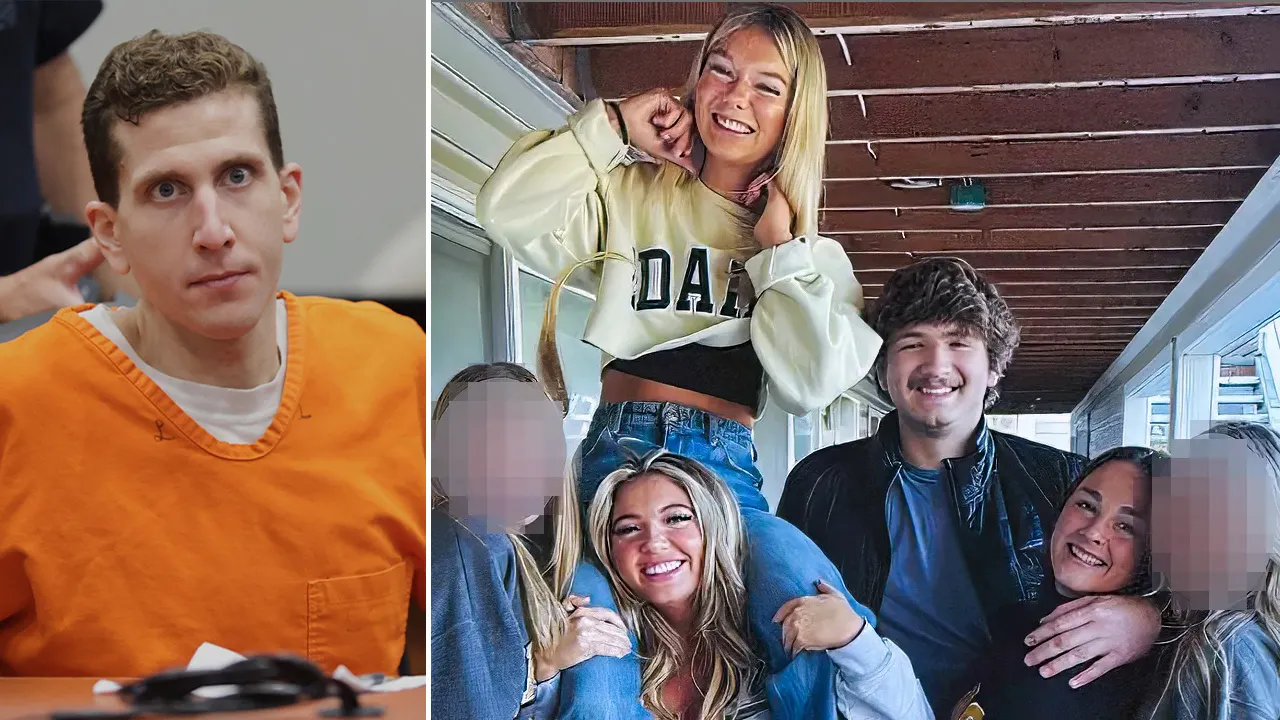
The courtroom had already delivered its punishment, but the emotional echo of the University of Idaho student murders has not faded. Bryan Kohberger, the 31-year-old former criminology Ph.D. student convicted of killing four young people, is now waging a legal battle not just against his life sentence, but against the very judge who handed it down. Kohberger is trying to remove Judge Steven Hippler, who at sentencing called him a “faceless coward” and said he could find nothing “good or intrinsically human” about him. For the families of Madison Mogen, Kaylee Goncalves, Xana Kernodle, and Ethan Chapin, whose lives were shattered by the knife attacks that shook the small college town of Moscow, Idaho, this latest maneuver is another twist in a case already defined by unspeakable tragedy. Kohberger, once a solitary figure studying criminal behavior, now stands accused of trying to undo his own guilty plea, claiming the system that convicted him failed him. Prosecutors, however, are pushing back hard, insisting that a judge’s scathing moral condemnation—however visceral—does not legally disqualify him from handling what comes next. The question before the court is whether Hippler’s words were the product of bias or simply the righteous fury of a man forced to witness the depths of human cruelty.
The judge’s words at sentencing were brutal, deliberately chosen, and impossible to forget. Hippler said Kohberger “slithered” into the victims’ home before committing a crime that made him “the worst of the worst.” He mocked the killer’s unexplained silence, noting that under the plea deal that spared him the death penalty, Kohberger was not required to explain himself. “Even if I could force him to speak, which legally I cannot, how could anyone ever be assured that what he speaks is the truth?” Hippler asked, his skepticism cutting through the sterile language of legal proceedings. “Do we really believe, after all of this, he is capable of speaking the truth, or of giving up something of himself to help the very people whose lives he destroyed? Rather, I suspect the so-called reason would be dished out in enticing self-serving and aggrandizing untruthful bits, leaving people wanting more information, more insight, and thus enhancing even further the power he seeks to hold.” The prosecutor had argued that Kohberger, by pleading guilty, avoided a harrowing trial and hopefully spared the victims’ families further anguish. But the judge made clear he saw no redemption, no hidden humanity, in the man before him. During the emotional victim impact statements, Hippler was seen wiping tears from his eyes, a rare public crack in judicial composure. The sentence he impossed reflected that raw anguish: four consecutive terms of life in prison without possibility of parole, plus another ten years, for the stabbing deaths of 21-year-olds Madison Mogen and Kaylee Goncalves and 20-year-olds Xana Kernodle and Ethan Chapin. It was a punishment designed to ensure Kohberger would never again breathe free air, but it also gave his defense team a foothold for claims of judicial prejudice.
Kohberger’s new legal team filed a motion seeking Hippler’s removal on Aug. 注 27, arguing that the judge demonstrated bias at sentencing and that he had rushed the case toward trial when their client’s former defense team wasn’t ready. The motion came after Kohberger himself filed a handwritten petition in July, telling the court his conviction should be overturned. In that petition, he alleged ineffective counsel, claiming his guilty plea was “not knowingly or voluntarily entered because it was induced by unkept promises” and that it was “not voluntarily entered because of threats asserted by [his] legal counsel.” This was a remarkable reversal for a man who had stood before a judge and solemnly affirmed that he was pleading guilty knowingly, voluntarily, and without duress. His new lawyers described a defense team overwhelmed, underprepared, and unable to mount a proper challenge to the state’s case. The court appointed attorney Greg Rauch, of Moscow, Idaho, took over the case, while Kohberger’s family also retained a private New York lawyer, Jason Goldman, to bolster their son’s fight. Hippler gave Rauch until Nov. 13th—four years to the day after the murders—to file an amended petition on Kohberger’s behalf. The implication was clear: this was no quick legal sidestep, but a prolonged effort to unravel the earlier plea and perhaps breathe new life into a case that many believed had already reached its ending.
Prosecutors, though, are having none of it. Latah County Prosecuting Attorney Bill Thompson, who announced his retirement earlier this week, and Deputy Prosecuting Attorney Keith Scholl filed a blistering opposition, arguing that Kohberger’s allegations of bias fall far short of the legal standard. “The motion must show that ‘the judge is biased,'” they wrote, italicizing for emphasis. “None of petitioner’s allegations against this Court—taken alone or together—have met that ‘extremely high’ bar.” It was a pointed reminder that judicial bias requires more than hurt feelings or harsh words at sentencing. Scholl had previously asked the court for transcripts from Kohberger’s change of plea and sentencing hearings, seeking to demonstrate that the former criminology student knew exactly what he was doing when he admitted guilt. The opposition filing went further, asserting that Hippler’s statements about Kohberger, made after the killer had confessed to slaughtering four innocent people, were neither unusual nor out of line. “In our case, the sentencing remarks are not enough to show bias,” prosecutors argued, “and the required showing of perceived bias cannot be tied to this Court’s capacity to fairly adjudicate any [post-conviction relief] claims alleged in this case, but rather puts this Court in the best position to adjudicate them as the legislature and the Idaho Supreme Court’s rules intend.” In other words, they insisted, the very judge who heard the evidence, watched the plea, and imposed the sentence is actually the most qualified person to decide whether justice was served. Hippler scheduled a virtual hearing on the motion for Oct. 注 15, ensuring that this legal war would continue into the fall.
The procedural history behind this showdown is complicated, but its stakes are simple: a man convicted of four murders is trying to take back his confession. Kohberger pleaded guilty on July 2, 2025, to four counts of first-degree murder and a burglary charge. The change of plea came only days after Hippler refused to grant Kohberger’s former defense team more time for discovery ahead of trial, a decision that his new lawyers now claim left them no choice but to enter a plea they weren’t ready to make. On July 注 23, 2025, Hippler sentenced him to four consecutive terms of life in prison without the possibility of parole, plus another 10 years, as part of a plea deal in which Kohberger avoided the death penalty. That deal, which once seemed like a final chapter, has become a new battleground. Kohberger has already waived his appeal rights, but he plans on pursuing post-conviction relief—a legal avenue that allows convicted defendants to challenge their detention through issues like ineffective counsel or coerced pleas. His handwritten petition, with its accusations of unkept promises and threats from his own attorneys, portrays a man who claims he was pushed into a confession he never truly wanted to make. The prosecution scoffs at this narrative, painting it instead as a cynical fishing expedition, an attempt to delay justice and perhaps find a more sympathetic ear. They have described his requests for documents and hearings as “fishing” for better arguments, and they are pushing for a quick dismissal of his claims. The Oct. 注 15 hearing will be a critical moment, where a virtual courtroom must decide whether a judge’s angry words are enough to undo a guilty plea that sent a quadruple murderer to prison for life.
Beneath the legal arguments over bias, transcripts, and procedural deadlines lies a deeper, achingly human story. Four young lives—Madison, Kaylee, Xana, and Ethan—were cut short in their college dormitories, their dreams of graduation, love, career, and family extinguished in a spasm of violence. Their parents have sat through hearings, watched their children’s killer enter a plea, listened to a judge describe him as worse than evil, and now must endure yet another round of legal wrangling. For them, Kohberger’s attempt to withdraw his plea is not a matter of courtroom procedure; it is an open wound, re-opened by every filing, every motion, every headline. They have already heard the worst details of how their children died; they do not need to hear the man who killed them argue that he deserves another chance at justice. Hippler’s own tears, prompted by their impact statements, revealed how deeply their grief had reached him. Yet the law demands impartiality even in the face of moral revulsion, and that is the tension now at the heart of this case. Can a judge who called a killer “the worst of the worst” still fairly weigh whether that killer’s plea was coerced? The prosecution insists yes, because judges are human too, and their words at sentencing are supposed to reflect the horror of the crime. The defense insists no, because a judge who has already made up his mind about a defendant’s character cannot possibly be impartial about whether his lawyers failed him. And so the battle continues, not just over one man’s freedom, but over the very meaning of justice in a case that has already left so many scars. For the families, for the town of Moscow, and for everyone who followed this tragedy, the only certainty is that the pain is not over. Kohberger wants his day in court again; the legal system will decide whether he deserves it, but nothing will bring back the four young people whose lives were stolen one terrifying night in Idaho.