


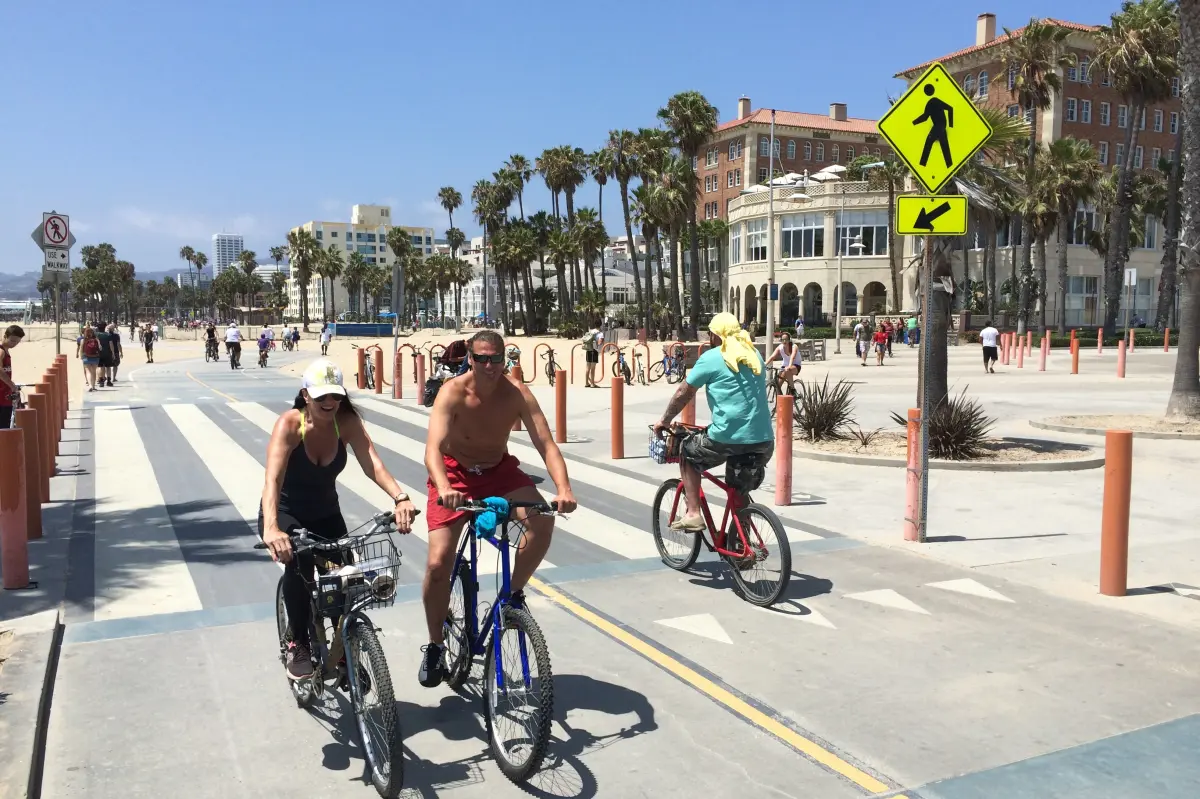
Imagine embarking on a scenic, sun-drenched bicycle ride along the picturesque streets of Santa Monica, feeling the refreshing ocean breeze on your face, only to be suddenly and dangerously forced into a frantic lane of high-speed traffic because an unattended luxury SUV or a delivery truck has decided to use the bike lane as their personal, illegal parking spot. This sudden, heart-pounding interruption is not just a minor annoyance for local active commuters; it is a terrifying, daily hazard that puts lives at risk and discourages community members from ever leaving their cars at home. In response to this pressing hazard, Santa Monica has taken a bold, historic stand to protect its active commuters, becoming the very first municipality in the state of California to implement cutting-edge, artificial intelligence-powered security cameras specifically designed to tackle illegal bike lane blockages. Commonly referred to as “robo-cops,” these sophisticated camera systems represent a major leap forward in how we manage public spaces, aiming to reclaim vital coastal corridors for the micro-mobility community. By dynamically targeting vehicles that stop, park, or idle in designated cycling paths, the city is sending a clear, loud message that the safety of human beings on two wheels should never be prioritized beneath the transient convenience of motorists on four. It is a massive step forward in transforming urban streets from vehicle-dominated expressways into shared, harmonious environments where diverse forms of transit can coexist safely.
At the heart of this innovative safety campaign is a seamless integration of advanced machine learning and traditional public law enforcement. The city mounts these highly specialized, AI-powered cameras directly onto the existing fleet of municipal enforcement vehicles so that they can actively scan the roadways as they perform their daily routes. When an enforcement vehicle drives down a street, the intelligent cameras use computer vision to distinguish between active traffic and stationary vehicles that are illegally obstructing the cycling lanes. Once the AI identifies a parked vehicle, it instantly chronicles the infraction by capturing incredibly precise telemetry, including the exact geographical coordinates via GPS, the precise digital timestamp, high-resolution photography of the vehicle’s license plate, and clear video footage of the surrounding environment to prove the obstruction. However, what makes this system particularly humane and reliable is that it avoids the chilling trap of purely automated, algorithmic justice. To ensure absolute fairness and transparency, no ticket is generated automatically by a machine; instead, every shred of digital evidence is systematically compiled and queued for evaluation by a human law enforcement officer. This human safeguard ensures that unique road conditions, emergencies, or innocent mistakes are evaluated with genuine human judgment, and a formal citation is only mailed out to the vehicle’s registered owner once a real person has thoroughly verified and signed off on the violation.
Recognizing that abrupt changes in public policy can catch well-meaning citizens off guard and breed unnecessary community resentment, Santa Monica’s administration carefully designed the rollout of this automated ticketing program to emphasize education and behavioral modification over immediate financial punishment. When the initiative officially debuted on May 1st, 2024, the city deliberately introduced a generous 60-day grace period, ensuring that drivers caught red-handed blocking lanes received warning notifications rather than hard financial penalties. This introductory phase served as a friendly, informative reminder to the driving public about the physical vulnerability of cyclists and the severe safety risks associated with lane obstruction. However, this educational window closed on July 1st, transitioning the program from a warning campaign into an active, enforceable ordinance carries a real fiscal bite of $93 per violation. For the average commuter, a nearly hundred-dollar fine is a substantial wake-up call, designed to decisively shift driving habits and break the casual, lazy habit of “just parking for a quick minute” in a bike lane. The city has already issued hundreds of warnings and official citations since the program became fully active, proving that this monetary deterrent is actively operating across the community to remind drivers that public safety carries a tangible, non-negotiable cost.
The sheer necessity of this high-tech policing becomes painfully obvious when looking at the staggering data gathered during the program’s developmental testing phases. Over a brief, six-week pilot run of the campaign conducted in 2024, just two single enforcement vehicles equipped with the AI cameras managed to flag an astronomical 1,700 potential safety violations in the city’s bike lanes. This shocking volume of daily infractions highlights a massive, systemic problem that traditional, manually operated parking patrols simply did not have the manpower or geographic reach to handle on their own. When a driver stops in a bike lane, they trigger a perilous domino effect: they force cyclists, scooter riders, and skateboarders to suddenly swerve outward into the main roadway, directly into the blind spots of fast-moving vehicles where the probability of a catastrophic collision rises exponentially. These 1,700 flagged events represent thousands of micro-crises where a cyclist was forced to make a split-second decision to risk their life in vehicular traffic. By utilizing smart cameras to systematically log and address these dangerous incidents, Santa Monica is shedding light on a pervasive traffic culture of neglect, using hard, empirical data to show why immediate, aggressive action is required to protect human life and clean up the streets.
While the concepts of automated traffic enforcement and AI-driven policing are still highly controversial in many parts of the United States, Santa Monica’s bold pivot is not an unpredictable shot in the dark; rather, it is anchored firmly in the spectacular, documented success of the city’s previous transit initiatives. This current cycling safety campaign was heavily inspired by the highly successful Automated Bus Lane Enforcement program, which the city launched with great anticipation in September of the previous year. That initiative had a very similar goal: utilizing smart cameras to deter arrogant drivers from blocking critical public transit bus lanes and obstructing busy city bus stops. Within just a few short months of implementation, this automated system yielded truly phenomenal results, reducing bus lane parking violations by a staggering 67% and bus stop blockages by an impressive 40%. This massive reduction in illegal parking proved that automation, when implemented fairly and consistently, has the unique potential to completely reshape driver psychology and encourage a culture of civic compliance. Seeing how beautifully the technology worked to streamline public transit and protect bus riders gave Santa Monica the confidence, data, and community trust necessary to expand this highly efficient automated shield to protect its growing population of everyday cyclists.
Looking at the broader, systemic picture, this progressive initiative is ultimately about far more than just writing code, deploying cameras, or collecting minor revenues from parking tickets; it is about reclaiming the vibrant, healthy future of our urban centers. As Santa Monica beautifully articulated in its official city blog, making bike lanes safer and more accessible is a foundational pillar in encouraging citizens to embrace active transportation, which directly leads to fewer motor vehicles on the road, diminished gridlock, and vastly cleaner, more breathable air for everyone in the community. As climate change continues to urge cities to rethink their relationship with carbon emissions and private automobiles, creating safe pathways for micro-mobility becomes an essential survival strategy of modern urban design. When community members feel genuinely safe on their bikes because they know they won’t be suddenly forced into direct conflict with a two-ton SUV, they will naturally choose to ride rather than drive, fostering a healthier, quieter, and more deeply connected neighborhood experience. By using cutting-edge artificial intelligence as an active shield to protect its most exposed commuters, Santa Monica is proudly leading the way for municipalities around the globe, showing how technology can be used to construct a cleaner, safer, and infinitely more human-centric paradise.