


This short news excerpt tells the story of a Canadian woman, Kaitlyn E. Tracey, who was arrested and detained after allegedly assaulting a teenager on a New Jersey boardwalk over political clothing. To humanize and expand on this incident, we must look beyond the brief police blotter and explore the broader cultural tensions, the deeply personal fallout for the families involved, the legal complexities of immigration, and how a split-second emotional reaction on a holiday weekend can permanently alter multiple lives. In today’s hyper-polarized climate, public spaces like boardwalks have transitioned from peaceful escapes into ideological battlegrounds, where clothing choices are treated as direct provocations and brief confrontations quickly escalate into life-changing legal disasters for everyone involved.
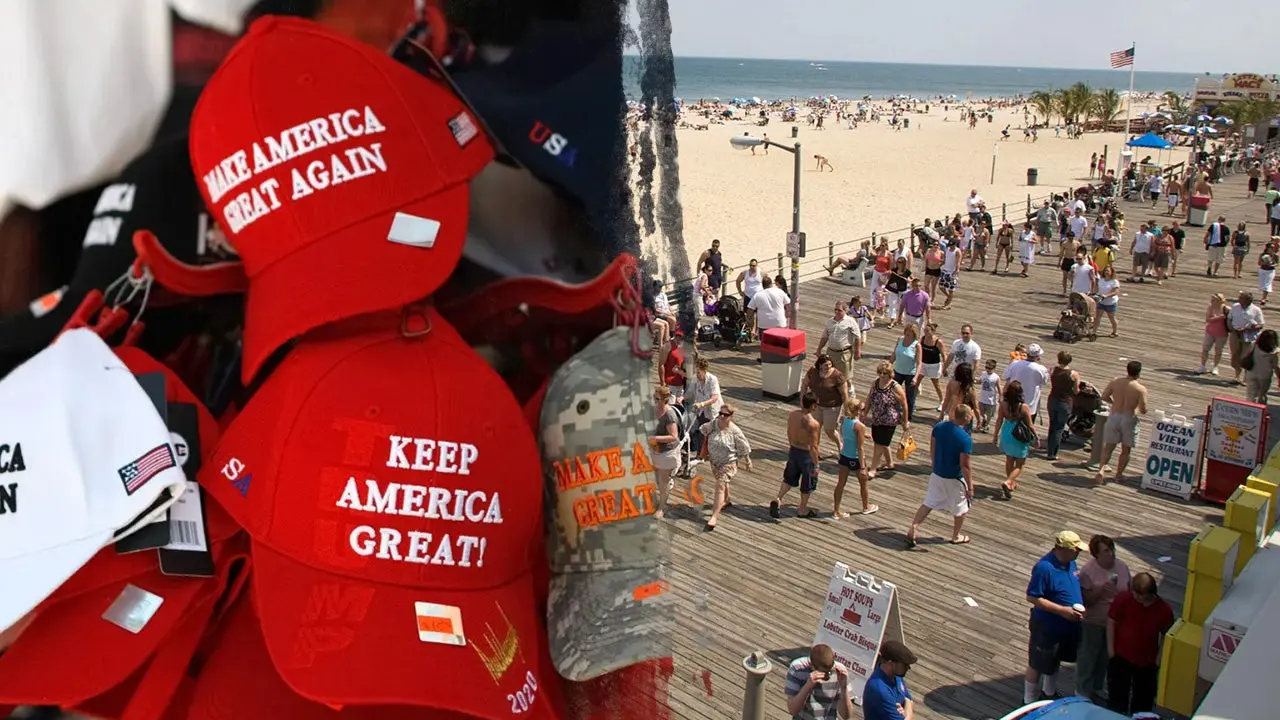
The incident unfolded on July 3, during the busy start of the Fourth of July weekend on the Point Pleasant Beach boardwalk, a classic Americana setting usually associated with family vacations, carnival games, and summer relaxation. The atmosphere turned tense when Tracey, a 33-year-old Canadian citizen living in New Jersey, crossed paths with a group of teenagers. One of the teens was wearing patriotic-colored sweatpants adorned with the words “Trump” and “ICE” (Immigration and Customs Enforcement). Offended by the political messaging, Tracey reportedly began filming the minors on her phone. What began as a silent expression of disapproval quickly deteriorated into a physical altercation; police and surveillance footage state that Tracey approached the group and slapped a teenage girl across the face and body before fleeing the scene, leaving a young girl shaken and a festive holiday crowd stunned.
Behind the headlines lies the immediate, distressing human impact on the young victim and her family, who went out for a holiday stroll only to face physical violence over a pair of pants. For a teenager, being confronted, filmed, and physically assaulted by an adult in a public space is a deeply traumatic experience that shatters their sense of safety and personal expression. This confrontation highlights how deeply political tribalism has infiltrated daily life, where children are no longer shielded from the aggressive hostility of adults who view them through a purely ideological lens. The teenager’s family is now left to navigate the emotional aftermath of this assault, dealing with the reality that a simple expression of political preference could make their child a target for violence on a crowded public boardwalk.
Equally devastating is the sudden collapse of Kaitlyn Tracey’s personal life and the desperation of her loved ones left behind. Following a police investigation, Tracey was arrested and hit with a barrage of serious charges, including endangering the welfare of a child, simple assault, harassment, and obstruction. The emotional toll of the arrest quickly rippled through her household, culminating in a heartbreaking social media video posted by a man claiming to be Tracey’s husband. In the tearful video, he pleaded for help and revealed that his wife had been detained by Immigration and Customs Enforcement (ICE) and taken to the Delaney Hall detention facility in North New Jersey. His raw, public display of grief underscores the collateral damage of such incidents, where families are abruptly torn apart, facing financial ruin, public shame, and the terrifying prospect of indefinite separation.
Tracey’s situation is further complicated by her status as a Canadian citizen who entered the United States in 2024. By allegedly attacking a teenager over clothing that referenced “ICE,” Tracey ironically triggered the very federal agency she seemed to despise, landing herself in an ICE detention center. Legal experts note that non-citizens who commit violent crimes or face charges involving child endangerment put their legal residency and visas at immediate risk, often triggering automatic deportation proceedings. For Tracey, a single moment of anger and ideological frustration has transformed her American dream into a legal nightmare, leaving her isolated in a detention facility while her attorney remains silent and federal authorities review her immigration status.
Ultimately, this incident serves as a sobering cautionary tale about the high cost of unchecked political outrage in modern society. When political logos are viewed as acts of aggression and physical violence is treated as a justifiable response to differing opinions, the fabric of community safety begins to unravel. The clash on the Point Pleasant Beach boardwalk resulted in no winners—only a traumatized young girl, a woman facing criminal charges and potential deportation, and a devastated husband pleading for his family’s future. It stands as a stark reminder that behind every viral confrontation and political headline are real human beings whose lives can be completely shattered in a matter of seconds when anger replaces basic human decency.