



For Heather Koponen, a retired physician’s assistant living on the scenic, wooded outskirts of Fairbanks, Alaska, the invisible threat of environmental pollution was always something that happened to other people, in other places. Her family home, originally built by her parents in 1966, was a sanctuary of comfort, framed by majestic Alaskan vistas and blessed with what she and her family fondly considered the best-tasting, most pristine well water in the world. Having spent years working in medicine, Heather was well aware of the health concerns surrounding PFAS—per- and polyfluoroalkyl substances, often referred to as “forever chemicals”—which had contaminated local areas due to the historical use of aqueous film-forming foams at nearby military bases and municipal airports. She knew friends and neighbors who suspected their chronic health struggles were directly linked to these toxic compounds, but because her home sat comfortably west of the designated contamination zones, she assumed her deep-water well was perfectly safe. It was only on a whim, after attending a community screening of Dark Waters—the gripping cinematic dramatization of attorney Rob Bilott’s real-life crusade against corporate chemical pollution—that Heather decided to take home a complimentary water testing kit provided by a local advocacy group. What she expected to be a routine confirmation of her water’s purity turned into a life-altering shock: the laboratory results revealed alarmingly high concentrations of PFAS in her beloved family well. Refusing to believe that their pristine source had been silently compromised, Heather and her family conducted multiple follow-up tests, only for each subsequent report to deliver the same devastating diagnosis, shattering her sense of security and thrusting her into the center of a global environmental crisis.
To truly comprehend the depth of Heather’s predicament, one must understand the insidious nature of PFAS, a massive family of synthetic, industrial chemicals that have permeated almost every corner of modern human existence since their invention in the mid-20th century. Renowned for their extraordinary ability to resist heat, water, grease, and stains, these chemicals became the darling of manufacturing, finding their way into household staples like non-stick Teflon cookware, stain-resistant Scotchgard carpets, waterproof clothing, grease-resistant fast-food packaging, and heavy-duty firefighting foams. The very characteristic that makes PFAS so incredibly useful in consumer products—the virtually unbreakable chemical bond between carbon and fluorine atoms, which is one of the strongest bonds in organic chemistry—is also what makes them an ecological nightmare. Because nature has no natural mechanism to break this bond down, these substances do not degrade in the environment; instead, they persist indefinitely, bioaccumulating in the soil, migrating deep into underground aquifers, and entering the food chain. Today, public health studies indicate that virtually every human being on Earth has detectable levels of PFAS in their bloodstream, a terrifying reality given that ongoing medical research has firmly linked exposure to these compounds with a tragic array of health issues, including diminished immune responses to vaccines, developmental delays and behavioral issues in children, thyroid disruption, decreased fertility, high cholesterol, and elevated risks of kidney, testicular, and prostate cancers.
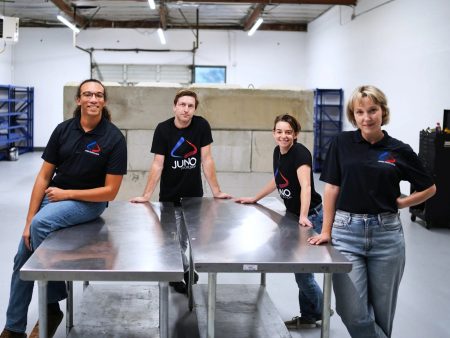
For decades, the global scientific community and environmental engineers felt powerless against the sheer durability of PFAS, as traditional water treatment methods like carbon filtration only succeeded in capturing the chemicals, leaving behind highly concentrated, highly toxic waste that still had to be stockpiled or buried in landfills where it could eventually leak back into the earth. However, this defeatist paradigm is finally being dismantled by pioneering innovators, including a trailblazing startup called Aquagga, operating out of the historic, cavernous Petrich Marine building on the industrialized Thea Foss waterway in Tacoma, Washington. Inside this former marble works facility, amidst the scent of aged cedar wood and salt water, co-founder and chief technology officer Brian Pinkard leads a team of brilliant engineers, including mechanical design engineer Calvin Rhodes, who suit up in protective gear to wage war on these indestructible molecules. Aquagga’s revolutionary solution relies on a process called hydrothermal alkaline treatment, or HALT, which essentially treats contaminated wastewater within highly specialized, mobile shipping containers painted a gleaming, hopeful white. By subjecting the toxic water to incredibly high temperatures and pressures—akin to the extreme conditions found near deep-sea hydrothermal vents—and mixing it with an extremely alkaline solution resembling ultra-concentrated bleach, the HALT system forcefully wrenches the carbon and fluorine atoms apart. This process successfully destroys more than 99.99% of the PFAS molecules, reducing them to harmless, simple elements like inert carbon and fluoride salts, offering an incredibly efficient, on-site disposal method that has already been successfully field-tested on thousands of gallons of waste at the Fairbanks International Airport and in high-stakes remediation projects with the United States Department of Defense.
While Aquagga focuses on blasting high-concentration liquid waste straight from the source, another Western Washington innovator, Sedron Technologies, is approaching the PFAS crisis from a completely different, highly creative angle: processing the municipal and agricultural waste that humans produce every single day. Originally launched under the name Janicki Bioenergy, the company received crucial early funding in 2011 from the Bill & Melinda Gates Foundation with a mission to design advanced wastewater purification systems for developing countries lacking modern sanitation infrastructure—a project so successful that Bill Gates famously drank water purified by their prototype on global television. Over the years, Sedron evolved its technologies to handle large-scale municipal biosolids (the nutrient-rich organic materials left over after sewage treatment) and heavy dairy farm waste, drying them in highly energy-efficient thermal systems. Meghan Carlo, Sedron’s senior permit manager, explains that when these biosolids are subjected to thermal processing temperatures exceeding 900 degrees Celsius for more than two seconds with high turbulence, the intense heat energy completely vaporizes and destroys the molecular structure of any lingering PFAS present in the sludge. This breakthrough is monumental because municipal sewage treatment plants have historically struggled with PFAS, which enter the waste stream through consumer products and human excretion; without Sedron’s high-temperature destruction technology, contaminated biosolids are routinely packaged and sold as agricultural fertilizers, inadvertently spreading these “forever chemicals” directly onto crop fields, golf courses, and residential gardens, continuing a dangerous cycle of environmental contamination.
The commercialization and deployment of these technologies could not come at a more critical juncture, as the sheer financial scale of global PFAS remediation is so mind-bogglingly vast that scientists and economists struggle to even quantify it, with one academic study estimating that continuously removing PFAS at the same rate they are released could cost a staggering $20 trillion to $7,000 trillion annually. Recognizing the urgency, the Biden administration enacted historic, unprecedented federal regulations in 2024, establishing the nation’s first legally enforceable drinking water limits on six key forms of PFAS, setting a strict maximum contaminant level of just four parts per trillion—an incredibly minute concentration equivalent to a single tear dropped into five Olympic-sized swimming pools. Naturally, the fluctuating political landscape introduces significant uncertainty, as transition plans under different presidential administrations threaten to roll back limits and delay municipal compliance, but many individual states are forging ahead with their own aggressive regulatory frameworks, creating an inescapable wave of liability concerns for local governments, chemical manufacturers, and private businesses alike. This swelling wave of litigation and regulatory pressure is driving an unprecedented surge in demand for the technologies pioneered by Aquagga and Sedron, prompting Sedron to break ground on a massive, state-of-the-art regional waste treatment facility in South Florida that will begin processing waste for over two million residents by 2028, showcasing the rapid transition of these clean-tech innovations from experimental laboratories to large-scale municipal applications.
Back in Fairbanks, Alaska, the high-level policy debates and industrial innovations feel both encouragingly vital and painfully distant to Heather Koponen, who must still navigate the exhausting, daily realities of living with a poisoned water supply while she waits for long-term municipal or technological relief to reach her doorstep. Her everyday routine now involves making a tedious, hour-long round trip to a natural mountain spring to manually fill heavy five-gallon jugs, relying on expensive commercial water deliveries that she still deeply distrusts, or constantly replacing specialized, high-grade filters that struggle to keep up with her household’s basic needs. Yet, despite the immense personal burden and the profound grief of losing the pure water her parents once proudly drew from the earth, Heather remains remarkably resilient, focusing her energy not on bitterness, but on advocating for systemic, global change and the total cessation of PFAS production. She firmly believes that humanity must look beyond short-term convenience and prioritize the biological health of the planet, viewing the pioneering work of companies like Aquagga and Sedron as essential beacons of hope in a long, difficult battle to dismantle the toxic legacy of the past and reclaim a clean, safe, and sustainable environment for generations yet unborn.