


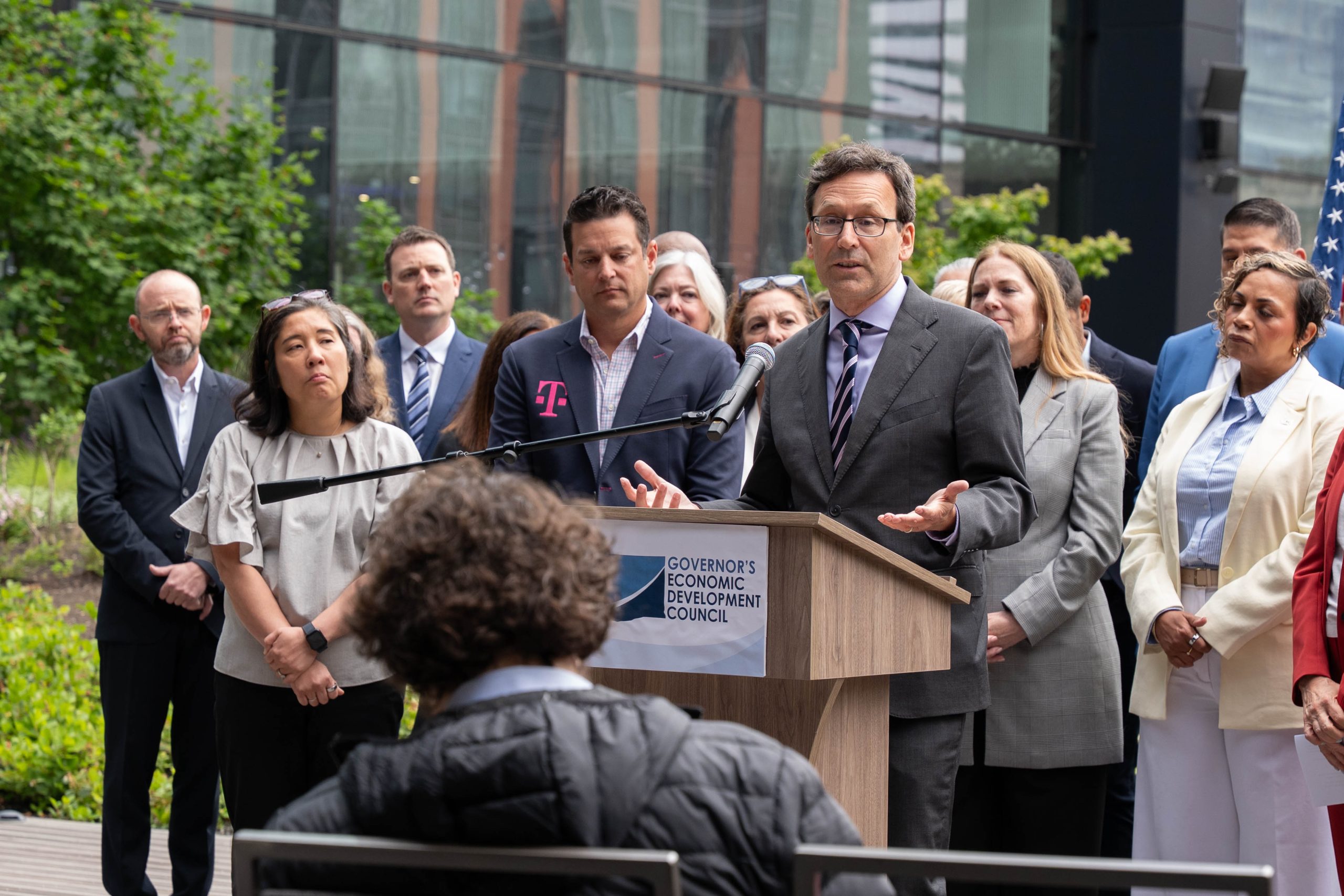
For generations, Washington State has proudly defined itself as a global crucible of human ingenuity, a rugged and beautiful corner of the Pacific Northwest where independent thinkers could transform wild dreams into world-changing operations. From the early days of aviation engineering to the birth of the personal computer, the cloud computing revolution, and the modern coffeehouse culture, Washington’s economic identity has always been synonymous with pioneering courage. However, behind the glossy exterior of glass-walled corporate campuses and thriving metropolitan centers, a quiet but distinct anxiety has begun to ripple through the local business community, sparking uncomfortable questions about whether the state is slowly losing the competitive edge that made its success possible. In a direct and highly anticipated attempt to address these growing tremors of economic insecurity, Washington Governor Bob Ferguson recently announced the creation of the Governor’s Economic Development Council. This newly minted twenty-six-member advisory body represents a historic executive intervention, marking the first time in nearly two decades—since the leadership of former Governor Christine Gregoire in 2006—that a Washington governor has formally convened a dedicated brain trust of this scale. By recruiting an impressive and heavy-hitting assembly of top executives from global corporate titans like Microsoft, Amazon, T-Mobile, and Boeing, alongside prominent leaders from organized labor, academic institutions, sovereign tribal governments, deep-water ports, and regional economic development organizations, Ferguson is attempting to build a collaborative, high-powered coalition. The primary mission handed to this esteemed group is both simple and incredibly daunting: to critically evaluate Washington’s position in the global market, identify structural barriers to growth, recommend innovative strategies for high-wage job creation, and ultimately advise the executive branch on how to preserve the state’s economic vitality before the tide shifts too far in favor of eager regional competitors.
The backdrop against which this council has been assembled is painted with a series of high-profile departures and warning signs that have deeply troubled local economic observers. For years, the Pacific Northwest enjoyed a reputation as an undisputed haven where bold corporate endeavors could scale rapidly, but of late, some of Washington’s most celebrated business icons and industrial mainstays have begun looking beyond the state’s borders to build their futures. The region was rocked by the news that some of its wealthiest, most influential entrepreneurs—including Amazon founder Jeff Bezos, Starbucks architect Howard Schultz, and Zillow and Expedia co-founder Rich Barton—had publicly decided to migrate their fortunes and personal lives out of Washington State. This high-profile exodus of wealth and influence is happening alongside tangible, industrial losses, such as Starbucks’ major corporate expansion in Nashville, and the startling announcement that Janicki Industries, an advanced aerospace and marine manufacturing cornerstone based in Sedro-Woolley, chose Great Falls, Montana, as the site for a massive, $800 million manufacturing center expected to create one thousand out-of-state jobs. John Janicki, the company’s president, expressed a sentiment shared by many local business owners, noting that while Washington will always remain their beloved home, their ability to expand locally has been severely throttled by increasingly complex regulatory frameworks and a perceived lack of economic empathy and business understanding at both the executive and legislative levels of state government. The corporate anxiety has been further exacerbated by the passage of controversial state initiatives, such as the newly minted “millionaires tax”—a proposed 9.9% levy on taxable, personal annual income exceeding $1 million—which critics argue serves as a direct psychological and financial deterrent for the very entrepreneurs who fund the state’s economic engine.
This rising tide of corporate restlessness is no longer confined to the boardrooms of the ultra-wealthy; it has rapidly trickled down to influence the perspective of everyday, medium-sized business owners who form the quiet backbone of the state’s community life. A quarterly survey conducted by the Association of Washington Business revealed a stark and sober reality, showing that the percentage of local business owners actively contemplating relocating their operations out of Washington had jumped from seventeen percent to a staggering twenty-four percent in a remarkably short period. Sensing vulnerability in the Pacific Northwest, hungry political leaders from rival states have begun aggressively positioning themselves as welcoming sanctuaries of operational sanity and lower overhead. Governors from across the nation are smelling opportunity in Washington’s regulatory friction; Ohio Governor Mike DeWine recently made a direct, public pitch to coastal workers and businesses, urging them to abandon the expensive coasts in favor of Ohio’s low cost of living, high quality of life, and welcoming community spirit. Even more blunt was Montana Governor Greg Gianforte, who openly boasted about attracting legendary Washington companies like Janicki Industries, framing the expansion as a triumphant victory for a state that prioritizes low taxes and minimal regulatory interference over what he characterized as the high-tax, high-regulation environment of coastal blue states. This intense, predatory competition from other states has forced local economic commentators and publications, such as Seattle-based technology news site GeekWire, to travel to revitalized Midwestern manufacturing hubs like Cleveland to study how these legacy cities are successfully reimagining their economic architecture—seeking to extract vital, urgent lessons block-by-block that Washington might need to quickly adopt if it hopes to stem the flow of departing talent and capital.
While Governor Ferguson’s newly formed advisory roster boasts an undeniable array of systemic influence, public intellect, and corporate prestige, a closer, deeper architectural critique of the twenty-six-member group reveals a glaring and highly controversial omission that has raised serious concerns within the Pacific Northwest’s innovation community. Despite the inclusion of towering corporate executives such as Microsoft President Brad Smith, Amazon’s David Zapolsky, and Boeing Commercial Airplanes CEO Stephanie Pope, there is not a single seat at the table reserved for leaders from Washington’s vital startup, angel investment, or venture capital ecosystems. This blind spot is deeply ironic for a state whose global reputation was built precisely on the backs of scrappy, boot-strapped startups operating out of damp suburban garages and cramped urban lofts. By failing to include the voices of early-stage software founders, biotech innovators, and the venture capitalists who fund them, the council risks ignoring the very grass-roots engine that cultivates Washington’s future corporate giants. Large, established multi-national corporations possess the immense legal departments, compliance budgets, and financial cushions necessary to absorb regulatory shocks, navigate tax hikes, and survive permitting delays. In contrast, early-stage startups operate on razor-thin margins and tight timelines where a single bureaucratic delay, tax modification, or unyielding regulatory hurdle can mean the immediate difference between spectacular commercial success and total bankruptcy. Without the nimble, risk-tolerant perspective of the startup community, there is a very real danger that any strategic policy recommendations generated by the council will lean too heavily toward protecting the legacy interests of established corporate titans, rather than cultivating the wild, unpredictable, and fertile soil required to sprout the next Microsoft or Amazon.
In response to immediate critiques that this council is merely a reactive, politically calculated gesture designed to quiet mounting public frustration, Governor Ferguson has stood his ground, insisting that the initiative is the fruit of deliberate, long-term strategic planning rather than sudden political panic. Addressing members of the press, the governor emphasized that he doesn’t worry about critics and remains entirely focused on identifying practical, systemic solutions to the problems facing Washingtonians. He clarified that the groundwork for this historic convening was quietly laid over a year ago, emerging naturally from a series of intensive, candid, and wide-ranging conversations with business owners, labor leaders, and community organizers who expressed a mutual desire to rebuild a collaborative, predictable, and supportive relationship with the executive mansion. The mandate of the council is both sweeping and ambitious; meeting on a structured, quarterly basis, these leaders are charged with directly evaluating Washington’s global economic competitiveness, discovering untapped avenues to expand high-wage, family-supporting employment, and systematically dismantling the dense thicket of regulatory and administrative barriers that frequently choke off local innovation. Ferguson’s administration is eager to spotlight its ongoing policy efforts, which include working diligently to accelerate permitting processes across various state agencies, drastically boosting housing production to tackle the region’s crushing affordability crisis, and investing heavily in high-growth, future-proof industries such as quantum computing, advanced green manufacturing, and clean energy production. By establishing this direct pipeline of communication between the state’s highest office and its most influential employers, the administration hopes to demonstrate that it can balance progressive social values with an aggressive, pragmatic commitment to business growth.
Ultimately, the true measure of success for Governor Ferguson’s Economic Development Council will not be found in the corporate prestige of its quarterly meetings, the polished eloquence of its press releases, or the intellectual density of the strategy papers it eventually produces, but rather in its ability to inspire genuine, long-term policy compromises that benefit everyday citizens. As Amazon’s Chief Global Affairs and Legal Officer David Zapolsky wisely observed, the creation of this group is a highly positive first step, highlighting the basic truth that communities thrive when the public and private sectors coordinate their energy around mutual prosperity. However, achieving this harmonious alignment will require navigating a incredibly delicate, politically charged tightrope. Washington’s progressive lawmakers are constantly challenged to fund vital public infrastructures, support struggling school systems, and build robust safety nets for vulnerable populations—initiatives that call for substantial public revenue, which recently compelled a hike in business taxes to close a daunting multibillion-dollar budget deficit. Yet, if the state’s policy-makers squeeze the commercial engine too hard in pursuit of these noble social goals, they risk driving away the very business investments and high-paying jobs that generate the tax base in the first place. The human stakes of this economic balancing act are immensely high for the millions of ordinary Washingtonians whose family budgets, job security, and quality of life are directly tied to the state’s economic health. Whether this newly minted council can successfully bridge this deep philosophical divide and outline a sustainable, inclusive path forward remains an open question, but its very existence serves as a clear, humbling admission that in the modern global economy, prosperity is never a permanent guarantee, and even the most successful societies must actively work to keep the spirit of innovation alive.