

We live in an era characterized by a profound, collective anxiety about the future of our home planet, where the emotional weight of environmental degradation often feels completely insurmountable. As the tangible, disruptive footprints of climate change manifest in unpredictable weather patterns, choking summer wildfires, and vulnerable ecosystems, a major new pressure has emerged: the staggering, insatiable energy demands of the artificial intelligence revolution. It can feel like an impossible, circular paradox, where humanity’s relentless pursuit of computational power and technological sophistication is actively accelerating the depletion of our natural resources and pushing our atmospheric limits to the absolute brink. Most news cycles naturally reinforce this sense of helplessness, bombarding us with devastating statistics, melting ice caps, and projections of systemic collapse that leave even the most passionate advocates feeling entirely paralyzed. Yet, beneath this overwhelming wall of existential noise, a quiet, parallel revolution is taking shape in specialized laboratories, university departments, and modest startup incubators around the globe. There is a deeply passionate class of scientists, mechanical engineers, and audacious entrepreneurs who refuse to accept that our ecological fate is already sealed. Instead, they are placing massive, calculated bets on human ingenuity, operating under the firm belief that the very same scientific tools that catalyzed our modern industrial crises can be fundamentally reimagined, refined, and deployed to heal the Earth. This is the inspiring, hope-filled landscape explored in Positive Charge, an exciting new podcast that cuts through the prevailing societal doom to showcase the groundbreaking innovations, persistent triumphs, and deeply personal human journeys driving the modern sustainability revolution.
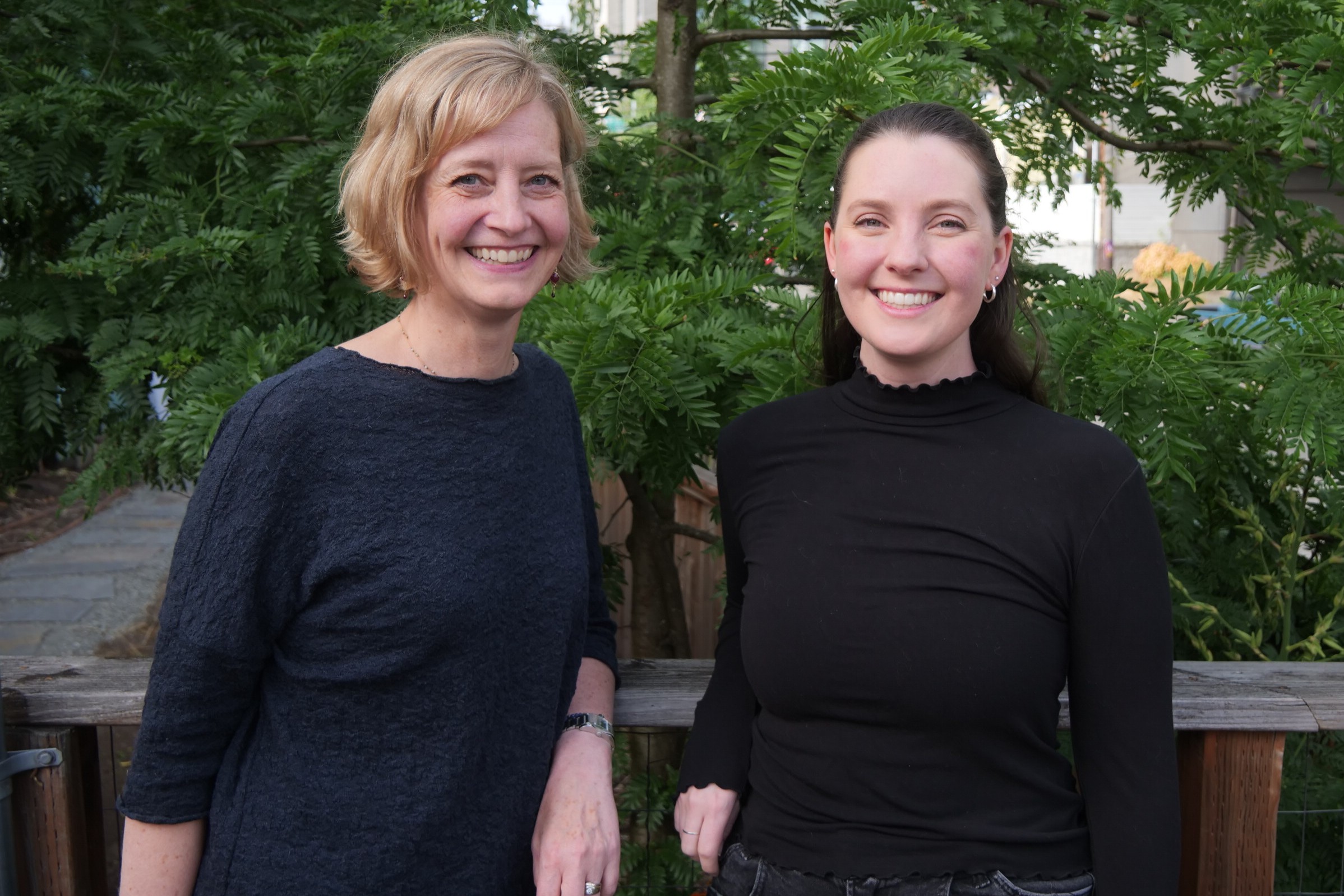
At the helm of this narrative journey are two exceptionally talented Pacific Northwest storytellers who bring both intellectual rigor and deep-seated empathy to the airwaves: Lisa Stiffler and Laura Scott. Lisa, an acclaimed veteran reporter for the technology news outlet GeekWire, has spent decades documenting the complex intersection of cutting-edge technology, climate change, and public policy, developing a reputation for sharp analysis and investigative integrity. Her data-driven precision is beautifully balanced by Laura Scott, an independent Seattle-based audio producer and journalist whose gift for rich sound design, narrative flow, and authentic human connection elevates each podcast interview into an intimate, cinematic experience. Together, these two creators refuse to merely report on cold clinical statistics, abstract carbon-credit markets, or sterile corporate press releases; instead, they travel directly to the front lines where our environmental challenges collide with authentic, everyday human lives. They sit in the crowded living rooms of families dealing with compromised local resources, and then they walk through the secure, high-tech laboratories where passionate developers are actively engineering the solutions to fix those exact problems. Crucially, while this ambitious editorial project is proudly sponsored by Amazon Sustainability, the podcast operates with complete, uncompromised editorial independence. This structural freedom ensures that Lisa and Laura can pursue every story with scientific honesty, transparent reporting, and a commitment to showing the real failures, hard-won breakthroughs, and human messy realities that define the arduous road to a greener planet.
The debut episodes of Positive Charge waste absolutely no time in tackling two of the most daunting, complex challenges of our contemporary world, starting with the ubiquitous menace of per- and polyfluoroalkyl substances, colloquially known as “forever chemicals” or PFAS. For decades, these highly stable, man-made synthetic compounds have been seamlessly integrated into everything from non-stick cookware and grease-resistant food packaging to waterproof clothing and heavy-duty firefighting foams, resulting in the insidious contamination of global water supplies and human food chains. Because their molecular structures contain some of the strongest chemical bonds known to science—a virtual “indestructible handshake” between carbon and fluorine atoms—they do not naturally degrade in the environment, accumulating silently in human tissue and wildlife for generations. The podcast’s premiere episode goes far beyond the terrifying headlines of contamination to introduce listeners to the cutting-edge companies and brilliant chemists who have engineered ways to do what was once deemed scientifically impossible: permanently destroy these indestructible molecules. By exploring methods like hydrothermal alkaline water oxidation, electrochemical destruction, and advanced filtration processes, Stiffler and Scott demystify the complex science behind breaking these stubborn molecular bonds. They show how these innovators are transforming a once-hopeless environmental disaster into a manageable, solvable engineering challenge, ultimately saving lives and restoring clean drinking water to communities that have spent years living in fear of their own kitchen taps.
In the second episode, the podcast shifts its gaze from the microscopic, invisible chemical threats in our water systems to the vast, star-powered heavens, focusing on the highly competitive global sprint to make commercial nuclear fusion a tangible reality. Long heralded as the ultimate holy grail of clean, sustainable energy, fusion—the natural process that powers our sun—promises to provide virtually limitless, zero-carbon electricity without generating the long-lived, highly radioactive waste associated with traditional nuclear fission reactors. For generations, the running joke among physicists and skeptics was that fusion energy was always thirty years away, and always would be. However, as the world experiences a massive surge in electricity demand driven by energy-hungry AI data centers and global industrial electrification, the timeline for commercial fusion has dramatically compressed under intense private sector pressure. Stiffler and Scott take listeners behind the security gates of pioneering startups and private labs that are aggressively challenging the slow-moving, government-funded models of the past. Powered by billions of dollars in private venture capital, advanced high-temperature superconducting magnets, and sophisticated computer simulations, these modern-day alchemists are building compact fusion reactors designed to generate practical green electricity for the grid within the decade. The hosts masterfully capture the electrifying tension, endless late nights, and infectious optimism of the engineers working to bottle a star on Earth, showcasing a grand scientific endeavor that could forever break the historic link between human economic progress and ecological decay.
What makes Positive Charge such an essential, refreshing addition to today’s media landscape is its unwavering commitment to the principles of constructive journalism. In a digital world saturated with clickbait doom-scrolling and paralyzing climate defeatism, the podcast offers a much-needed psychological pivot, demonstrating that genuine optimism is not about wearing rose-colored glasses, but about actively choosing to engage with our realities constructively. Every few weeks, subsequent episodes of the show will systematically dive into new, untreated frontiers of sustainability and climate technology, exploring concepts that sound like far-fetched science fiction but are rapidly becoming scalable science facts on the ground. Listeners can look forward to deep dives into direct air carbon capture systems designed to vacuum excess greenhouse gases straight out of the atmosphere, bio-engineered microbial fertilizers that could eliminate the destructive chemical runoff of modern agriculture, and innovative recycling methods for lithium-ion batteries that could make our transition to electric vehicles truly circular. By highlighting these practical, scalable solutions and the incredibly diverse teams behind them, Lisa and Laura inspire a deep sense of wonder, curiosity, and agency. They remind us that while the problems we face are undeniably massive, the collective intelligence, creativity, and determination of the global scientific community are more than a match for them, offering a powerful antidote to the psychological paralysis that so often stymies collective progress.
Ultimately, Positive Charge is more than just an informative audio series; it is an open, warm invitation for everyday global citizens to shift their perspective and actively participate in the building of a sustainable, flourishing future. The podcast’s thoughtfully chosen title carries a brilliant double meaning: it is a clever, literal nod to the physical, electrical, and scientific principles driving our clean energy transition, but it is also an emotional, social call to action for listeners to carry a cooperative, forward-looking energy into their own lives and local communities. To embark on this fascinating journey of discovery, hope, and planetary restoration, listeners can easily subscribe to Positive Charge on all major podcast platforms, including Apple Podcasts, Spotify, and Amazon Music, or explore comprehensive episode guides, visual multimedia, and deep-dive companion articles directly on the dedicated GeekWire landing page at geekwire.com/positivecharge. By tuning in, we gain something incredibly vital in the modern age: an understanding that the story of our planet’s future has not yet been written, and that with the right combination of technology, humanity, and relentless hope, we still possess the power to write a triumphant ending. Through these stories of struggle, perseverance, and breakthrough, Stiffler and Scott prove that while our current environmental path is fraught with immense challenges, we are still very much in charge of steering ourselves toward a brighter, cleaner, and more positive tomorrow.