


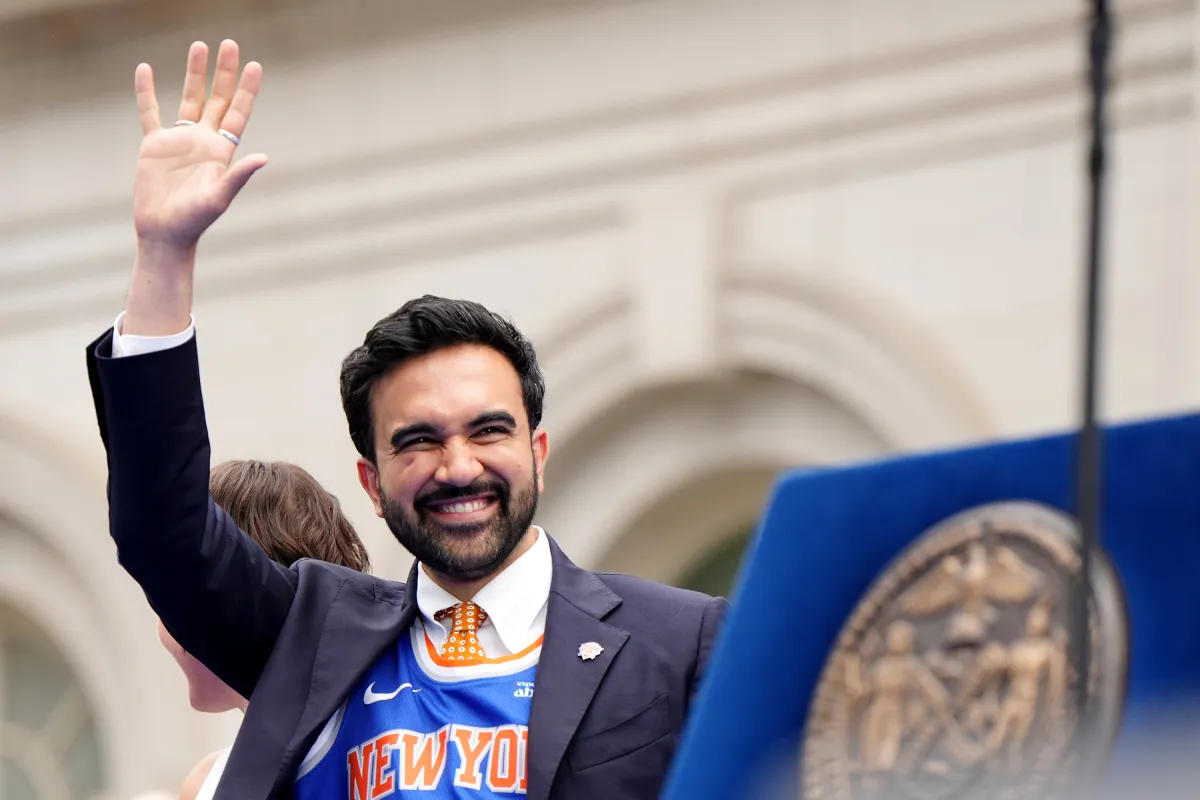
On a warm, humid Tuesday evening in June, the bustling streets of New York City became the backdrop for a political earthquake that reverberated far beyond the five boroughs. For months, the city’s congressional primaries had been quietly building toward a historic climax, serving as an ideological battleground for the very soul of the Democratic Party. As the physical and emotional energy of campaign volunteers culminated in crowded neighborhood community centers, union halls, and cramped campaign offices, the tension between the party’s traditional, long-serving establishment and an energetic, ascendant progressive movement reached a boiling point. When the final votes were tallied on Tuesday night, the political landscape of America’s largest metropolis had been decisively rewritten. Three candidates championed by New York City Mayor Zohran Mamdani emerged victorious in their highly contested primary races, signaling a stunning shift in the local balance of power. The magnitude of this political realignment was immediately captured by seasoned observers, including former presidential adviser Van Jones, who remarked on CNN to anchor Kaitlan Collins that had Mamdani completed this remarkable “hat trick,” it would herald “a new era in Democratic Party politics.” Jones’s vivid assertion that “the roof is collapsing on the Democratic Party establishment tonight” summarized the collective sense of shock and awe felt by political insiders, marking this night not as a routine local election, but as a historic moment of reckoning.
To truly understand the human drama of this primary night, one must look at the two powerful public figures whose contrasting visions for America defined the struggle: House Minority Leader Hakeem Jeffries and Mayor Zohran Mamdani. Jeffries represents the classical, disciplined path of political ascent, built on decades of institutional coalition-building, defense of national party incumbents, and a pragmatism focused on reclaiming a congressional majority. For Jeffries, political survival and progress are achieved by maintaining a broad, moderate national tent capable of winning competitive, moderate swing districts across the United States. Conversely, Mayor Zohran Mamdani represents a radical departure from this corporate-aligned, cautious approach to governance. Mamdani, a democratic socialist who captured national headlines with his historic 2025 mayoral victory over former Governor Andrew Cuomo, has built his political brand on the raw power of grassroots organizing, tenant advocacy, and economic populism. Since entering City Hall, Mamdani has consistently sought to translate his personal popularity into an organized municipal movement designed to challenge entrenched power structures and elevate working-class voices. This primary became a critical test of Mamdani’s capacity to build a lasting political apparatus, putting his vision of transformative, progressive policy directly up against Jeffries’ defense of institutional continuity and electoral moderation.
The battle lines of this historic confrontation were drawn across three distinct congressional districts, each representing a unique microcosm of New York’s diverse electorate. In the 10th Congressional District, former New York City Comptroller Brad Lander—a seasoned policymaker with a deep focus on economic equity—mounted a formidable campaign against incumbent Representative Dan Goldman. Lander’s primary victory, officially projected by the Associated Press at 9:04 p.m., was met with immediate praise from progressives and the national party alike; Democratic National Committee Chair Ken Martin released a statement celebrating Lander as a tireless champion of affordable housing and worker protections who would tirelessly hold corporate interests and conservative opponents accountable in Washington. Meanwhile, in the open-seat race to succeed the legendary, retiring progressive icon Representative Nydia Velázquez, Assemblymember Claire Valdez successfully secured her victory by 9:23 p.m., promising to carry forward a legacy of grassroots activism and labor solidarity. The most shocking upset of the night, however, unfolded in the 13th Congressional District, where at 10:38 p.m., community organizer Darializa Avila Chevalier defeated the powerful veteran incumbent Representative Adriano Espaillat. These three successive victories represented a clean sweep for Mamdani’s endorsed slate, leaving seasoned political operators to marvel at how a grassroots campaign of door-knocking, small-dollar donations, and neighborhood organizing had successfully dismantled some of the state’s most formidable political operations.
Beyond the domestic debates over rent costs, public school funding, and economic inequality, these primary races also exposed deep, emotional divisions within the Democratic coalition over international affairs, most notably the ongoing humanitarian crisis in Gaza. For many New Yorkers, foreign policy is not an abstract, academic debate; it is a deeply personal issue that directly touches their families, cultural identities, and moral beliefs. This raw emotional dynamic was particularly visible in the 10th District, where Representative Dan Goldman’s steadfast, traditional pro-Israel stance clashed directly with Brad Lander’s vocal criticism of Israel’s military campaign. Lander tapped into a deep well of grief, frustration, and moral outrage among progressive Jewish, Arab-American, and young voters who felt their representatives were out of touch with the urgent need for a ceasefire and humanitarian intervention. Similarly, in the 13th District, Darializa Avila Chevalier’s challenge to Adriano Espaillat was fueled by activists who viewed the foreign policy platform of established leaders as morally compromised. By framing these congressional contests around the global struggle for human rights, Mamdani and his progressive allies successfully mobilized an electorate that felt a profound moral responsibility to use their local ballots to send a clear message of peace and systemic foreign policy reform to the halls of Congress.
The national implications of Tuesday’s results are bound to reshape the strategic debates within the Democratic National Committee as the party begins to look toward the critical 2026 midterms and the 2028 presidential cycle. For years, the party’s establishment has argued that moving too far to the left on economic and social issues risks alienating moderate, suburban swing voters who are crucial to winning national elections. However, the resounding victories of Lander, Valdez, and Chevalier support the theory of change championed by national progressive leaders like Senator Bernie Sanders and Representative Alexandria Ocasio-Cortez. This perspective argues that the key to defeating conservative movements is not ideological moderation, but the enthusiastic mobilization of younger, working-class, and marginalized voters who feel abandoned by incremental politics. By addressing the material anxieties of everyday life—such as sky-high housing costs, stagnating wages, and corporate dominance—the progressive movement demonstrates that a bold, populist economic message can build highly motivated and victorious electoral coalitions. As other primary races unfold across the United States, candidates and strategists will undoubtedly look to New York as a masterclass in how to successfully challenge entrenched power by addressing the immediate, lived experiences of everyday communities.
Ultimately, Sunday-morning political analyses will contextualize these results, but the true significance of this election lies in the changing human geography of New York’s political soul. While this ideological rivalry is not a simple, zero-sum war—both Hakeem Jeffries and Zohran Mamdani share a fundamental commitment to defeating conservative opponents and expanding democratic access—the primary results signal that the center of political gravity has shifted toward Mamdani’s progressive coalition. Working-class voters, renters, and grassroots activists have sent a clear message to Washington: they will no longer accept a status quo that prioritizes institutional preservation over human dignity and systemic reform. The victories of Brad Lander, Claire Valdez, and Darializa Avila Chevalier are a testament to the fact that when ordinary people organize, build coalitions, and demand a more compassionate policy agenda, they possess the power to reform even the world’s most powerful political institutions. As these newly elected leaders prepare to bring their progressive energy and moral clarity to the nation’s capital, they carry with them the hopes and dreams of a city that has decided to step forward into a vibrant, compassionate, and truly democratic future.