



The Return of the Hype and the Ghost of 1966
The opening of the 2026 FIFA Men’s World Cup in North America felt like a waking dream for England’s long-suffering football fans. When the Three Lions marched onto the pitch for their opening match against Croatia, the atmosphere was thick with a mixture of historical anxiety and intense modern expectation. What followed was a breathtaking 4-2 display of offensive football that instantly reawakened the country’s favorite summer anthem: “It’s Coming Home.” The victory was a beautiful, fluid exhibition of dynamic attacking play, headlined by an clinical brace from captain Harry Kane, a characteristically elegant finish from midfield prodigy Jude Bellingham, and a lightning-fast strike from Marcus Rashford. For a brief moment, the heavy psychological burdens that have haunted English football since Bobby Moore lifted the Jules Rimet Trophy in 1966 seemed to evaporate under the warm stadium lights. Analysts across the globe quickly adjusted their predictions, elevating Gareth Southgate’s men to undisputed tournament favorites. The English public, notoriously susceptible to early-tournament euphoria, began planning their route to the final, convinced that this generation of multi-million-pound superstars was destined to finally bring the trophy back to London. Yet, as the history of the sport so cruel teaches, the highest peaks of English optimism are almost always followed by a sobering, sudden pull back to reality—and that reality arrived in the shape of a disciplined, hungry Ghanaian team.
The Foxborough Gridlock and Tactical Warfare
The transition from the high-scoring thrill of their opening victory to the humid pitches of New England proved to be a grueling lesson in tournament football. On a warm Tuesday afternoon at Gillette Stadium in Foxborough, Massachusetts, England was handed a stark reminder that games are won on the grass, not on paper or FIFA rankings. What was supposed to be a routine stepping stone toward the knockout rounds devolved into an exchange of physical and tactical blows, culminating in a hard-fought 0-0 draw. Under the sharp, tactical guidance of their veteran manager Carlos Queiroz, Ghana’s Black Stars took the pitch with a masterfully designed blueprint engineered to stifle England’s creative flow. From the opening whistle, the space Bellingham, Kane, and Bukayo Saka had enjoyed against Croatia vanished into thin air. Every passing lane was occupied, every aerial duel was contested with ferocious intensity, and the pristine turf of Foxborough became a battleground of defensive attrition. England’s superstars, accustomed to the fast-paced, open play of elite European leagues, quickly found themselves suffocated by a low block that stood like a stone wall, turning what was supposed to be an English victory march into a vexing, exhausting afternoon of frustration.
The Humility of a Global Icon
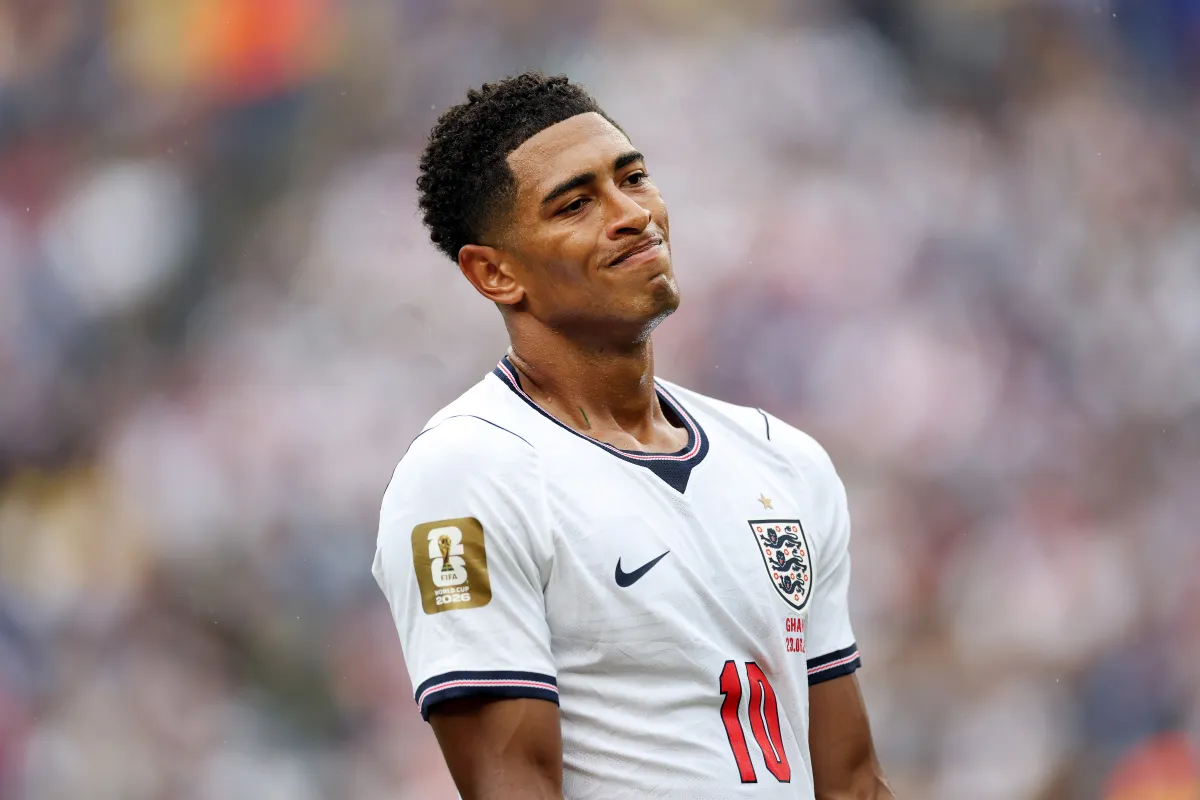
Amidst the physical battle and tactical gridlock, the post-match headlines belonged to Jude Bellingham, though not for the reasons the young superstar would have preferred. Despite struggling to break free from the Ghanaian defensive stranglehold, the Real Madrid midfielder was named the Player of the Match, a decision that raised eyebrows and ultimately led to an incredibly candid, human moment of self-reflection. Demonstrating a level of emotional maturity that belies his young age, Bellingham openly rejected the accolade in his post-match interview with BBC Sport, expressing deep humility. “Yeah, I didn’t deserve it, to be honest,” Bellingham admitted with refreshing honesty. “It should have gone to one of their lads who defended so well.” He went on to describe the game as a classic case of “second game fever,” a phenomenon where England historically struggles to replicate a brilliant opening-day performance. The match had indeed been a grueling, frustrating affair for the young star, characterized by a heated halftime confrontation on the touchline with Ghana’s manager Carlos Queiroz and capped off by his substitution in the 73rd minute for Morgan Rogers. Bellingham’s willingness to deflect praise and honor the defensive excellence of his opponents offered a touching moment of pure sportsmanship in an era too often dominated by curated public relations, reminding fans why he is respected as much for his character as his world-class talent.
The Defiant Triumph of the Black Stars
For Ghana, this goalless draw was not merely a hard-earned point; it was a historic, culture-defining result that sent shockwaves through the international football community. The chasm between the two nations on paper was immense, with England occupying the lofty heights of No. 4 in the FIFA World Rankings, while Ghana sat quietly down at No. 73. According to statistical analysts, this 0-0 gridlock represents the third-largest ranking differential in FIFA Men’s World Cup history where the lower-ranked team managed to secure a result. Led by a backline that played with a mixture of raw passion and mechanical discipline, the Black Stars executed their game plan to absolute perfection. Statistically, they emerged as a defensive marvel of the tournament, standing proud as one of only four teams yet to concede a single goal. Even more impressive is the fact that Ghana has faced a staggering 30 shots across their World Cup campaign without letting the ball cross their goal line—the highest defensive volume of any of the 48 competing nations. This remarkable achievement speaks volumes about the collective heart of the squad, who traveled to the United States not simply to participate, but to aggressively assert their place on the world stage and demand the respect of the global elite.
The Mathematics and History of Group L
With the dust now settling on this gripping encounter, the mathematical landscape of Group L has set up a highly dramatic final matchday. Both England and Ghana sit locked at the top of the table with four points apiece, though England maintains a slim grip on first place thanks to their superior plus-two goal differential. The race to secure a spot in the knockout rounds will reach its climax on Saturday, June 27, in a pair of high-stakes matches that will test the nerve of both camps. England is scheduled to wrap up their group stage campaign against a dangerous Panama side, while Ghana will prepare to lock horns with a wounded Croatia team hungry to salvage their own tournament dreams. For the Black Stars, the possibility of advancing beyond the group stage carries immense historical weight, as the nation has not reached the knockout rounds since their legendary, heartbreaking run to the quarterfinals in 2010. England, meanwhile, faces the unbearable pressure of their own domestic expectations, knowing that anything less than a convincing performance against Panama will invite a deluge of criticism back home and jeopardize their quest to improve upon their quarterfinal finish at the 2022 World Cup in Qatar.
The Beautiful Leveler
Ultimately, the afternoon of drama in Massachusetts served as a poetic reminder of why the World Cup remains the absolute pinnacle of global sports. It is a unique theater where financial wealth, individual celebrity, and historical prestige can be entirely neutralized over ninety minutes by eleven determined athletes playing for the honor of their country. England’s journey through this tournament continues with a necessary dose of humility, their grand illusions of an easy run to the trophy replaced by a newfound respect for the grit required to win at this level. Conversely, Ghana leaves Gillette Stadium with their heads held wonderfully high, armed with the undeniable proof that they can stand toe-to-toe with the world’s absolute best and survive. As both nations turn their attention to the critical challenges of the final group games, the tournament remains beautifully poised, promising more of the raw emotion, tactical complexity, and human drama that makes football the world’s truly universal language.