


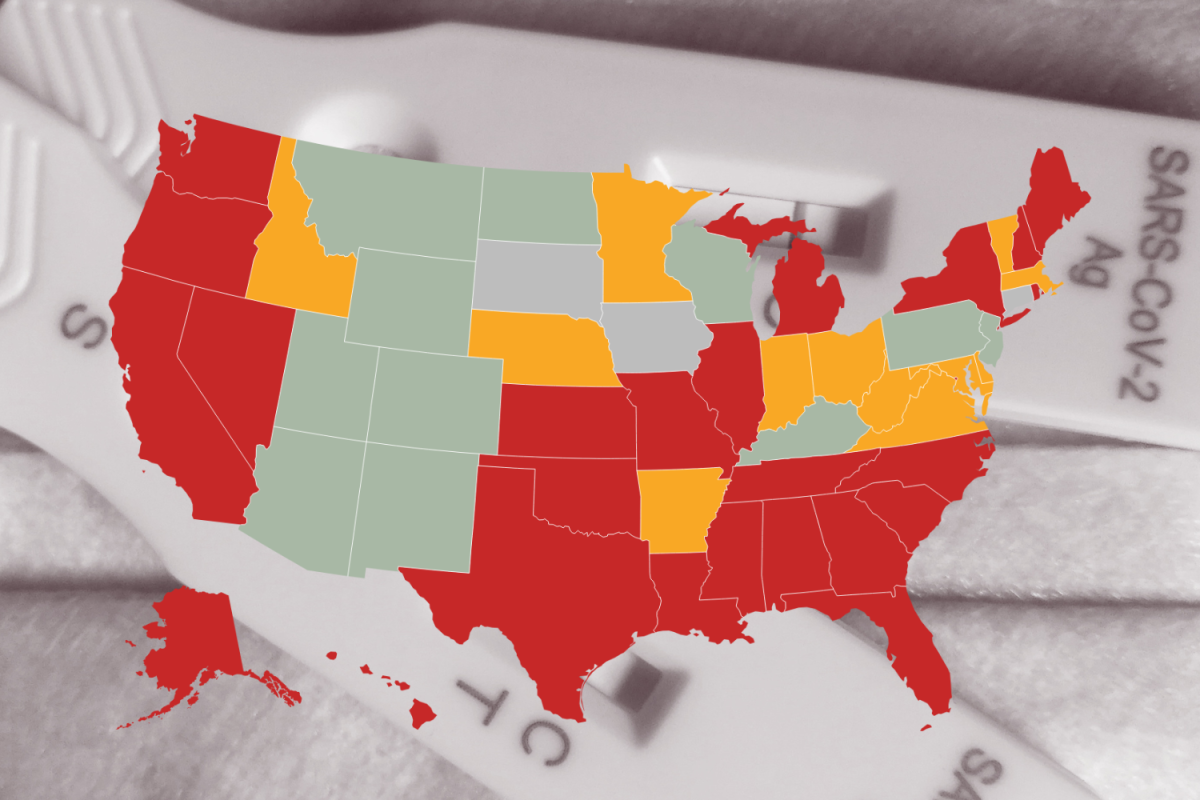
Just as many of us were beginning to feel a sense of durable relief, hoping that the quiet spring months signaled a permanent cooling of the pandemic’s embers, the virus has once again quietly asserted its presence across the United States. According to the latest epidemic modeling released by the Centers for Disease Control and Prevention (CDC), COVID-19 infections are trending upward nationwide, marking the first broad resurgence we have witnessed since the early spring. For the average person, this statistical reality translates into a familiar, subtle shift in daily life: a neighbor testing positive before a long-awaited summer vacation, a coworker suddenly switching to remote meetings, or a local pharmacy running low on rapid tests. The CDC’s sobering estimates suggest that infections are actively growing or likely growing in thirty-seven states, painting a stark map where not a single state is currently classified as experiencing a decline in transmission. Eleven states are keeping their heads above water with relatively stable transmission levels, while a handful of others simply lack the robust data required to confidently project a trend. For a public weary of health surveillance and deeply eager to relegate the virus to the history books, this sudden shift serves as a gentle yet persistent reminder that human behavior and viral evolution remain locked in an ongoing dance, demanding our quiet attention even when we would prefer to look away and move on.
The geography of this summer surge spans from bustling coastal cities to the warmth of the sunbelt, highlighting how easily the virus navigates our interconnected lives during peak travel seasons. The visual map of the resurgence shows deep pockets of growth across the American South, with heavily populated states like Texas, Florida, Georgia, Alabama, Mississippi, Louisiana, Tennessee, North Carolina, and South Carolina leading the uptick. At the same time, the trend is not isolated to warm-weather regions; dense, major metropolitan hubs in California, New York, Illinois, and Michigan are also seeing infection rates climb, complicating plans for summer camps, family reunions, and indoor gatherings. Conversely, a few pockets of the country are experiencing a temporary plateau, with states like Arizona, New Mexico, Montana, Wisconsin, Pennsylvania, and New Jersey reporting relatively stable transmission rates for the time being. This regional variance shows that while the virus travels efficiently along interstate highways and airport terminals, local patterns, immunity levels, and environmental factors—such as people gathering indoors to escape intense summer heat—still influence its spread. For families living in the zones of growth, the news introduces a familiar calculation of risk, balancing the joy of summer gatherings against the vulnerability of older grandparents or immunocompromised loved ones who remain most at risk during these unexpected spikes.
To understand how health officials arrive at these conclusions without relying on the extensive, universal testing of years past, it helps to look at the mathematical toolkit the CDC uses to monitor our collective health. Instead of attempting to count every single positive home test—an impossible task in an era where most mild illnesses go officially unreported—scientists utilize a sophisticated surveillance metric known as the effective reproduction number, or Rt. This value essentially measures the speed of transmission, answering a simple but vital question: is one infected person, on average, passing the virus to more than one other person? When the national estimate climbs above the threshold of growth, as it has recently for the first time since spring, it signals that the virus is gaining momentum in the community. Public health experts stress that these models are not meant to represent exact case counts, which can easily induce anxiety, but are rather designed to function as an early warning system, much like a weather forecast predicting a coming storm. By tracking wastewater data, emergency room visits, and modeling trends, communities and hospitals can prepare for an increase in demand without being caught off guard, transforming cold numbers into practical, human-centered tools for societal resilience.
While families across the nation quietly navigate these rising health metrics in their homes, a remarkably different, highly charged drama surrounding the pandemic’s legacy has been unfolding in the halls of Washington, D.C. Dr. Anthony Fauci, the former director of the National Institute of Allergy and Infectious Diseases and the long-time public face of the federal pandemic response, made a highly anticipated appearance before the Senate Homeland Security and Governmental Affairs Committee. The hearing, broadcast live on C-SPAN and Senate channels to a divided nation, took place in an atmosphere charged with years of political theater and deeply entrenched debates over public trust, government overreach, and epidemic policy. Adding fuel to the legislative fire, committee chairman Senator Rand Paul had recently made public over one thousand pages of Dr. Fauci’s private journals, offering a rare, intimate, and highly contested look into the former health official’s personal reflections during the darkest days of the health crisis. These journals, documenting Fauci’s private doubts, interactions with the White House, and thoughts on the contested origins of the virus, became the primary weapon in a partisan battleground, turning a routine congressional oversight hearing into a deeply personal investigation into how power was wielded during a once-in-a-generation crisis.
The atmosphere inside the hearing room grew increasingly tense as Dr. Fauci, facing intense and pointed grilling from lawmakers, repeatedly chose to invoke his Fifth Amendment constitutional right against self-incrimination. This legal strategy meant he declined to answer questions regarding several sensitive topics, including his specific decision-making processes during the pandemic and the controversial content contained within his personal diaries. Senator Paul and his Republican colleagues utilized select passages from the newly released journals to challenge the official narrative of the early federal response, questioning the transparency of decisions that shaped the lives of millions of Americans, from school closures to vaccine mandates. The defense of the Fifth Amendment by one of the country’s most prominent public servants highlighted the deep legal and political vulnerabilities that still linger years after the acute phase of the crisis has passed. For the public watching at home, the spectacle offered little closure, instead underscoring the deep ideological divide between those who view early pandemic policies as essential, life-saving measures implemented under extreme duress, and those who see them as an overreaching abuse of administrative power that warrants strict legal accountability.
Ultimately, this striking contrast between the active, quiet rise of COVID-19 infections in thirty-seven states and the loud, retrospective legal battles in the nation’s capital highlights the complex reality of living in a post-consensus world. While lawmakers debate the history and origins of the virus in polished committee rooms, everyday citizens are left to manage the practical, immediate consequences of a persistent biological threat with far less clear guidance than they once had. The current rise in cases does not carry the terrifying novelty of 2020, but it does carry a heavy psychological exhaustion, forcing individuals to rely on their own risk assessments, vaccines, and personal precautions to stay safe. If we are to bridge the gap between public health science and the communities it serves, the nation must find a way to separate the noise of political grandstanding from the quiet, essential work of community protection and epidemiological vigilance. As we move forward into a future where waves of infection will likely continue to rise and fall, the true challenge lies not just in tracking the effective reproduction number on a graph, but in restoring the broken trust between the institutions of science and the families who rely on them to safely navigate an unpredictable world.