


Every software engineer who has ever worked a high-visibility on-call rotation knows the sudden, visceral panic associated with a 3:00 AM pager alert. It is a moment defined by extreme biological disadvantages: your heart instantly races, your vision blurs with deep physiological exhaustion, and the immense, looming pressure of corporate downtime weighs heavily on your every single mouse click and keystroke. In these high-stakes, pressure-cooker situations, human cognitive capacity is severely degraded by fatigue, extreme sleep deprivation, and the dreaded psychological phenomenon of “tunnel vision” that makes diagnosing complex, highly distributed cloud outages feel like searching for a needle in a rapidly shifting, pitch-black haystack. Recognizing this painful, deeply human reality in the tech sector, Microsoft has stepped in to offer a promising new form of relief by officially launching its Azure Copilot Observability Agent into general availability on Tuesday. Built directly upon Microsoft’s extensive, multi-decade history of running Azure’s massive global cloud infrastructure, this specialized AI companion steps in as an unflappable, virtual site reliability engineer. It works by rapidly connecting the isolated dots of system data to guide engineers straight toward the most probable root cause of an unexpected failure. Because an artificial intelligence agent does not experience adrenaline spikes, raw physical exhaustion, or the paralyzing fear of corporate failure under the watchful eye of anxious executive leadership, it can approach complex digital catastrophes with an objective, analytical calm that is virtually impossible for a sleep-deprived human to replicate. This launch marks a major milestone in humanizing tech infrastructure, transforming a traditionally stressful, panic-fueled firefighting episode into a structured, assisted dialogue that proactively prioritizes the mental well-being of engineering teams alongside database and application uptime.
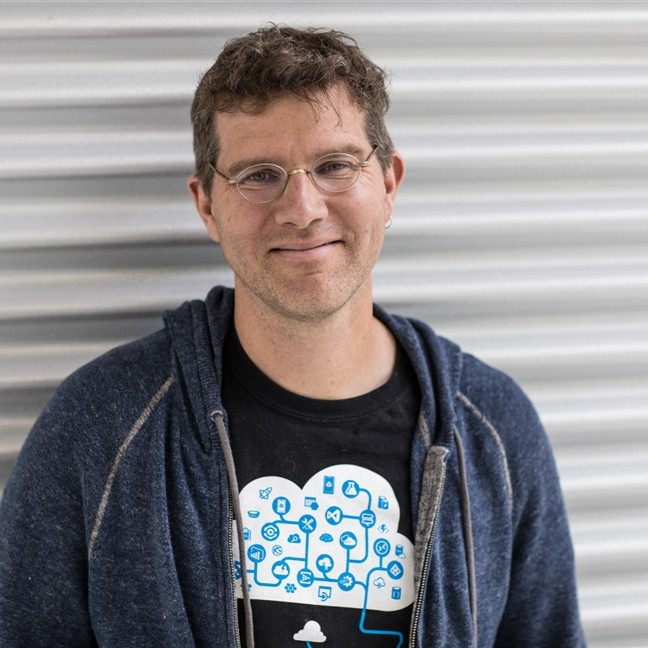
The visionary championing this profound technological leap is Brendan Burns, a highly respected Microsoft Technical Fellow and Corporate Vice President whose illustrious career is fundamentally linked to the architecture of the modern web. More than a decade ago, Burns, alongside his former Google colleagues Joe Beda and Craig McLuckie, created Kubernetes—the legendary open-source engine that fundamentally transformed how companies deploy, scale, and manage containerized applications across vast networks. While Kubernetes brought an unprecedented level of self-healing automation to the world of cloud scale, it also dramatically increased the sheer complexity and architectural density that modern software engineering teams are forced to monitor and maintain on a daily basis. As Burns explains, the self-repairing mechanisms of Kubernetes are fundamentally deterministic, meaning they operate strictly on static, rigid, and pre-defined rules; when a system breaks, it can restart a container, but it lacks the cognitive ability to form creative hypotheses, critically evaluate environmental anomalies, or dynamically investigate novel solutions. The newly released Azure Copilot Observability Agent bridges this exact gap by introducing an active reasoning layer to the equation. In a recent interview, Burns emphasized that AI-driven agents excel in these chaotic scenarios precisely because they lack human emotional attachments and vulnerability to pressure. When an engineering manager is breathing down a developer’s neck demanding an immediate, definitive breakdown of why things broke, human systems-thinkers often rush to incorrect conclusions out of fear; an AI agent, by contrast, operates with absolute emotional neutrality, testing theories against system telemetry in real time without being swayed by stress.
To appreciate the practical brilliance of this system, one must look at how the Azure Copilot Observability Agent navigates the vast digital labyrinth of a modern enterprise. In any cloud environment, vital clues about an unexpected failure are almost never located in a single, convenient location; instead, they are scattered haphazardly across a massive, disconnected sea of application logs, microservice performance traces, virtual machine metrics, and network signals. For a lone human operator attempting to triage an emergency in the middle of the night, manually correlating these noisy and disparate telemetry streams is an excruciatingly slow, error-prone endeavor. Microsoft’s new agent automates this entire forensic process, piecing together the fragmented puzzle to map out a clear, coherent narrative of the system’s degradation. Crucially, Microsoft has also rolled out a powerful new capability called “autonomous operations,” currently available in preview, which permits the agent to independently surface, triage, and deeply investigate automated system alerts without requiring a person to manually prompt it or kick off the diagnostic sequence. However, Microsoft is retaining a vital, reassuring boundary when it comes to system write-access and execution. The agent is deliberately designed not to take corrective actions on its own; it will not autonomously reboot a production database, alter a security configuration, or redeploy critical code packages. By intentionally stopping short of full execution, the product leaves the final decision-making authority entirely in the hands of human engineers, ensuring that while the heavy lifting of raw intellectual labor and rapid data aggregation is automated, humans remain the ultimate pilot.
Microsoft’s foray into this space occurs within a highly competitive, fast-moving landscape of tech giants and agile software monitoring platforms all racing to capture the market for intelligent operations. The Redmond-based tech giant is entering a crowded arena where major observability players are rapidly deploying their own specialized generative AI capabilities. For instance, industry leader Datadog made its highly anticipated Bits AI SRE agent generally available in December, and Amazon Web Services quickly followed suit by introducing its comparable AWS DevOps Agent in the spring. Alongside these cloud titans, established observability veterans like Dynatrace, Splunk, New Relic, and Grafana are moving at breakneck speed to integrate similar conversational AI diagnostics into their core packages, accompanied by a dynamic wave of well-funded, AI-native software startups. To stand out and capture market share, Microsoft has strategically structured the pricing for its Azure Copilot Observability Agent on a flexible, usage-based consumption model rather than locking companies into rigid, per-seat licensing contracts—a direct reflection of the competitive pricing model AWS deployed for its DevOps Agent. Yet, Burns is highly confident that Microsoft possesses a unique and massive competitive differentiator that its rivals simply cannot duplicate: the unmatched breadth of its developer and cloud ecosystem. Because Microsoft stewards everything from GitHub code repositories to Azure’s physical data centers and global deployment pipelines, its observability agent can look across the entire lifecycle of software, drawing a straight line from a production latency spike back to the specific, errant line of code committed by a developer days prior.
This incredibly deep, end-to-end integration is central to what Burns envisions as a broader, industry-wide transition toward “agentic operations,” a landmark concept he outlined in a comprehensive technical publication accompanying the launch. Traditional operations systems are fundamentally passive; they scream through noisy dashboards and generic pages when a pre-set threshold is exceeded, but they lack the contextual capacity to understand why a change occurred or what the developer was trying to achieve. Agentic operations, on the other hand, represent a shift toward active reasoning engines that can understand the fundamental design intent behind application structures. Because the Azure Copilot Observability Agent can contextualize the code history resident in GitHub alongside the physical, real-time performance telemetry flowing through Azure, it acts as an omniscient digital architect that translates cold machine signals into highly descriptive, human-readable post-mortem analyses. Instead of wasting hours querying complex databases and searching through obscure log lines, a developer can simply ask the agent to explain the performance regression in plain language. By linking the dynamic footprint of developer commits with the live, chaotic behavior of cloud infrastructure, the agent effectively demystifies the inner workings of modern systems, enabling cloud platforms to transition from complex, fragile black boxes into transparent, understandable partners that help developers learn from outages rather than merely surviving them.
At its core, this technical evolution is not actually about optimizing system performance metrics or boosting corporate profitability—it is about restoring peace of mind and preserving the humanity of those who build our digital world. Reflecting back on his own storied career, Burns openly shares the deep personal empathy that drives his commitment to this project, recalling the intense, grueling physical and psychological toll of pulling a 36-hour on-call shift during his early years managing major internet infrastructures. He notes with a warm sense of reflection and hard-earned wisdom that his own professional life would have been vastly different, characterized by far fewer sleepless nights, healthier boundaries, and less workplace stress, had he possessed an intelligent observability tool like this a decade ago. By shielding developers from the exhausting, high-pressure burden of initial problem identification and log forensic activities, this AI agent protects the mental health of engineers and allows them to allocate their valuable creativity toward design and innovation rather than exhausting firefighting. As the industry advances down the exciting, carefully guarded road toward fully autonomous remediation systems, the fundamental relationship between software developers and their creations is being beautifully rewritten. Artificial intelligence, long feared as a force of human displacement, is proving in this instance to be a deeply humanizing savior, stepping into the dark of the graveyard shift to ensure that no developer ever has to face the daunting complexity of a system crash alone in the dark.