



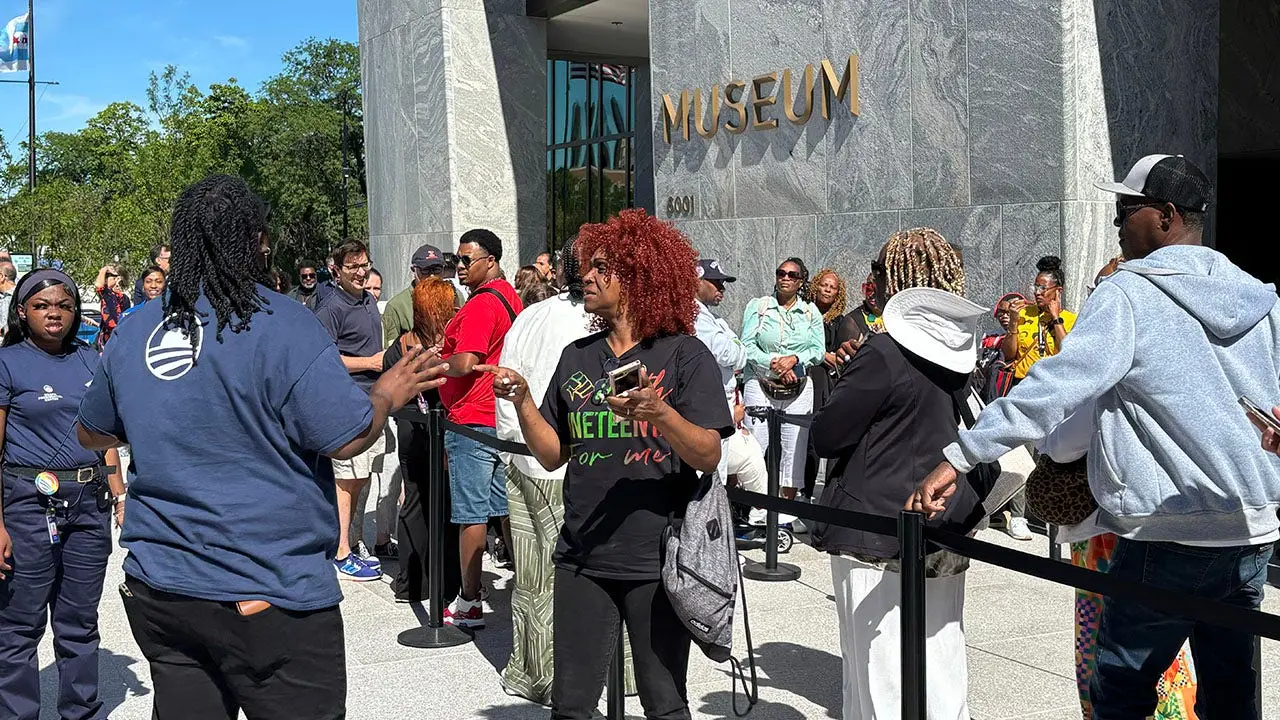
The festive atmosphere along the shores of Lake Michigan on Chicago’s historic South Side was thick with anticipation, pride, and deep emotional reflection over the holiday weekend as the Barack Obama Presidential Center threw open its doors to the public. Nestled within the expansive greenery of Jackson Park, the masterfully designed 19.3-acre campus quickly became an oasis of celebration and collective memory, particularly because its public opening coincided with the national celebration of Juneteenth—the holiday commemorating the final emancipation of enslaved African Americans in 1865. Just days prior, a glamourous, private opening ceremony had transformed the South Side into what many onlookers described as the hottest ticket in Hollywood, drawing iconic luminaries like Oprah Winfrey, Tom Hanks, and Steven Spielberg to celebrate the occasion. Yet, despite the presence of global superstars, the true heart of the weekend belonged to the thousands of middle-class families, local residents, and visitors who traveled from across the country to witness what they saw as a historic homecoming. For people like Lauren Tillman, who lives about forty minutes outside of Chicago, the physical presence of this grand monument was an emotional relief and a powerful statement of community empowerment. To Tillman, outsiders often view Chicago through a narrow, negative lens dominated by sensationalized headlines of systemic violence and economic division; this center, she believed, stood as a vibrant rebuttal, representing a beautiful gathering place intended specifically to uplift and unify the local Black community, turning a global spotlight back onto the warmth and resilience of the South Side.
For the many visitors who wandered through the sunlit plazas and modern pavilions during the opening days, the center represents a physical monument to a concept they proudly describe as “Black excellence.” The deep emotional gravity of having a Black family occupy the White House for two full terms is still a fresh and vital source of inspiration for community members like Ashley Woods. Growing up on the South Side of Chicago, Woods recalled a pervasive, quiet societal expectation that young minority children could only achieve great wealth or high status through very narrow avenues, such as professional sports or a career in the music industry. To see a native son of Chicago rise to become the commander-in-chief of the nation, running the government with an air of dignity and displaying a loving, cohesive family structure, shattered those historical ceilings and offered a powerful, real-time example of what is possible when structural barriers are overcome. This sentiment of pride and survival was echoed by travelers like Sheryl Rogers and Peggy Neely-Harris, who made a dedicated pilgrimage from St. Louis to be part of the historic opening. Rogers spoke of the center with a sense of profound urgency, describing it as a vital “light in this present darkness” during an era where many minority communities feel their political rights, physical safety, and historical narratives are under active systemic attack. To these visitors, the Obama family left behind an almost flawless blueprint of high moral character, familial devotion, and community-first leadership—recalled by many as a steady, scandal-free era of public service that exuded love, unity, and hope.
However, as historians, legal scholars, and political watchdogs observe the formation of this public narrative, they point to a much more complex and heavily contested record that characterized Obama’s two terms in the Oval Office. Despite the warm memories of his supporters who look back on his presidency as standard-setting and scandal-free, the analytical reality of those eight years reveals several major administrative, legal, and constitutional controversies that continue to challenge his legacy of transparency. One of the most controversial chapters unfolded when Barack Obama’s Department of Justice took the highly unusual step of secretly seizing the phone records of Fox News journalists, including lines that belonged to the personal residence of a reporter’s parents. This aggressive action to root out government leaks drew direct condemnation from civil liberties groups and press freedom advocates, particularly when federal court documents revealed that an FBI agent had written an affidavit characterizing reporter James Rosen as a potential criminal “co-conspirator” under the Espionage Act simply for cultivating a confidential government source. This dramatic move sent shockwaves through newsrooms across the country, creating a chilling effect on investigative journalism and raising serious questions about the administration’s stated commitment to defending a free and open press.
The shadow of federal overreach during the Obama years extended beyond press relations, bleeding into domestic taxpayer operations and international military strategy in ways that continue to fuel intense partisan debates today. On the domestic front, the Internal Revenue Service became the center of a national firestorm when it was discovered that the agency had systematically targeted, delayed, and over-scrutinized the tax-exempt applications of conservative grassroots organizations, particularly those containing politically charged terms like “Tea Party” or “Patriot.” Simultaneously, along the southern border, the Bureau of Alcohol, Tobacco, Firearms and Explosives initiated “Operation Fast and Furious,” a flawed sting operation where federal agents intentionally allowed illegal straw purchases of military-style firearms in hopes of tracking them to high-level cartel bosses. The agency lost track of more than two thousand of these weapons, one of which was later recovered at the scene of the tragic murder of U.S. Border Patrol Agent Brian Terry in 2010; when Congress attempted to investigate, Attorney General Eric Holder refused to turn over key department records, resulting in him becoming the first sitting cabinet member in United States history to be held in contempt of Congress. Furthermore, the administration faced heavy international legal security and moral condemnation for authorizing targeted drone strikes in Yemen that resulted in the extrajudicial deaths of four American citizens—including a teenager—without providing them with their constitutionally guaranteed right to a trial.
Despite these heavy policy controversies and the heated political debates that continue to surround his administration’s record, local residents walking the South Side campus on opening day remained focused on the immediate, tangible promise the center holds for their neighborhood. Valerie Reynolds, a twenty-six-year-old Chicago resident, looked out over the sprawling lawns and expressed a deep, heartfelt hope that the shiny new campus would serve as a powerful counterweight to the bleak news headlines that regularly define her community by its struggles with poverty and street violence. For Valerie and many others, the center represents a rare, physical oasis of safety, education, and collective inspiration—a physical reminder of the shared optimism and electric unity that swept through the country during Obama’s historic 2008 campaign. She admitted that walking through the crowd felt like the first time in over a decade she had truly felt that same sense of collective closeness, standing in stark contrast to the modern era of deep political fragmentation and public anger. This poignant juxtaposition highlights the ultimate paradox of the Obama Presidential Center: it stands as a localized beacon of hope and revitalization on the South Side, even as the broader nation remains deeply divided over the lasting socio-political legacy of the administration that built it.
Ultimately, the opening of this grand presidential center serves as both a celebration of history and a bittersweet mirror reflecting the current state of American politics, eliciting feelings of intense nostalgia and a longing for leadership that prioritizes decorum and inclusion. Visitors like Kia Ware, traveling from Virginia, found themselves overcome with emotion as they contemplated the dramatic shifts in the American political landscape since Obama stepped down from the podium in 2017. Watching the center open was a reminder of an era when, in their eyes, the federal government actively fought to protect vulnerable populations, civil liberties, and lands that they now believe are being systemicially dismantled or ignored. This deep-seated sense of loss has only elevated Obama’s stature within the Democratic Party, where he remains a towering, highly sought-after figure whose unifying voice is deeply missed by supporters who wish he could step back onto the active political stage. As visitors slowly made their way home from the sunlit campus, leaving the echo of music and laughter behind, the Barack Obama Presidential Center stood solid against the Chicago skyline—a monument to an era of historic breakthroughs and complex realities, serving as a reminder that the pursuit of unity and progress remains an ongoing, deeply personal journey for the local community and the nation at large.