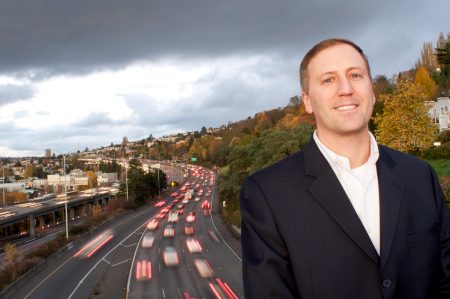




The delicate balance of municipal growth, corporate responsibility, and the physical migration of wealth has reached a critical tipping point in the Pacific Northwest, as highlighted by a telling new economic assessment. For the past five years, Seattle’s contentious “JumpStart” payroll tax—conceived as a progressive mechanism to fund affordable housing and local community services by taxing high-paying positions—has stood at the center of a raging debate regarding urban vitality and fiscal policy. A sobering new report released by the Downtown Seattle Association now validates many of the business community’s early warnings, illustrating how the tax has acted as a silent centrifugal force, nudging high-value jobs and office valuations out of the city center. The starkest evidence of this migration isn’t found in abstract spreadsheets, but rather across Lake Washington in booming Bellevue, a city that has eagerly positioned itself as a business-friendly sanctuary, absorbing the displaced economic energy of its western neighbor. Yet, while local municipalities spar over tax borders and office occupancy rates, the tech industry’s wealthiest pioneers are expanding their personal footprints far beyond the rainy confines of the Puget Sound. In a striking display of national diversification, Valve’s legendary founder, Gabe Newell, was recently revealed as the buyer of a breathtaking, ultra-exclusive waterfront estate just north of Miami. This real estate acquisition underscores a broader, fascinating nationwide trend: even as Pacific Northwest tech hubs grapple with local policy hurdles and economic rebalancing, their chief architects are increasingly seeking out secondary, sun-soaked bases of power to establish their legacies, signaling a permanent shift in how and where modern technological fortunes are anchored.
As traditional economic structures shift geographically, the Pacific Northwest continues to solidify its reputation as a crucible for humanity’s most ambitious scientific endeavors, punctuated by a monumental breakthrough in the race for clean energy. Historically, nuclear fusion has been treated as a brilliant but perpetually distant dream—the ultimate clean power source that is always “thirty years away” from viability. That long-standing skepticism was shattered this week when Everett-based Helion Energy announced a world-first achievement: securing official regulatory licenses to construct and operate a commercial-scale fusion power facility. Rather than trapping themselves in endless academic theory, Helion’s team of engineers and visionaries has pushed through the agonizingly complex thickets of state and federal bureaucracy to prove that fusion is not just a laboratory curiosity, but a viable, near-term industrial reality. By moving past the theoretical phase and into the highly regulated domain of physical construction, Helion has fundamentally rewritten the timeline for the global energy transition. This regulatory victory is more than just a win for a single company; it serves as a powerful validation of the private sector’s ability to solve the world’s most daunting physical puzzles. In an era dominated by digital software, Helion’s tangible progress serves as a thrilling reminder that the region’s pioneering spirit is still deeply rooted in hard science, physical engineering, and the audacious pursuit of a sustainable planet.
Simultaneously, the digital landscape is undergoing an equally profound, albeit silent, architectural revolution inside the world’s largest cloud computing infrastructure. At Amazon Web Services, under the methodical stewardship of Swami Sivasubramanian, an army of highly specialized, secretive teams is hard at work building the next generation of artificial intelligence: autonomous agentic tools. Unlike the simple chatbots that dominated the early years of the AI boom, these agentic systems are designed to operate independently, executing complex multi-step workflows, triaging endless streams of corporate communication, and proactively patching critical security vulnerabilities before humans even realize they exist. Yet, as AWS showcased these incredibly autonomous agents to eager enterprise clients at its high-profile New York Summit, a fascinating corporate and political paradox was unfolding behind the scenes. In quiet corridors, Amazon CEO Andy Jassy was reportedly among a select group of prominent technology leaders who personally warned senior officials in the Trump administration about potential national security risks embedded in Anthropic’s newest AI models. This defensive maneuvering has struck industry analysts as a brilliantly complex, if somewhat awkward, corporate chess move, given that Amazon has funnelled billions of dollars into Anthropic as a cornerstone of its broader generative AI strategy. The contrast highlights the dual reality of the 2026 tech sector: a public-facing rush to deploy autonomous digital agents, coupled with a deep, private anxiety regarding the geopolitical implications and uncontrollable risks of the very technology they are racing to dominate.
While the titans of cloud computing wage high-stakes battles in corporate boardrooms and federal offices, local startups are demonstrating that old-fashioned physical hustle and creative marketing are still vital to capturing the public’s imagination. Consider Luke Larson, a passionate entrepreneur who is channeling his relentless energy into a green, caffeinated vision of the future with his startup, Vale. Larson is looking to completely redefine how we consume beverages, aiming to build a massive, Seattle-born matcha empire that mirrors the scale, cultural footprint, and ubiquity of Starbucks, but with a highly modern, automated twist. His strategy skips the overhead of traditional, slow-paced cafes in favor of a rapidly scalable hybrid model, combining intimate local brick-and-mortar storefronts with thousands of state-of-the-art, automated matcha-dispensing kiosks distributed across the nation. This blend of premium culinary appreciation and sleek engineering mirrors the scrappy, brilliant marketing tactics of other local innovators, such as the AI-powered communication coaching platform Yoodli. Rather than spending astronomical sums on conventional digital ad campaigns to cut through the noise, Yoodli’s team opted for a hilariously effective, low-tech stunt during the FIFA World Cup festivities at local Pier 62. By simply standing in the crowd with a hand-written cardboard sign displaying their web address, they managed to hijack Fox Sports’ live international broadcast, proving that even in an era of multi-billion-dollar algorithms, a touch of human ingenuity and grassroots audacity remains the ultimate growth hack.
This vibrant startup energy is constantly being replenished by a continuous cycle of executive reinvention and professional resilience, which keeps the Seattle talent pool uniquely dynamic. A prime example of this phenomenon is Dan Lewis, the resilient former CEO of the digital freight marketplace Convoy. When Convoy abruptly shut down its operations in late 2023 amid a brutal logistics downturn, it sent shockwaves through the local tech ecosystem, but Lewis’s story did not end with that sudden shuttering. After a transitional chapter spent working within the ranks of Microsoft, Lewis has officially departed the tech giant to chart a new entrepreneurial path, launching a highly anticipated, stealth-stage startup aimed at optimizing the sheer operational efficiency of running resource-heavy AI models. By applying his deep expertise at the intersection of complex logistics and advanced software, Lewis is tackling one of the most critical structural bottlenecks of our era: the massive, unsustainable computational demands of advanced artificial intelligence. His quick transition back into the high-risk startup arena is mirrored by other major talent migrations across the region, including tech veteran Brian Hall—celebrated for his leadership tenures at Microsoft, Amazon, and Google—who has lent his immense credibility to the rising AI firm Mistral by joining their ranks. These high-caliber movements, alongside the quiet retirement of Amazon’s pioneering Vice President of Alexa Domains and Dropzone AI’s strategic acquisition of a new head of product, paint a vivid picture of a region defined by its remarkable adaptability.
When one steps back to look at the collective mosaic of the Pacific Northwest tech landscape in 2026, it becomes clear that we are witnessing a profound metamorphosis that touches every layer of society. We see a region wrestling directly with the real-world friction of its own rapid success, where local tax debates dictate corporate footprints, and where the boundaries of physical energy and digital capability are being pushed further than ever before. Yet, beneath the high-profile regulatory triumphs of fusion power, the complex geopolitical gamesmanship of cloud computing giants, and the corporate musical chairs of seasoned executives, the true lifeblood of this community remains unquantifiably human. It is found in the relentless drive of a founder trying to automate the perfect cup of green tea, the clever cheekiness of an AI startup using cardboard signs to reach global audiences, and the resilience of a veteran CEO dusting himself off to tackle the next great bottleneck of the computer age. In a world increasingly dominated by cold, automated systems and massive corporate structures, these stories serve as a powerful reminder that technology’s evolution is not an inevitable, pre-written script. Rather, it is a deeply human narrative, shaped by local passions, personal failures, untamed ambitions, and the enduring belief that the future is still something we can build with our own hands.