


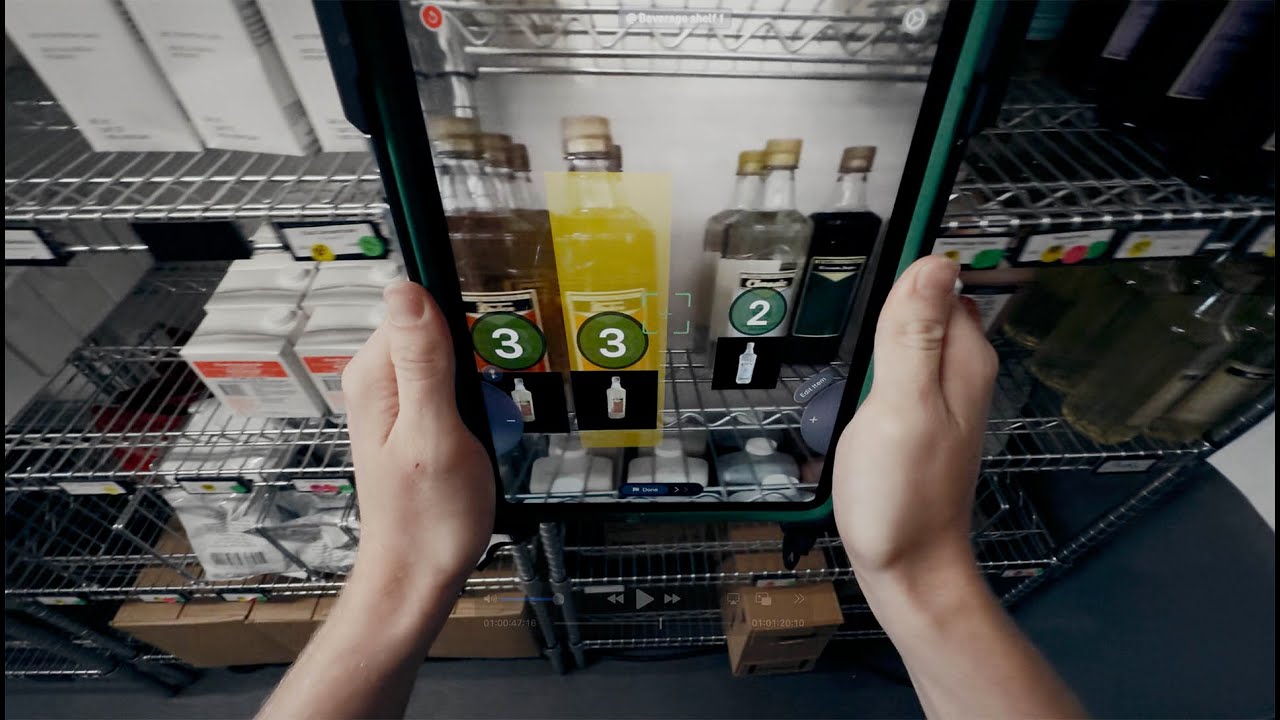
In an era where technology promises to sweep away the tedious, repetitive tasks of our daily lives, modern retail has increasingly turned to artificial intelligence for answers to its most frustrating operational challenges. For corporate giants like Starbucks, few tasks are more universally disliked by employees than the time-consuming process of weekly inventory management. The dream of handing this physical chore over to a computer vision system was supposed to be a triumph for workers and executives alike. By partnering with the Redmond-based tech startup NomadGo, Starbucks set out to replace the dreaded clipboard-and-pencil counting routine with “Automated Counting,” an advanced, augmented reality system designed to run on store iPads. This innovative union between a nimble, hyper-local startup and a global coffee conglomerate was heralded as a massive step forward in workplace digitalization. The goal was simple but ambitious: to transform a grueling, hour-long physical review of dry goods, milks, and syrups into a friction-free, ten-minute scan. In theory, this rapid automation would keep baristas out of the cramped, windowless stockrooms and place them back on the floor, where they could focus on crafting beverages, cultivating warm environments, and fostering genuine human connections with customers during their daily morning rush.
However, the leap from a perfectly controlled testing laboratory to the unpredictable, chaotic reality of a bustling retail store proved to be a cavernous divide that the software could not easily cross. When Automated Counting was rapidly deployed across all 11,300 company-operated Starbucks locations in North America, the real-world environments immediately began to push the system to its absolute limits. Baristas, already working under tight schedules, found themselves wrestling with temperamental iPad cameras that simply could not make sense of the physical layout of a busy backroom. Reflection was a constant, frustrating culprit; the gleaming stainless-steel doors of industrial refrigerators frequently mirrored the inventory, leading the artificial intelligence to double-count cartons of milk and oat milk. In other instances, the computer vision algorithm struggled to differentiate between look-alike items, occasionally misidentifying standard trash receptacles as luxury flavor syrups. Worse still was the fragile state of store-level infrastructure; in locations burdened with weak, spotty Wi-Fi networks, even a brief drop in connection would completely wipe out a barista’s scanning progress mid-session, forcing them to start the tedious process from the very beginning. Far from saving time, the temperamental technology frequently added a layer of deep frustration to an already stressful work day.
This technical breakdown highlighted a significant structural clash of eras: a cutting-edge startup trying to merge its spatial computing models with an aging, decades-old corporate database system. While NomadGo had achieved an impressive 99% accuracy rate in controlled laboratory settings, real-world deployment presented complex challenges that could not be easily solved on the fly. As NomadGo’s CEO David Greschler noted, computer vision algorithms inherently struggle when their target objects constantly change, requiring up to six weeks of intensive retraining whenever Starbucks introduced limited-edition holiday cups or new seasonal syrups. Making matters worse, the startup’s development team was occasionally left in the dark about these packaging changes, only finding out about them once they had already landed on store shelves. Underneath these software challenges lay a massive, legacy IBM AS/400 infrastructure dating back to the 1990s. This outdated backbone structure struggled to process high-speed, real-time AI data streams from thousands of locations simultaneously. This mismatch between the advanced frontend technology and an old-school backend system created a bottleneck that ultimately proved insurmountable for the young platform.
The human cost of this sudden technological retreat was felt immediately, bringing a sharp, heartbreaking reality to the corporate decision. On April 3, Starbucks abruptly notified NomadGo that it was terminating the project, leaving the small startup completely blindsided by the sudden shift in strategic direction. Having poured their hearts, souls, and engineering hours into what they believed was a game-changing national integration, the leadership team at NomadGo was left with few options; within days of losing their primary corporate client, the startup was forced to lay off a significant portion of its thirty-person staff, including the core technical engineers who had built the system. Shortly thereafter, on May 18, Starbucks officially notified its store partners that Automated Counting was being permanently retired. Across North America, baristas were instructed to physically peel the special QR tracking codes off their stockroom shelves and return to their traditional, manual tallies. The sight of workers tearing down the high-tech physical markers of an automated future served as a quiet acknowledgment of the complex limitations of trying to automate physical human labor.
In response to the sudden cancellation of the program, Starbucks released a statement framing the development as a natural step in the iterative process of retail innovation. The coffee giant emphasized that they view technology as a tool to support, rather than replace, the organic human experiences that form the biological core of their global brand. Pointing to a massive $500 million investment aimed at staffing its coffeehouses with more partners, corporate leadership argued that true innovation requires the willingness to experiment, listen to frontline feedback, and courageously pivot when a new program fails to meet organizational standards. Yet, this high-minded corporate perspective highlights a challenging reality of the modern tech ecosystem: a software failure that serves as a mere “learning experience” for a multi-billion-dollar enterprise can be a devastating, life-altering event for a small, ambitious tech startup. For the laid-off engineers and the leadership team at NomadGo, the cost of “failing fast” was not a minor corporate adjustment, but a major threat to their business survival.
Despite the high-profile closure of the inventory scanning initiative, Starbucks appears entirely undeterred in its broader pursuit of incorporating artificial intelligence into its retail ecosystem. The company is actively moving forward with several high-tech digital projects, including an advanced ordering companion within its mobile application designed to translate colloquial, customized user requests into precise drink recipes, alongside testing ChatGPT-style integrations that suggest items based on a user’s mood or outfit. Behind the counter, baristas still speak with “Green Dot Assist,” a generative AI assistant created to help local staff quickly search for complex drink recipes, operational policies, and corporate standards. As these digital experiments continue to reshape our morning coffee routines, this cautionary tale serving as a stark reminder of the limits of automation. It proves that no matter how sophisticated our neural networks become, they must still operate in a physical world that is inherently messy, unpredictable, and deeply human—a world where a simple pencil and clipboard can still outperform the most advanced spatial computing eye.