


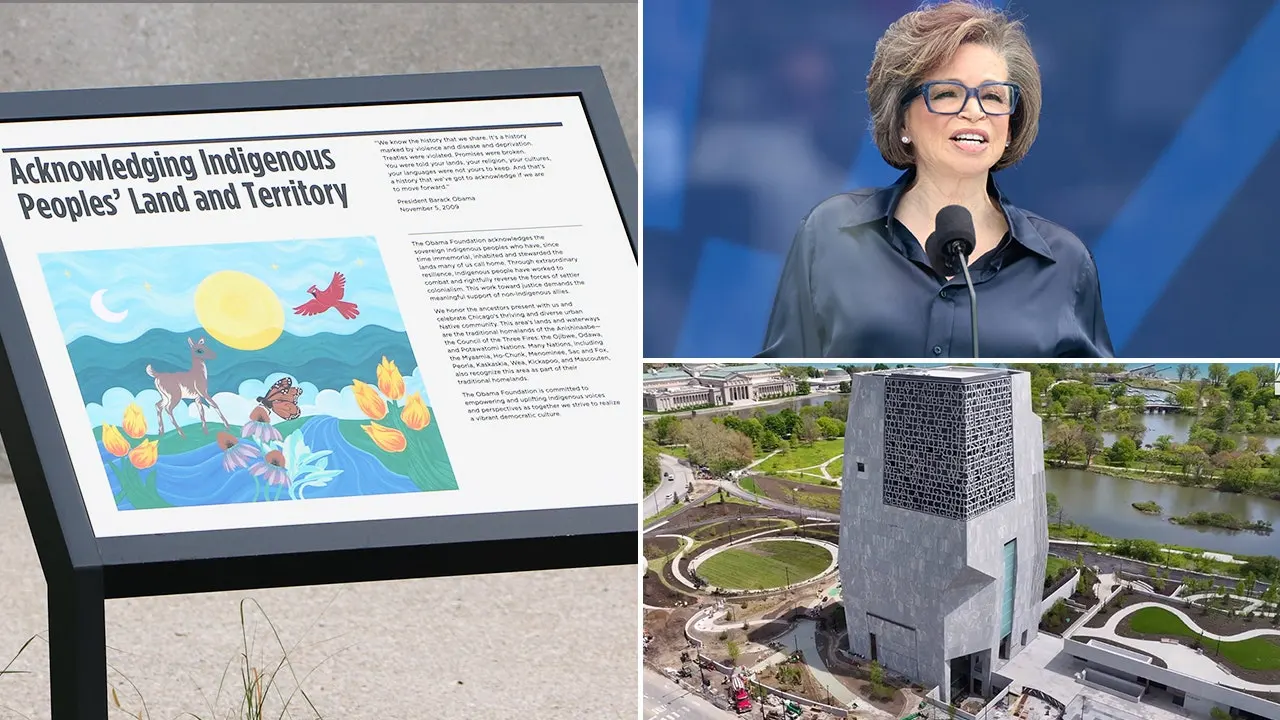
The physical rise of the Obama Presidential Center in Chicago, marked by its highly anticipated opening following Juneteenth, has brought more than just architectural novelty to the city’s South Side; it has thrust a simmering national debate into the local spotlight. At the heart of this controversy is the center’s explicit embrace of “land acknowledgment,” a practice increasingly popular in progressive circles but deeply polarizing across the wider American landscape. During the dedication ceremonies, Obama Foundation CEO Valerie Jarrett set a highly deliberate tone by formally recognizing the Indigenous tribes who historically inhabited the area. This was not merely a fleeting introductory gesture, but rather a preview of a permanent installation situated just steps from the museum’s towering stone structure and a statue of the former president. The prominent display explicitly states that the foundation honors the sovereign Indigenous peoples who have stewarded these lands since time immemorial, actively positioning the center on the frontlines of the cultural debate over America’s founding footprint.
This permanent installation does not shy away from provocative language, explicitly referencing the ongoing efforts of Indigenous peoples to confront and “rightfully reverse the forces of settler colonialism.” To anchor this message, the display features a poignant 2009 quote from Barack Obama himself, reflecting on a history scarred by broken treaties, violated promises, and the systemic mistreatment of Native Americans. To supporters, this public display represents a necessary, long-overdue reckoning with the painful chapters of American expansionism, offering a dignified space for historical reflection inside a monumental public institution. Conversely, critics view the display as a prime example of performative guilt—a fashionable nod to the ideological narrative that modern America is built entirely on “stolen land.” This ideological rift transforms what could have been a unifying cultural landmark into a ideological battleground, raising fundamental questions about how institutions should address the complexities of national identity and historical grievance.
Yet, beyond the grand arguments over national history and historical justice, local critics are pointing out what they view as a glaring, deeply localized irony built into the very foundations of the center. While visitors are invited to reflect on the historical dispossession of Indigenous lands, the physical real estate beneath their feet is the center of a much more modern property dispute. The Obama Presidential Center, which is run by the private Obama Foundation, sits on nearly 20 acres of prime public parkland in Jackson Park. This land was transferred to the foundation by the city of Chicago under a highly controversial 99-year lease agreement for a symbolic payment of just $10. For years, community activists, open-space advocates, and legal defense groups fought this transfer in court, arguing that a priceless public asset was effectively handed over to a private entity under the guise of civic development, bypassing the interests of the very public that owned it.
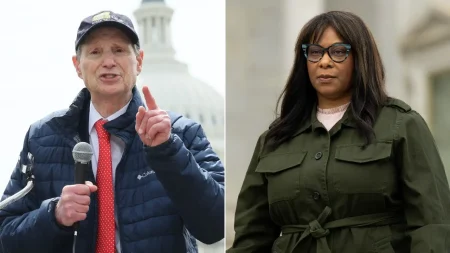
This legal and ethical tension was put into sharp focus by Illinois GOP Chair Bob Grogan, who argued that the narrative of ancient land theft serves to distract from contemporary political maneuvers. Standing outside the center, Grogan noted the profound irony of lecturing future generations on how the land was stolen from Native Americans while ignoring how the parkland was acquired from modern Chicagoans. Furthermore, Grogan pointed out that the physical land in question is largely an artificial creation, constructed after the Great Chicago Fire of 1871. In the aftermath of the historic disaster, public works projects used massive quantities of urban rubble and landfill to build out and stabilize the parkland along the lakefront. In this light, critics argue that the ground the center stands on is not an untouched, ancestral wilderness stolen from native tribes, but rather a manufactured public space built by the sweat and tax dollars of Chicago’s 19th-century working class—making its cheap transfer to a private foundation feel like a modern-day taking from local taxpayers.
The financial controversies surrounding the center extend far beyond the initial land acquisition, casting a long shadow over the project’s broader economic legacy. With construction costs climbing toward the $1 billion mark, the development has required millions of additional dollars in taxpayer-funded infrastructure upgrades, road redesigns, and environmental re-routing around Jackson Park to accommodate the massive campus. These public expenditures have irritated local watchdogs, especially given that the Obama Foundation has yet to reach its highly publicized goal of raising a $470 million endowment fund. This endowment was originally promised as a financial safety net designed to protect Chicago taxpayers from bearing any future operational or maintenance liabilities for the center. Without this fund fully secured, critics argue that local residents are being forced to take on significant financial risks for a private project that chose to build on coveted, historic public parkland.
Perhaps the most painful irony for the surrounding South Side community involves the very people the center promised to uplift. Promoted as a historic catalyst for economic justice and local empowerment, the project pledged to prioritize minority-owned businesses and local subcontractors, offering them a slice of the massive construction budget. However, recent investigations have revealed a troubling reality: several local subcontractors, including minority-owned firms, claim they are owed millions of dollars for work they already completed on the site. For these small business owners, the lofty rhetoric of systemic equity and community wealth-building stands in stark contrast to their actual experiences of financial strain and unpaid bills. As the Obama Presidential Center seeks to project a progressive message of historical healing and social justice, it must now navigate the earthly realities of local discontent, outstanding debts, and the lingering resentment of a community watching a billionaire-backed foundation rise on public land.