


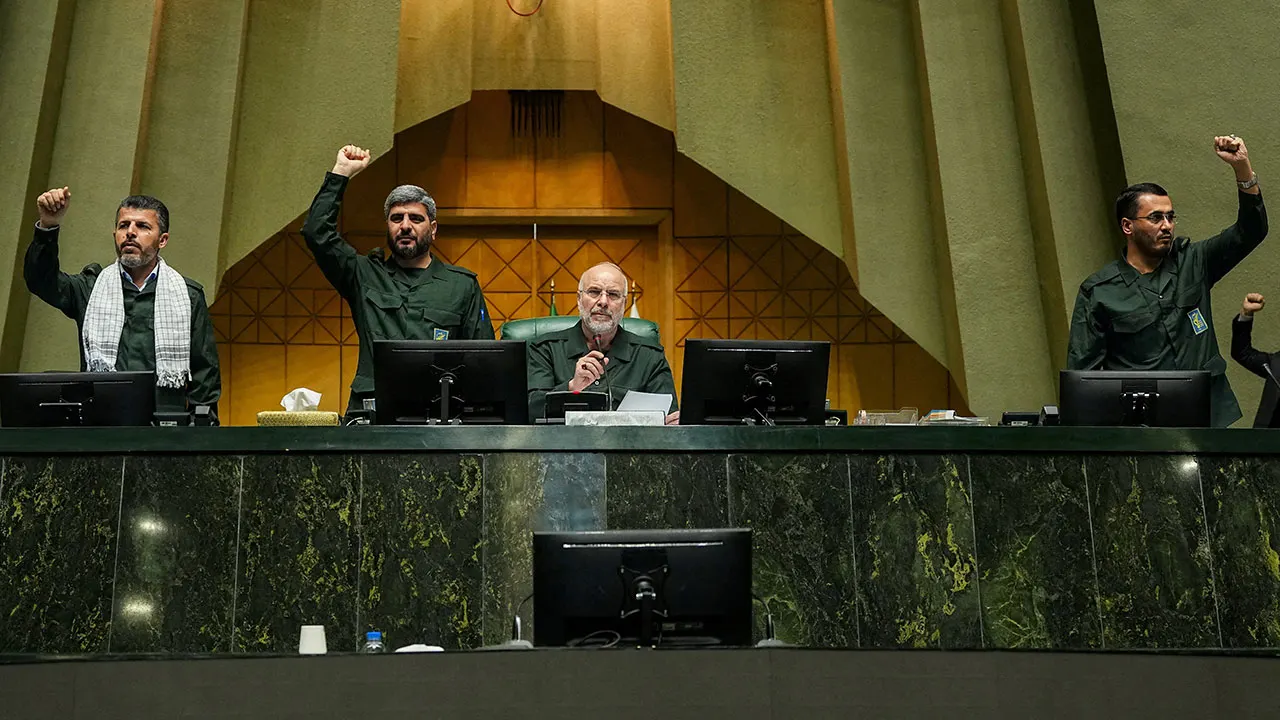
The digital ink on the newly signed memorandum of understanding between United States President Donald Trump and Iranian President Masoud Pezeshkian was barely dry before the cold, unyielding reality of Tehran’s internal power structure reasserted itself on the global stage. Aimed at bringing a volatile halt to active conflict and restoring the critical flow of maritime commerce through the vital shipping lanes of the Strait of Hormuz, the agreement was immediately met with a barrage of defiant rhetoric from Iran’s hardline political and military elite. Mohammad Bagher Ghalibaf, the highly influential speaker of the Iranian parliament and a key figures in the regime’s negotiating apparatus, issued an uncompromised warning through the media arm of the Islamic Revolutionary Guard Corps (IRGC), stating in no uncertain terms that if Washington fails to uphold its end of the bargain, Tehran will instantly abandon its own commitments. This preemptive shot across the bow was rapidly reinforced by Esmail Qaani, the commander of the elite IRGC Quds Force, who deliver a televised address asserting that the American leadership was trembling in fear and warning that the United States must learn its place and avoid confronting the Islamic world. Qaani’s bellicose threats extended far beyond the local waters of the Persian Gulf, reminding Western strategists that American vulnerability is not merely confined to the strategic choke points of the Bab al-Mandeb and the Strait of Hormuz, but extends globally. This immediately signaled that despite the diplomatic breakthroughs achieved at the highest presidential levels, the deep-seated ideological animosity of Iran’s military establishment remains entirely intact and ready to jeopardize the nascent peace.
At the heart of this geopolitical drama is a complex fourteen-point memorandum of understanding that seeks to trade immediate, sweeping economic relief for future promises of security and nuclear restraint. Under the terms of the plan, which were officially articulated by a senior United States official, Washington has agreed to take the unprecedented step of lifting its crippling naval blockade, actively collaborating with regional partners to establish a massive $300 billion reconstruction and development fund for the war-torn Iranian economy, and terminating an intricate web of domestic, United Nations, and international sanctions on a carefully coordinated schedule. Additionally, the United States has pledged to swiftly grant all necessary licenses, waivers, and regulatory permissions to facilitate these multi-billion-dollar global financial transactions. In return, Iran has officially recommitted to its previous declarations that it will neither procure nor develop nuclear weapons, promising to resolve the contentious fate of its existing stockpile of highly enriched material through a future, yet-to-be-negotiated mechanism, with the bare minimum requirement being the on-site down-blending of materials under the strict surveillance of the International Atomic Energy Agency (IAEA). However, critics are quick to point out that the framework strategically defers the most contentious, high-stakes questions—most notably the permanent, verifiable dismantling of Iran’s sophisticated centrifugal infrastructure—to an incredibly tight sixty-day window reserved for negotiating a final, legally binding treaty, leaving critics to wonder if the West is giving away its leverage too early.
The anxiety surrounding this high-stakes diplomatic gamble is significantly magnified by the character and history of the central Iranian figure orchestrating these negotiations, who is a far cry from a moderate diplomat. Mohammad Bagher Ghalibaf, a sixty-four-year-old political titan, is a pure product of Iran’s ruthless security apparatus, having spent his formative years rising through the ranks of the IRGC during the bloody, protracted Iran-Iraq War before eventually commanding the Guard’s air force. His domestic reputation was solidified during his subsequent tenure as the nation’s national police chief, where he worked alongside the infamous Qassem Soleimani to systematically crush internal dissent, including the brutal suppression of the historic 1999 student uprisings in Tehran. Transitioning into provincial and national politics, Ghalibaf served as the mayor of Tehran for over a decade before ascending to the speakership of the parliament in 2020, establishing himself not as an independent political visionary, but as the ultimate operational executive for the supreme leadership. Regional intelligence analysts, such as Beni Sabti of the Institute for National Security Studies, point out that Ghalibaf’s political longevity stems entirely from his absolute submission to the ruling clerics; he operates as a highly efficient “yes man” who will readily shake hands with Western envoys like Steve Witkoff if ordered to do so, or just as easily order a military escalation if the winds in Tehran shift.
This deep-seated pragmatism on the part of Ghalibaf should not be mistaken for genuine moderation or a desire to integrate Iran into the rules-based international order, as his career has also been plagued by staggering domestic controversies and corruption allegations. While ordinary Iranian citizens survive under the crushing weight of hyperinflation, food scarcity, and international isolation, Ghalibaf and his family have faced intense scrutiny for allegedly running vast, illicit oil sales and sanctions-evasion networks designed to enrich the regime’s inner circle. The hypocrisy of the ruling class was laid bare to the Iranian public through highly publicized scandals, including widely circulated images of Ghalibaf’s family returning from luxury shopping trips abroad laden with designer Gucci suitcases, exposing a vast economic chasm between the regime’s revolutionary rhetoric and its private indulgence. Despite these scandals, his prominent placement at the center of these sensitive international negotiations represents a massive domestic propaganda victory for the clerical establishment. According to Behnam Ben Taleblu, a senior fellow at the Foundation for Defense of Democracies, the sight of a career IRGC commander and notorious wheeler-dealer signing a major accord with senior Western officials validates the regime’s long-term strategy, proving to their domestic audience and regional proxies that they can force the world’s sole superpower to the negotiating table without making permanent concessions.
This dynamic highlights what veteran foreign policy analysts describe as the central, systemic flaw of the current American diplomatic strategy: the dangerous belief that economic engagement will somehow domesticate a revolutionary state. Foreign policy experts warn that by providing massive, front-loaded sanctions relief and reconstruction capital, the West is repeating the same miscalculations that characterized the 2015 Joint Comprehensive Plan of Action (JCPOA). Historically, the cash windfalls and economic integration resulting from previous diplomatic agreements did not lead to internal moderation or a reduction in regional aggression; instead, the Iranian state utilized those newly acquired resources to build a formidable domestic ballistic missile program and fund a highly sophisticated network of regional proxy militias that took decades and billions of dollars to neutralize. Geopolitical strategists like John Hannah, former national security adviser to Vice President Dick Cheney, emphasize that while hardliners like Ghalibaf possess the uncontested domestic authority to actually enforce the terms of an agreement, there is no evidence to suggest their long-term strategic intentions have changed. The critical, unresolved question remains whether the Iranian leadership views this memorandum as a genuine turning point toward peaceful coexistence, or merely as a tactical breather designed to rescue their collapsing economy, reconstruct their defense systems, and bide their time until they are strong enough to initiate the next phase of regional conflict.
Ultimately, this diplomatic experiment presents the United States and its allies with an incredibly precarious gamble where the margins for error are razor-thin. If the administration’s calculations are correct, this memorandum could serve as the foundation for a historic de-escalation, bringing a reliable peace to the Middle East, securing critical global maritime corridors, and locking Iran’s nuclear ambitions behind a wall of rigorous international inspections. However, if the critics’ warnings prove prescient, Washington may find itself in a deeply compromising position, having voluntarily dismantled its most effective economic leverage in exchange for easily reversible promises from a regime that has spent decades perfecting the art of diplomatic duplicity. The bitter irony is that the very same Iranian leaders who have repeatedly threatened to burn American military bases, sink Western warships, and hold American leadership personally liable for regional bloodshed are now the designated partners for peace. As the sixty-day clock begins to tick toward a final agreement, the international community is left to watch with bated breath, hoping that this high-stakes diplomatic gamble leads to genuine stability, while quietly fearing that the West may once again be funding the very forces dedicated to its destruction.